Meet the Men Helping Texans with Disabilities Explore the Outdoors

Just off the coast of Port O’Connor, in the shallow marshes on the edge of Espiritu Santo Bay in Southeast Texas, the early morning landscape was enveloped in a tranquil azure haze.
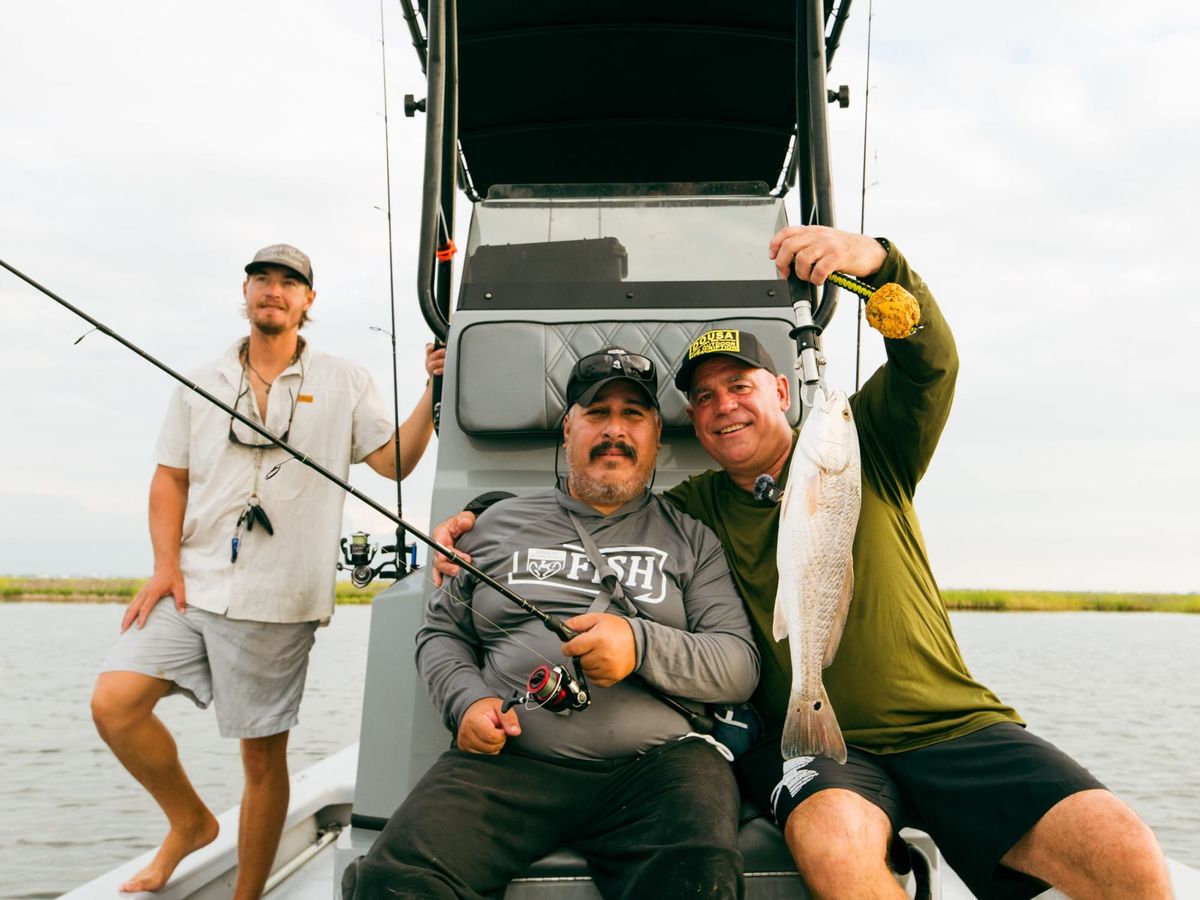
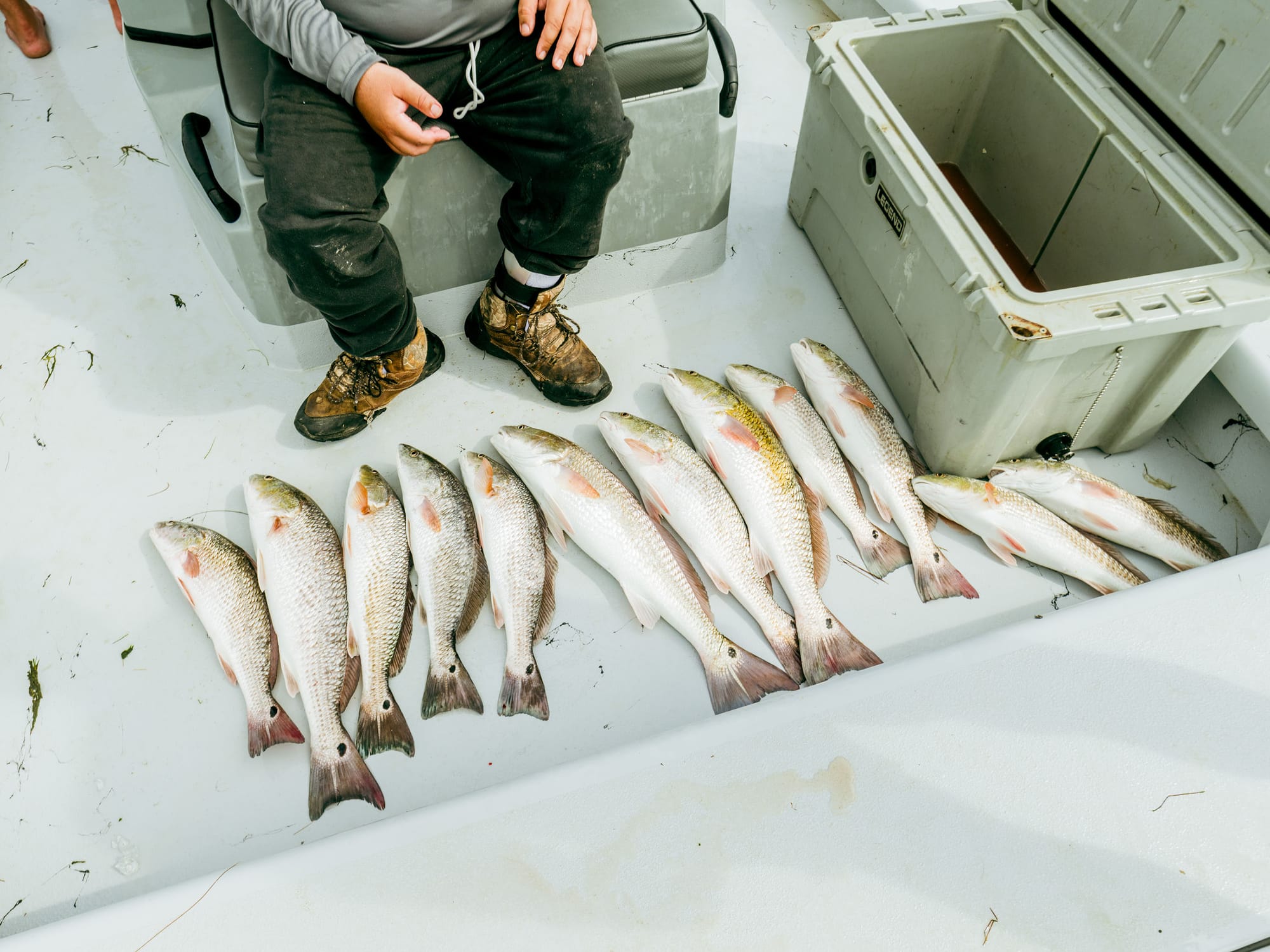
It was the Saturday of Labor Day weekend, and while the boat traffic certainly picked up, at 8:30 a.m., fisherman Jason Ruiz didn't have much in the way of competition. In just over an hour, he hooked 11 redfish — silver and copper-flecked drums known for the distinctive black spot on their tails, all stored in the cooler at his feet — leaving him just one short of the boat’s daily limit. Twice, that final fish eluded him.
“Ain’t that always the way?” observed Ruiz’s friend, Craig Felton. “The last fish is always the hardest.”
“But this time we have the right guide,” said Ruiz, nodding toward High Roller fishing expert Colton Stahl. Just then, Stahl hopped out of the boat, nudging it a little closer toward the “honey hole” he spotted in the distance. After a few minutes of quiet, Ruiz perked up at a sharp tug on his line. Then, the action began again.
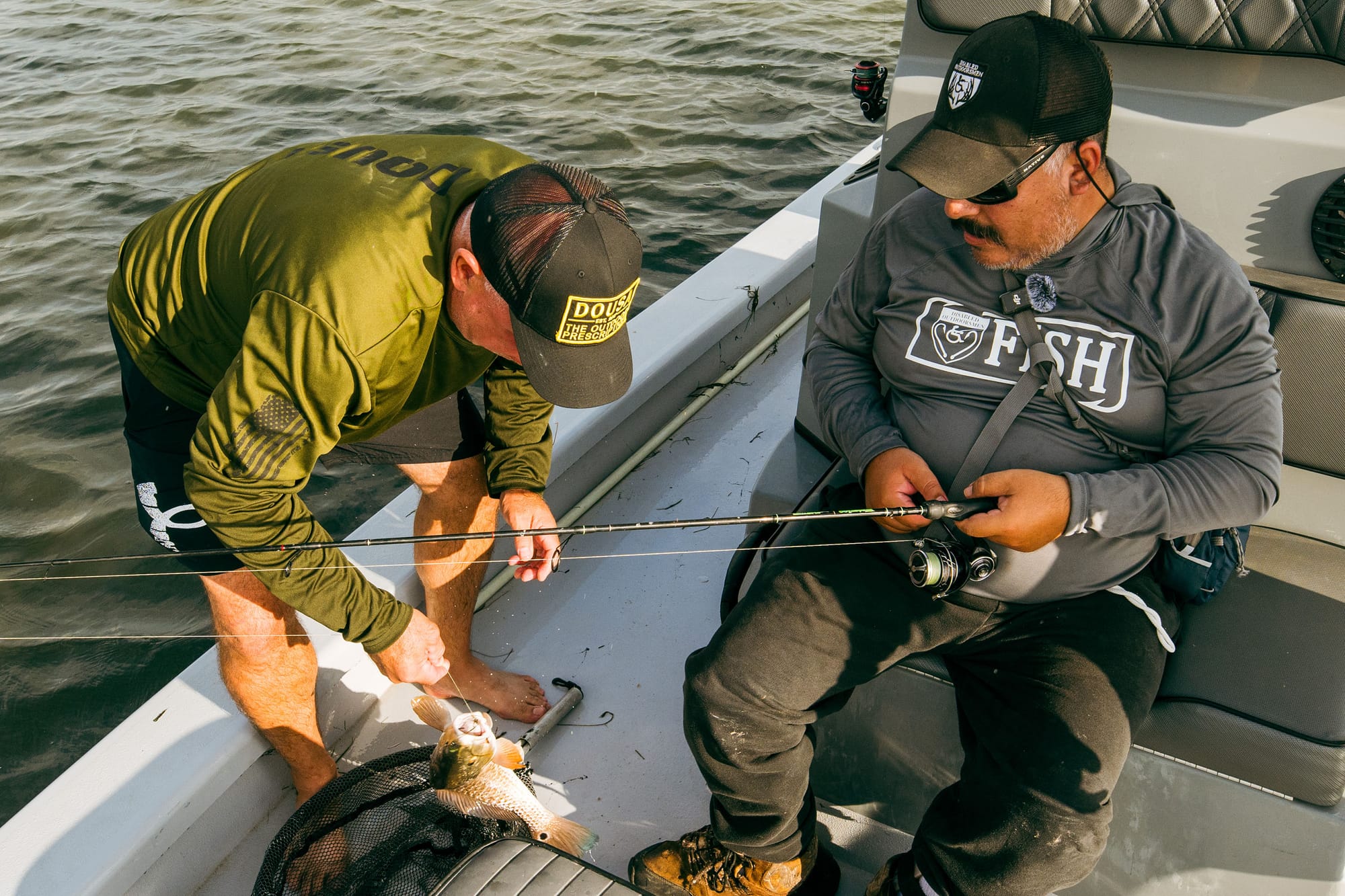
Like a coach, Felton excitedly barked instructions to Ruiz: “Set that line! Crank it! Reel! Reel! Reel!” Stahl quickly appeared with a net, ready to bring the catch onto the boat. Following a brief struggle, there it was: a hefty 27-inch redfish, and the final catch of the day. It was an impressive feat, considering it was only his second time out on a boat.
Pelicans soared overhead, resting on the perimeter of grassy plains that extended for miles, as schools of fish periodically breached the otherwise placid waters.
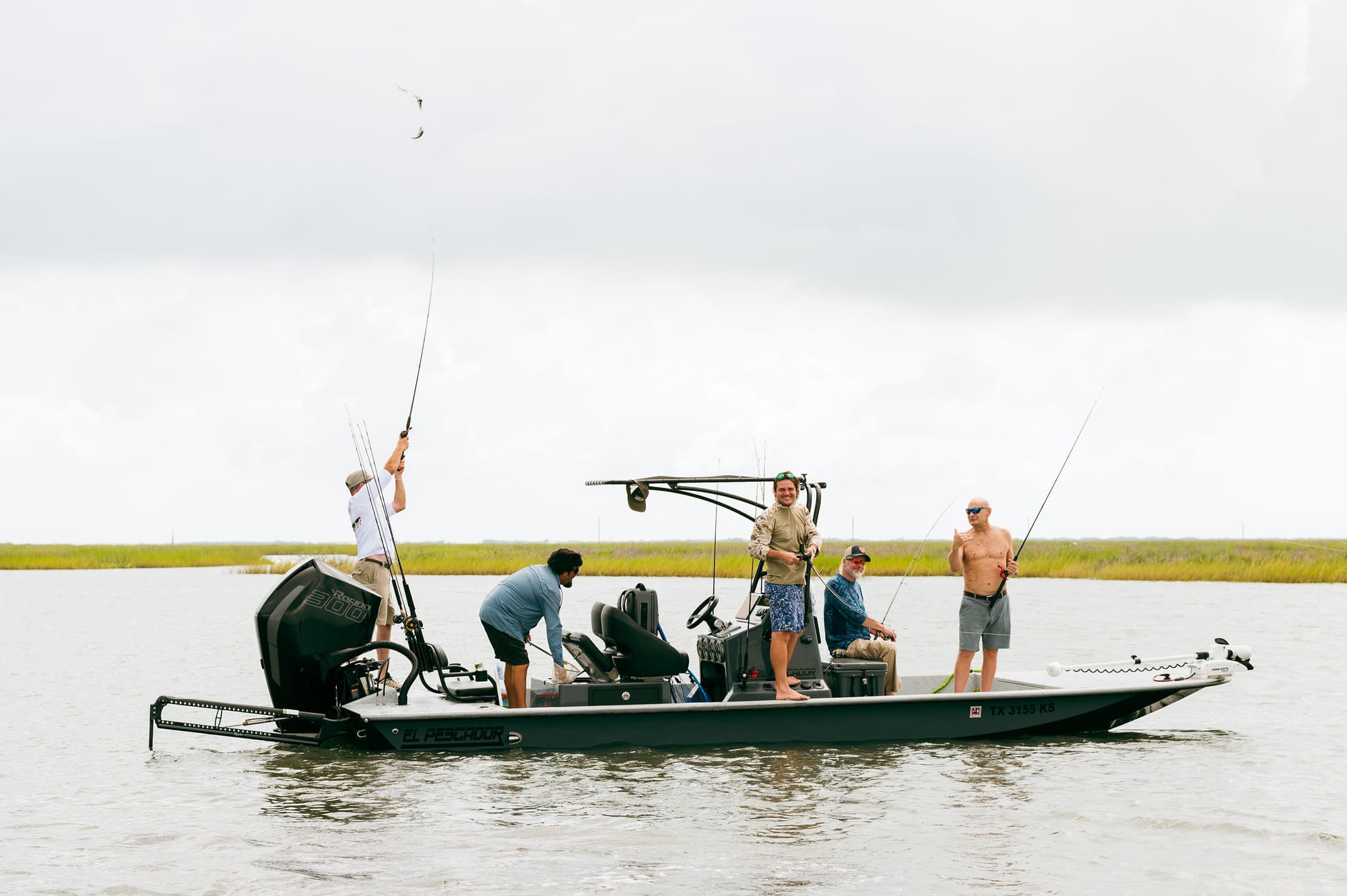
On another shallow boat nearby were two of Ruiz’s recent acquaintances: Erik Fegenbush and Lars Wyka, who had traveled all the way from Colorado and Florida for this fishing trip. Just one day earlier, the three men had been strangers. Now, they were out in the bay, brought together by Disabled Outdoorsmen USA — a nonprofit that hosts dozens of annual hunting trips and outdoor experiences catered to people with disabilities.
On this trip, DOUSA coordinated with Stahl’s guide service to take care of the trio’s accessibility needs, ensuring they could safely partake in the outdoor adventure. Ruiz, who sometimes uses a wheelchair, was born with spina bifida, a congenital spine condition that affects his mobility. Fegenbush is a retired Lieutenant Colonel in the United States Air Force and two-time melanoma survivor. Wyka, meanwhile, deals with chronic pain stemming from a mix of cardiac issues, a spine injury, and chronic obstructive pulmonary disease, which causes restricted airflow and breathing problems.
"That time he got to experience the feeling of taking someone else on a hunt who also knew what it was like to have a disability. It opened up a whole new world, not just for him, but for Sydney."
Though each of them had long ago learned how to manage their conditions, this trip was a chance to take a break. Every detail had been planned out for them: the nonprofit put them up at the luxurious coastal getaway of DOUSA partner Forrest Pace (whose home was equipped with an elevator). Their first night at the house, they’d been treated to a catered three-course dinner of sea bass and steak filet. And while they’d had to wake up before sunrise to head to the dock, there was no grumbling to be heard — all three men were buzzing with excitement, swapping stories about previous catches, and eager to get out on the water.
***
The organization is the brainchild of Weston Jenkins, who was a rising junior at Texas State University when he founded DOUSA in 2017. Growing up in the Texas Hill Country, he’d spent most of his life exploring the outdoors — hunting, fishing, and sitting around campfires. Wrapped up in many of these memories was his older cousin, TJ duPerier. With their seven-year age difference, Jenkins had always looked up to duPerier, even getting pointers from him before he went on his first deer hunt at 8 years old. Despite their mutual love of the outdoors, it wasn’t always easy for them to share in it together.
As a child, duPerier had been diagnosed with muscular dystrophy — a progressive condition that has required duPerier to use a wheelchair to get around since he was 13.
“I saw what being outdoors did for him,” Jenkins told The Barbed Wire of TJ. “He always wanted to be outside, no matter what we were doing. I wanted to do something that would make it easier for him, and for other people with disabilities, to get out there again and enjoy themselves.”
Starting the group was one thing, but in order to actually fund their first excursion, Jenkins needed money. He started printing a simple logo on T-shirts and caps that he sold around campus and in his college classrooms until, finally, in the fall of 2017, he had secured enough funding and found his first participant: Sydney Smith, a double amputee and triathlete based in Utah.
"A lot of people with disabilities just don’t have the opportunities to get the equipment they need for this because it’s so expensive."
Jenkins invited Smith to a deer hunt on duPerier’s Eagle Pass ranch in November of that year, flying him out and putting him up with the funds he’d raised through apparel sales. When Smith arrived, it was TJ who walked him through everything he knew about hunting whitetail deer. “It was a full circle moment,” Jenkins said. “TJ always loved to hunt and fish, but that time he got to experience the feeling of taking someone else on a hunt who also knew what it was like to have a disability. It opened up a whole new world, not just for him, but for Sydney, who got that feeling of shooting a deer again.”
Since that first hunt, DOUSA has grown steadily to include five chapters across the country in Texas, South Carolina, Minnesota, Alabama, and Utah, where Smith is currently serving as the chapter’s vice president. These groups rely on a network of volunteers, local businesses, and generous donors, who offer up everything — their time, their expertise, and their property — in order to help the groups stage their outings.
Interested participants fill out an application on the group’s website, listing their particular needs so that the DOUSA board can match them to an appropriate hunting experience. That can mean anything from securing all-terrain motorized wheelchairs to ensuring the property where they’ll be hunting has ground blinds set up. “A lot of people with disabilities just don’t have the opportunities to get the equipment they need for this because it’s so expensive,” Jenkins said. “We want to bridge that gap and be a resource for them.”
Jenkins wants to provide DOUSA participants with a well-rounded experience, something that starts well before the actual hunt. Thanks to year-round fundraising efforts, and sales from their apparel (now sold online and in retailers like Academy Sports + Outdoors), the group covers the costs of flights and lodging.
To date, the group has taken participants on dove hunts in Uvalde, elk hunts in the mountains of Utah, and wild turkey hunting in South Carolina. Next month, they’ll host their first shed hunt for disabled youth in Boerne. “A lot of times, people have this cap on themselves with what they can achieve, but we want to help people take that away,” he said.
***
Back at the dock, Ruiz beamed with pride as the final fish went into the cooler. Stahl and Felton helped lift him back into his wheelchair, laying out his bounty in front of him for a photo, the fish’s scales glimmering in the brilliant morning light. This was his second outing with DOUSA. The first was just two months earlier at Calaveras Lake, southeast of San Antonio. Felton, DOUSA’s vice president, also attended that trip, and since then, he and Ruiz have been in contact nearly every day.
“I’ve always loved fishing, but the best part is the company,” Ruiz said. “I told Craig just the other day that if I ever win the lottery, I’m buying a place just like (Pace’s), and anyone who wants to come out and fish can come out and have the same experience I had.”
After adding two more redfish from Fegenbush and Wyka, Stahl quickly got to work prepping and fileting their haul. Wyka had spent most of the morning angling for bigger fish, hooking a tarpon that put up a fight before nearly unspooling his rod. Though he didn’t reel it in, he still thought of the day as a success.
“I feel pain most days, but when I was hooked onto that tarpon, I didn’t feel any pain at all.”
All photos by Cat Cardenas.