Locals Say SpaceX Is Polluting Sacred Land. This Project Aims to Preserve It.

Among the Carrizo Comecrudo people of Texas, it is said that the state’s rivers are like ancestors. As they flow toward the sea, they bring their abundance, their beauty, and their knowledge with them. In South Texas, the place where these rivers meet and empty into the Gulf of Mexico is a sacred life source — the location they believe to be the birthplace of the first woman. Today, most Brownsville locals know it as Boca Chica Beach — a public stretch of sand located at the end of Highway 4, along the southernmost edge of the Texas coast. But to many people outside of the Rio Grande Valley, that land, its name, and its history have largely been swallowed up by the operation of the rocket launch facility just up the road: SpaceX’s Starbase.
Growing up a short drive from Boca Chica Beach in Brownsville, 35-year-old Monica Sosa told The Barbed Wire she still remembers it as an escape: a piece of unspoiled coastline that was free for everyone to enjoy. On lazy summer weekends, she and her siblings would hop into her mom’s blue Chevrolet Astro van. The back seats pulled down to make room for more passengers as they stopped to pick up more family. Once there, they’d look forward to hours and hours of endless sunshine, and a cooler packed full of ham and cheese sandwiches, sodas, Cheetos, and fruit.
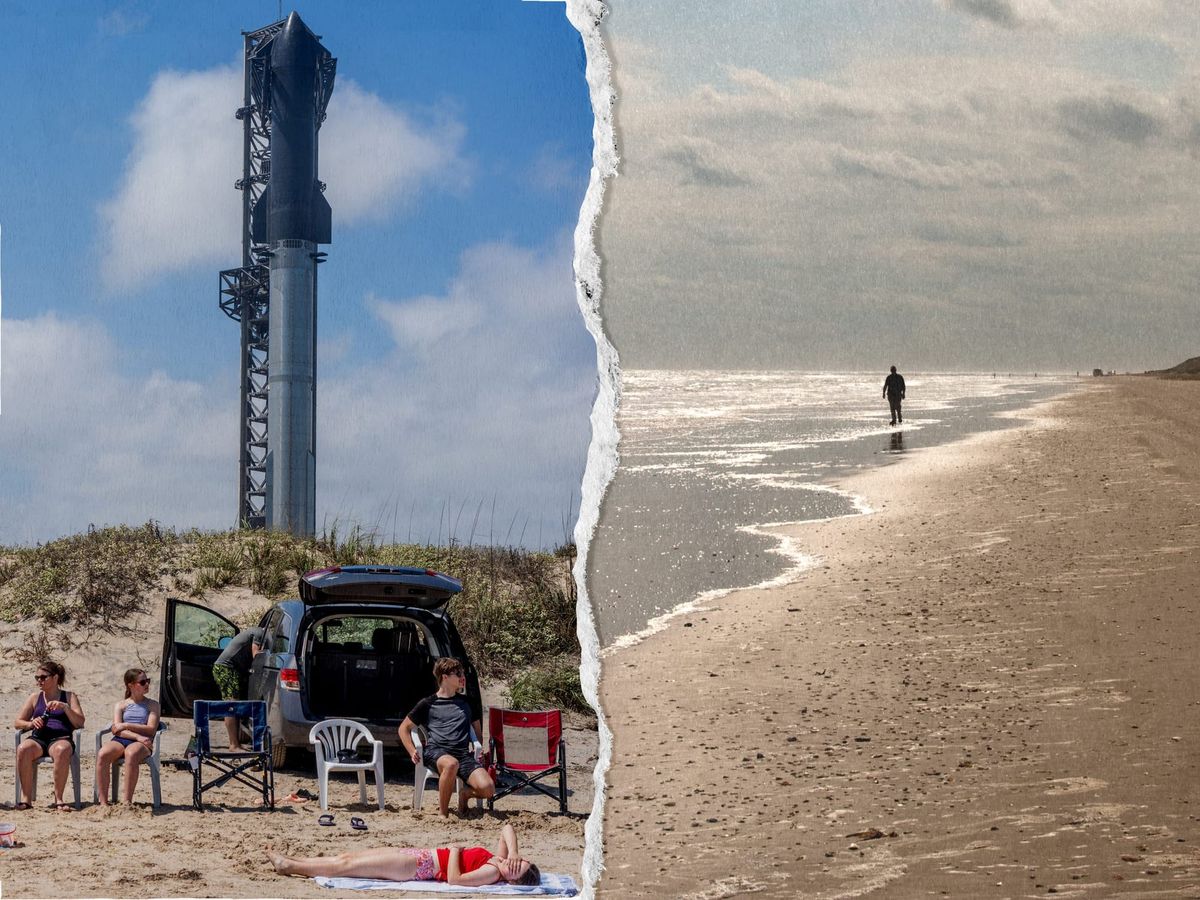
As an adult, many of those happy memories have turned bittersweet. The beach, while still free to the public, is frequently plagued by the closure of Highway 4 each time there’s a rocket launch or other “space flight activities.” And even when it’s open, the construction has fundamentally changed the landscape: There’s a tall metal SpaceX launch and catch pad towering over the once-untouched sand dunes.
“Boca Chica was bliss,” Sosa said earlier this month. “I came from a working class family, and being out there was one of the only times we would come together and play. We’d be in the water, sitting in the sun, running through the lomas (hills), or burying each other in sandcastles. You could spend the whole day out there. But now there’s someone who has the right and the ability to privatize a beach that people have used for decades and decades.”
SpaceX’s operation in the Rio Grande Valley has been far from smooth. In recent years, they’ve been cited by the Texas Commission on Environmental Quality for multiple violations of wastewater regulations and been the subject of multiple legal complaints. The company has disputed these claims as “factually inaccurate” and has been allowed to continue their operations.
In April of this year, multiple Valley-based environmental groups filed a lawsuit against the Texas Parks and Wildlife Department over a proposed land swap that would grant 43 acres of Boca Chica State Park to SpaceX in exchange for land near Laguna Atascosa National Wildlife Refuge. In addition to their concerns about pollution, the groups also argued that the land proposed in the swap was sacred to the Carrizo Comecrudo Tribe.
“SpaceX has always been polluting,” Christopher Basaldú, a member of the Carrizo/Comecrudo Tribe told the Texas Tribune, which first reported on the allegations. “And I think people are kind of brainwashed into thinking that rockets — constructing rockets, testing rockets and blowing up rockets — that somehow that's not causing pollution.”
In a bid to turn her frustration into action, Sosa created a living archive of the beach. Titled “Boca Chica, Corazón Grande” (Small Mouth, Big Heart), the project was created in collaboration with Entre, a community film center in the Valley founded by artists C. Díaz and Andres Sanchez. “This wasn’t just something we wanted to do. We felt like we needed to do it,” Sosa said.
Since 2021, Entre has been soliciting entries for the multimedia project from people who have frequented the beach their whole lives. Through letters, photographs, postcards, and recorded interviews, the archive has blossomed into a rich tapestry of Boca Chica, highlighting it as an essential community gathering place.
“It was accessible to so many of us because there was no entry fee and none of the rules that applied to most other beaches,” Sosa explained. “There was none of that bikini beach culture there. It was a place where my mom felt comfortable going in with baggy shorts and her big t-shirt. She could be her authentic self, and that was the beauty of it.”
More recently, the project has expanded to include “beach happenings,” in-person events that bring together creatives, community members, and advocates for Boca Chica.
“We think it's important to document people’s stories to keep a record, but we also wanted to find ways to help people connect with Boca Chica in person,” Sanchez told The Barbed Wire. “That first event was a way to remind people that the past is still present, and the beach is still with us for the time being. In a way, we’re contributing to the archive by helping create new memories.”
The issue of SpaceX is complicated, according to Sosa, because even among the Valley’s locals, there isn’t a consensus on its role in the area. To some, the company’s presence has been an unwelcome disturbance that’s left communities close to the launch site displaced and raised concerns about environmental damage, since rocket debris has been routinely thrown onto tidal flats and sand dunes. In April 2023, the launch pad was destroyed by a departing rocket, sending concrete into a federally designated wildlife refuge and causing a 3.5-acre fire.
Others see SpaceX and its CEO, Elon Musk, as saviors of the region who’ve brought economic investment and resources with them. For Sosa, the debate has activated a deeper divide among residents that predates SpaceX.
“A lot of us think of (the Valley) as this place without opportunities, like it’s a place you have to leave if you’re ever going to ‘make it,’” said Sosa. “But that’s a narrative we’ve been told, and when you’ve heard it for so long, I think you start to embody it. SpaceX has brought a lot of those feelings to light.”
Boca Chica, Corazón Grande is an attempt to help reconcile some of those conflicting emotions about the beach — and the region as a whole. Faded photographs of smiling families, bright blue skies, young couples, and busy fisherman are a reminder that long before Highway 4 became a gateway to the stars, it was a place full of memories and life.
“It’s heartbreaking that future generations won’t get to experience it the way we did, in its purest form, before it was touched by any construction,” Sosa said. “Now, it just feels like SpaceX has taken over, and Boca Chica is becoming more about Starbase and SpaceX, rather than the community, or the families or the land.”
While SpaceX gained widespread acclaim for the success of their fifth Starship booster test flight on October 13, not everyone on the ground was pleased. Members of Entre took to the beach the following day to document the aftermath of the launch, while environmental advocacy groups like Save RGV and the South Texas Environmental Justice Network have sounded the alarms over falling debris and water pollution from the launch.
“This is the people's beach, this is our beach,” Nansi Guevara, a visual artist who created the art installation, told the Texas Tribune. “And we’re gonna fight to protect it.”
For Sosa, the archive is her own act of resistance.
“I’m hoping that this will not only serve as a form of resilience and protection and preservation, but also as a testament to the possibilities, because storytelling is a powerful tool. The world is always changing, but we don’t have to forget what was. And when someone tries to take something from us unwillingly, we can resist, we can fight back, we can show up, we can remember.”