‘We Should Be Paying Attention’: These Are the Faces of 38 Trans Texans Killed by Violence Since 2013

Editor’s note: This story mentions threats of violence against the LGBTQIA+ community.
For 25 years, a growing number of people have honored Trans Day of Remembrance on Nov. 20 as an annual memorial to the lives of transgender and gender nonconforming people lost to violence.
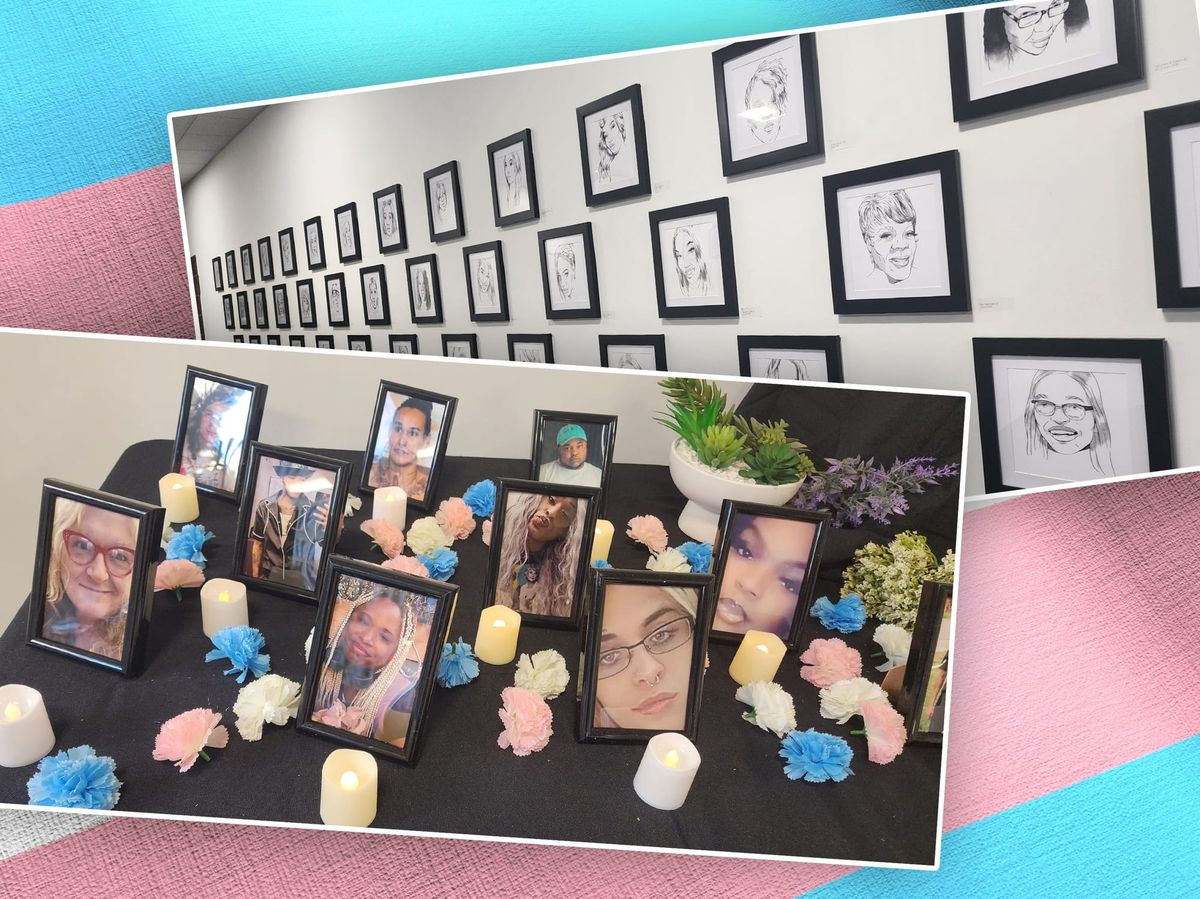
The 38 trans and gender nonconforming Texans who have died by violence in the state since 2013 were honored this year with new portraits, thanks to Gordy Carmona, a community engagement and advocacy strategist for the Dallas-Fort Worth region at Equality Texas. “Lost Faces,” an art installation in Adolphus Tower gallery in downtown Dallas, features an ofrenda and original works commemorating slain Texans.
“Anti trans violence affects us all, and it’s something that we should be paying attention to, and none of these people should have been forgotten,” Carmona told The Barbed Wire.
This year’s Trans Day of Remembrance comes at a frightening time for the transgender community, in Texas and nationwide, amid fears of future violence and losses of their rights. President-elect Donald Trump’s second inauguration looms like a dark cloud, according to several who spoke with The Barbed Wire, after watching millions of dollars worth of anti-trans attack ads and seeing threats against trans & LGBTQ+ folks in the Heritage Foundation's Project 2025. Just over two weeks after the first openly transgender person in Congress was elected, a Republican congresswoman from South Carolina introduced a resolution for a transgender bathroom ban that some lawmakers say is just plain “bullying” and “cruelty.”
“It feels so daunting,” acknowledged Carmona. “We were making progress.” Now, they feel the incoming Trump administration is threatening to drag us “backwards” when it comes to the rights of transgender people and many others.
Trans Texans are also looking fearfully toward the upcoming 89th session of the Texas Legislature. Republicans have already filed 32 bills targeting trans rights, as well as a pre-filed bill that would potentially require genetic testing as part of a ban on athletes competing on teams that don’t match their sex assigned at birth. Research suggests such bills in state legislatures, even when they don't pass, can encourage increased violence and other hate incidents, as well as an increase in suicide attempts among trans people.
Other bills already prefiled for next year's session of the Texas Legislature would prevent trans people from updating their identity documents to match their gender or ban them from accessing certain forms of health care as both trans adults and children. (In September, Texas already banned trans folks from changing their sex on birth certificates and driver’s licenses.) House Bill 1075 would allow people to sue a drag performer who “fails to take reasonable steps to restrict access to the performance by minors.” The bill's definition of drag is so broad it would likely mean that transgender artists and educators performing in public could be liable for $5,000 in damages. Many are repeats or variations of failed bills from previous sessions. Advocates like Carmona and others like them who watch the Legislature are now waiting to see which bills, if any, will gain hearings during the session.
“We don’t know what’s happening, what can happen, because things are just in this really bizarre frame right now where we are expecting to see more legislation attacking us,” they said.
Carmona walked me through the gallery on a quiet Friday afternoon. Visitors first see an ofrenda, a traditional Day of the Dead altar, with portraits of the 38 individuals who died from violence in the U.S. since the last Trans Day of Remembrance. The photos are arranged with LED candles and marigolds in white, blue and pink, the colors of the transgender pride flag.

Certain patterns stood out as we looked at their faces.
“We’ve seen year after year, the majority of the folks that are identified on our Trans Day of Remembrance lists are Black women and Hispanic women,” Carmona noted. “They always appear at a disproportionate rate compared to white, trans and gender nonconforming folks.”
Carmona pointed out another disturbing statistic illustrated by this year’s altar: the presence of multiple teenagers, including Pauly Likens, a murdered 14-year-old trans girl from Pennsylvania, and Nex Benedict, a nonbinary Oklahoma 16-year-old who died one day after being attacked in a girl's restroom.
“They had a whole life ahead of them and they're just taken away,” Carmona lamented.
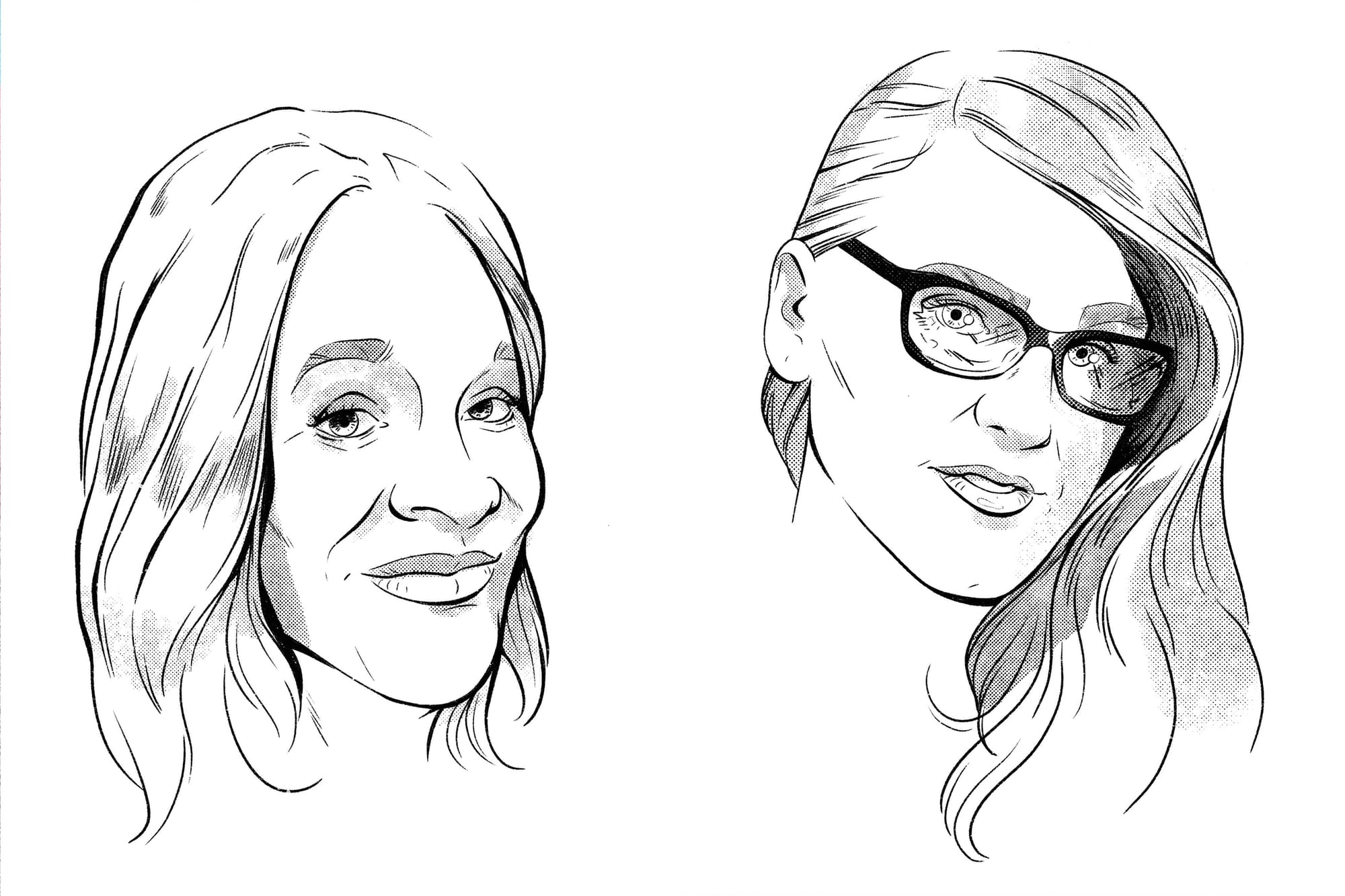
Past the ofrenda is a wall of 38 black and white portraits, representing each of the trans or gender nonconforming Texans who died between Nov. 1, 2013 and Oct. 31, 2023. Carmona explained that they commissioned original artwork because of the often poor quality of available images.
“They were usually Facebook photos that were kind of like grainy, and some of them were even mug shots, because that's the only photos that were pushed in publications [reporting on their deaths], and we didn't want to remember them in that light,” Carmona said.
The portraits were created by Dallas artist Gabriel Mendez, whose work often focuses on queer people and LGBTQ+ themes. He described the challenge of representing each of the dead as they would have wanted to be seen. In one case, the only available image showed just their lips and nose with the rest covered up.
“Each person I drew, I would take a moment to really look at and guess what they were showcasing,” Mendez told The Barbed Wire in an email. “I did my best to accent that as much as I could without it looking like a parody or cartoon. It was my responsibility to help them get their personality across to a world that will never meet them.”
Finally, in an alcove past the portrait wall, is a shrine. Surrounded by the faces of other murdered transgender people rests a full-length mirror decorated with flowers intended to honor Live Oak Doe. Found unresponsive in Houston in 1986, the woman died soon after, without being identified. Although her name still hasn't been released to the public, she was finally identified in January 2021 through volunteer DNA analysis and research. Carmona explained that her death, and the decades-long search for her identity, inspired the “Lost Faces” project.
“I created this installation piece as an opportunity for people to reflect that any of these individuals could easily have been us,” Carmona said. Inconsistent or incorrect reporting and news coverage, they continued, has left the identities of slain trans people forgotten as well. “I hope people will be enraged by this epidemic that's being ignored by many people.”
Some, Democrats among them, have blamed a focus on transgender people and LGBTQ+ rights for Vice President Kamala Harris' loss in the presidential election and the nation's rightward shift. In Texas, the chair of the Democrats stepped down for his own comments about the trans community. Yet, Sarah Kate Ellis, president and CEO of GLAAD, the national LGBTQ+ advocacy organization which cosponsored the “Lost Faces” Gallery, argued that it's more important than ever to stand with trans folks.
“In the wake of the election and a country reckoning with a return to an administration with a hostile record against LGBTQ people and especially transgender Americans, there is an imperative opportunity to center trans people in the conversation as people and as examples of freedom in the truest sense,” she wrote in an emailed statement to The Barbed Wire. “This moment demands we all recognize the importance of trans people in our lives, as family, friends, neighbors, classmates, colleagues, and fellow Americans who are as essential to a future that is more free, more just, and more equitable for all.”
Rather than despair, Carmona told me they hope the “Lost Faces” inspire anger and action on behalf of trans folks. “We desperately need allies to be more than just allies, we need them to be accomplices working day in and day out to ensure that the human rights of trans and gender nonconforming folks are upheld. Our lives depend on it.”
‘Lost Faces’ can be viewed until November 23, when a memorial ceremony will be held at the gallery. It's open to the public on Thursday and Friday from 4-7pm, or by appointment. To schedule a tour, contact field@equalitytexas.org.
Editor’s Note: If you’re seeking mental health support for LGBTQIA+ youth, call or text the Trevor Project’s 24/7 support line at 866-488-7386. For peer support run by and for trans people, call the Trans Lifeline at 877-565-8860. You can also call or text 988 to reach the 988 Suicide & Crisis Lifeline.
Correction: This story incorrectly referred to the art installation as “Lost Voices,” when it is actually called “Lost Faces.” Previous reporting also indicated that there were 40 portraits as part of the exhibit. In fact, there were 38. The Barbed Wire regrets the errors.