Inside Texas Prisons, Women Smuggle Eyeshadow — and Risk Solitary — to ‘Feel Human’
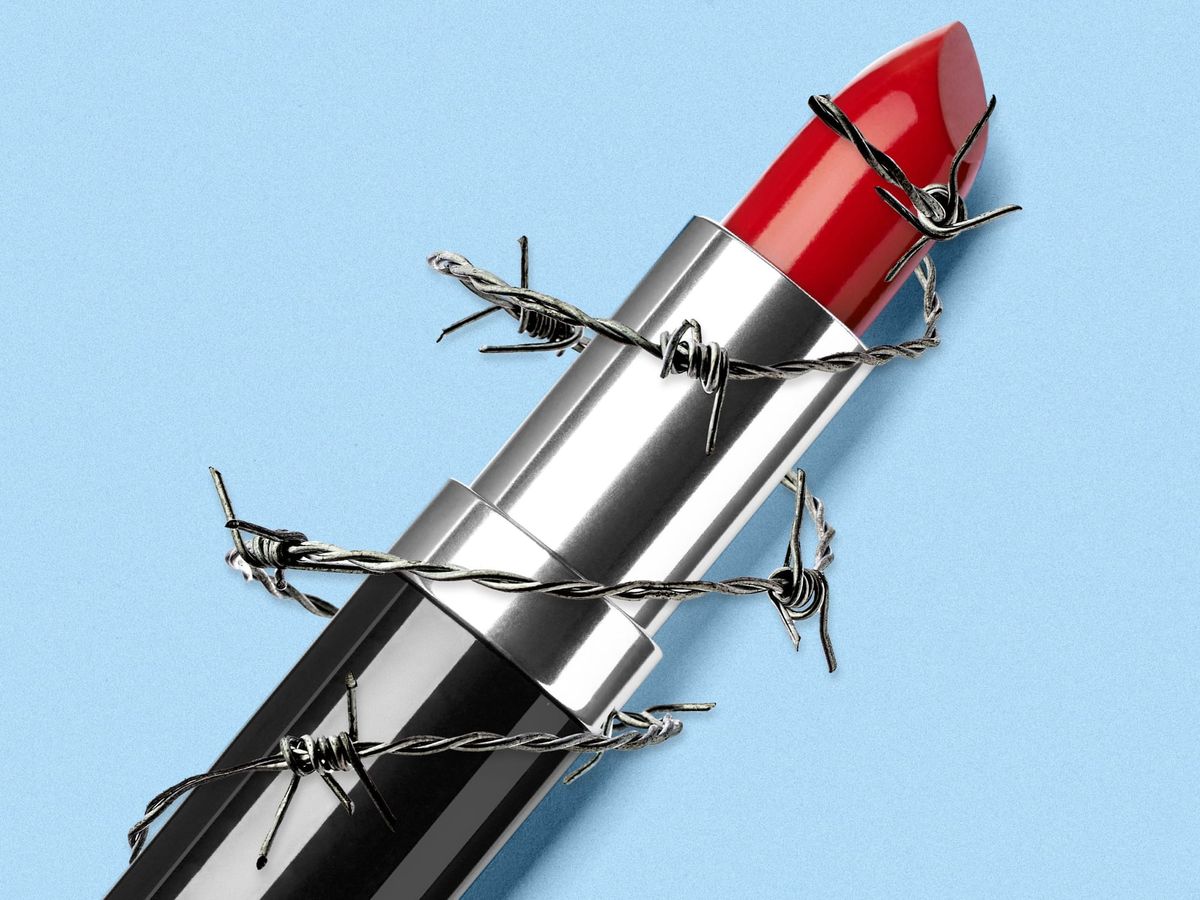
Editor’s note: Kwaneta Harris is an incarcerated journalist in Texas whose work is supported by Empowerment Avenue, an organization that seeks to increase and normalize the inclusion of incarcerated writers in mainstream publications.
On a hot day in the summer of 2024, the women’s prison visitation room had fewer than a dozen people in it.
They’ve seldom been full in the 17 years I have lived in Texas prisons.
I watched 24-year-old Muffy palm the golf ball-sized Saran Wrap into her waistband. When the guard answered the phone, Muffy — who wore a permanent smirk and fresh sneakers — maneuvered the ball inside her body. Though cell phones and drugs are the most smuggled contraband into men’s prisons, in women’s prisons, it’s eyeshadow.
In Texas, the prison population houses teenagers as young as 16-and-a-half. These young women compete daily with each other to create the latest makeup trends they see in fashion magazines. It’s the women under 30 in here who get caught the most wearing smuggled-in eyeshadow. The largest consumers are my generation, though.
I’m 52 years old. We Generation X and Boomers hoard cosmetics for family visits to recreate a look from a happier time. Nobody is wearing the good stuff like MAC or Fenty. It’s drugstore brands like Covergirl and L’Oreal for us. Only the nostalgia seekers pay triple the price for Wet N Wild, Max Factor, and Fashion Fair brands.
Cosmetics were outlawed in New York prisons until 1920 and Nebraska prisons until 1924. In the United Kingdom, makeup was outlawed in prisons until 1946. In French prisons, it was outlawed until 1972. That year, according to CNN, lipstick and powder were approved because “denying women the use of makeup may lead to personal neglect and psychological effects,” an American newspaper reported French authorities as saying at the time. In Texas, over a decade ago, my prison sold eyeshadow for a short time. Now, the prison store sells one type of $10 mascara and $5.25 eyeliner pencil. The three shades of lipstick for $8.50 that were in fashion during my grandmother’s time and $16 foundation for very fair skin.
In Texas, they don’t want us wearing what they aren’t selling.
Maryam Henderson-Uloho told The Cut in August that, during her 12.5 years incarcerated, makeup was “color in a colorless world.” In a story for CNN, 28-year-old Joyce Pequeno said in 2021: “It makes me feel good, like a real human being — not just a number.”
In exchange for “favors” or profit-sharing, male prison staff are the common route for contraband makeup to enter the prison. For others, like Muffy, whose eyeshadow resembles a bifold door — the half closer to her nose a sparkly turquoise, the other side a bold fuchsia — the profit margins are too irresistible to share.
A four-compartment CoverGirl eyeshadow costs $5.50. Before arriving in prison, the visitor empties each compartment, crushes it, adds a “cut” like commercial glitter and crushed cheap eyeshadow. This is sold for $5. A tiny Saran Wrap “sack” the size of half a pea. Lipstick is also sold for $5 for a pea-sized amount in Saran Wrap. These are then contained in a golf ball-sized Saran Wrap for transport in the prison. It takes three eyeshadow sacks and two lipstick sacks per single use application per day.
This entire process is extremely risky. If caught, the visitor — or someone like Muffy — can face a misdemeanor charge for introducing contraband into a correctional facility. Muffy’s sentence could be lengthened. The young women wearing bright eyeshadow colors attract disciplinary infractions resulting in restrictions on phone, commissary, visitation, and recreation. Sometimes it is even solitary confinement or a parole denial. Prison administrators believe these are deterrents. “Prison isn't supposed to be comfortable,” is what they say. “It’s not the Ritz.”
Makeup becomes our war paint, our armor, our rebellion behind these walls. Take Shaina, who has been locked up since she was barely more than a child. Twenty years later, at 34, she guards her contraband makeup collection worth $600 like it’s made of gold, keeping it hidden on her body.
“I wear eyeshadow to feel better,” she confides during our late-night talks through a shared vent. “It makes the inside feel like the outside looks.” I understand her need to maintain that connection to normalcy, to beauty, even as depression threatens to swallow her whole.
We realize makeup isn’t a priority. But the time wasted by the corrections staff to enforce rules that do nothing to stem the flow is a priority. They’re chronically understaffed by 40% in this prison, according to Texas Public Radio. Working in buildings that reach 120° Fahrenheit during summers while wearing cumbersome equipment, they should be distributing ice water instead of handing out disciplinary infractions for wearing eyeshadow.
Nunu’s story hits differently.
At 26, this survivor of domestic violence has found an unexpected path to reclaiming her agency through makeup. She refuses to leave her cell without it, skipping meals, laundry, even work and school if she’s run out. After years of having every choice stripped away by an abusive partner, something as simple as choosing a lipstick shade has become her declaration of independence. It’s beautiful and heartbreaking how she’s discovering who she is within these confines.
The lengths we go to maintain this small piece of freedom would seem absurd to outsiders. Mo’s story about the stuck mascara tube in her “purse” — our nickname for the vaginal cavity — circulated through the unit for weeks. It took three days and multiple helping hands before her lover finally retrieved it. Then, there’s Lisa, who forgot about her hidden makeup stash after taking her psychotropic meds, accused her roommate of theft, and nearly started a riot before discovering the source of her mysterious orange discharge.
The eyeshadow was in her purse.
Holidays transform our faces into canvasses of hope and defiance. With Valentine’s Day approaching, I already know what I’ll see: Red glitter hearts adorning eyelids, carefully crafted cat-eye arrows, and delicate “Be Mine” scripts traced above eyebrows. Without nail polish, we channel our creativity into these temporary masterpieces, each design a story of resilience.
My own relationship with makeup has shifted dramatically since arriving here. Before prison, I was chained to “tasteful application” at every job, everyday, without fail for decades. Now, I wear it only for visits, my small act of rebellion. In 2017, the journalist Keri Blakinger wrote for Chron.com that even the kind that resembled “circus makeup” was worth it when she was in prison. “It might have looked like a mishap to everyone else, but to us it looked an awful lot like a middle finger,” she said.
Hell, I don’t even shave my legs anymore. While others spend hours perfecting their faces, viewing it as an investment in their humanity, I’ve chosen to reclaim those moments for sleep and reading; I’ve already given makeup enough of my time.
Even when the state succeeds in making prison free of smuggled makeup, people find a way to create it.
Stolen powdered ink from the prison industry print shop, crushed colored pencils, and baby powder are an unsafe, semipermanent stained eyelid alternative when eyeshadow isn’t available. We aren’t exempt to the pressure of cosmetic consumption, and we’ll find our own ways of participating.
Prison is by design an environment of power and control, with a goal to erase individual identity, and until we have other ways to look good — and to feel good — the underground supply for makeup will keep flowing.
Correction: A previous version of this article misstated the type of charge that a person can face for introducing contraband into a correctional facility. It is either a Class B or Class C misdemeanor, not a felony. The Barbed Wire regrets the error.