Churches Helped John S. Chase Become Texas’ First Licensed Black Architect. Now, They’re Landmarks.

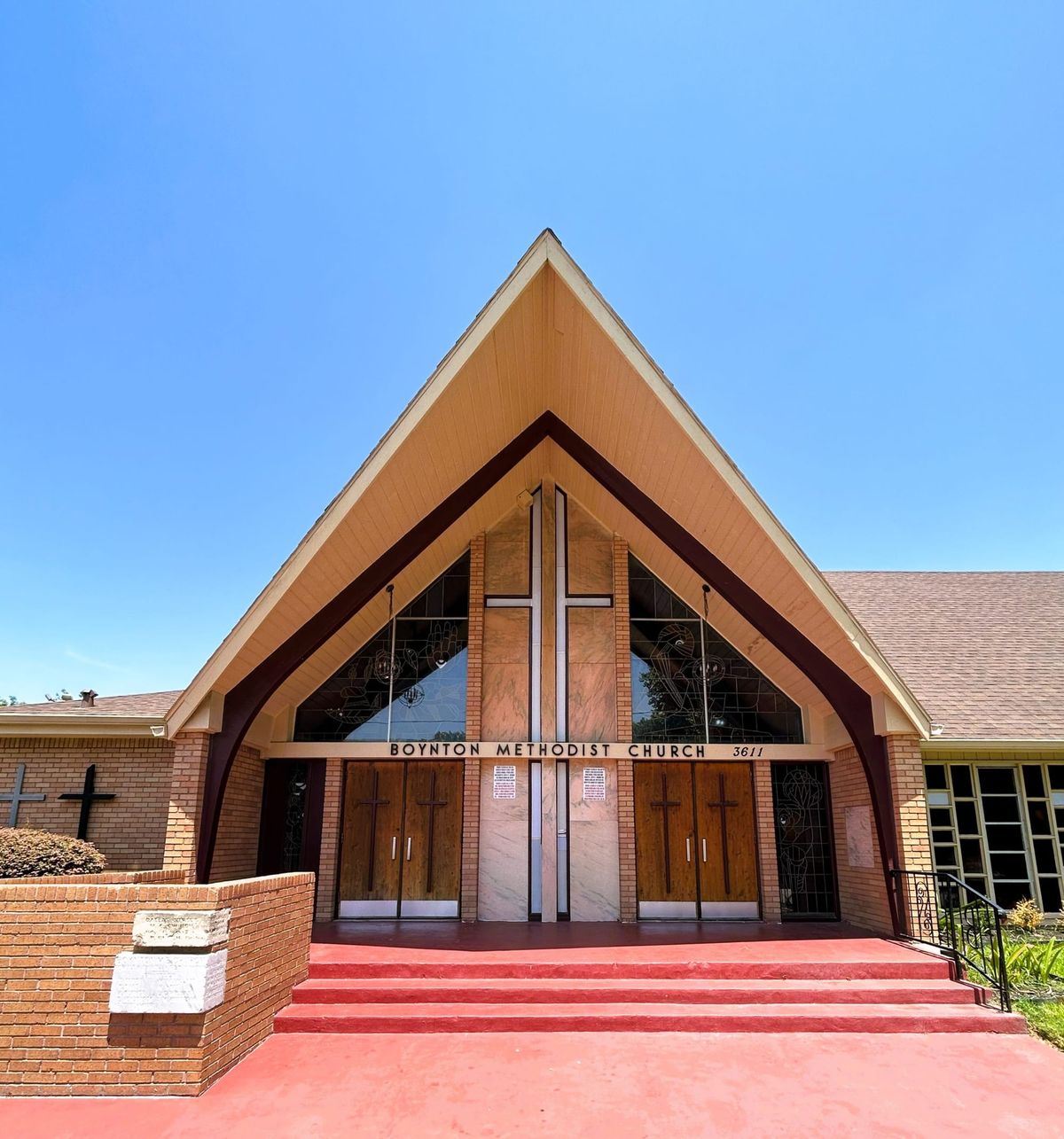
In 1957, when the pastor of Boynton Chapel Methodist Church was looking for a larger facility, the congregation of the church in Houston’s Third Ward settled on a young Black architect to design it.
John Saunders Chase, who would have turned 100 this year, was the first licensed Black architect in Texas and preached the gospel of modernism throughout a career full of firsts. Chase was influenced by modernists like Frank Lloyd Wright and acclaimed Black California architect Paul Revere Williams. However, Black churches of that era kept to neo-Gothic designs. Pitching modern design defined by its simplicity, straight lines, and geometric shapes could have been a waste of time. To the small congregation, it was a hit.
A year later, the resulting church was unlike any other building in the area. Visitors would drive by to check out the structure that — if not for the bell tower, stained glass, and sign above the entrance — could have very well been an office building.
Rev. Linda Davis, who has led the church for nearly nine years, said that’s still the case.
"We are a small congregation, but I tell people that we are very mighty as it relates to our historical significance. You see it in the work he's done here,” Davis said, referring to Chase. “A lot of people drive by just to see it.”
The church has long been a hub for activism. When an expansion was added in 1916, it contained the only swimming pool open to Black people in the city. Local heavyweights in the civil rights movement attended, including suffragist Christia Adair, Madgelean "Mama" Bush, a community leader who ran the Martin Luther King Jr. Center, and Dr. Forde B. McWilliams, one of the state's first Black veterinarians.
Despite the church’s long history, distinct design and community contributions, it didn’t have historic designations like other significant churches in the area.
“Many of the churches in the Third Ward already had their historical marker. I was like, ‘Why doesn't this church have its historical marker?’” Davis said.
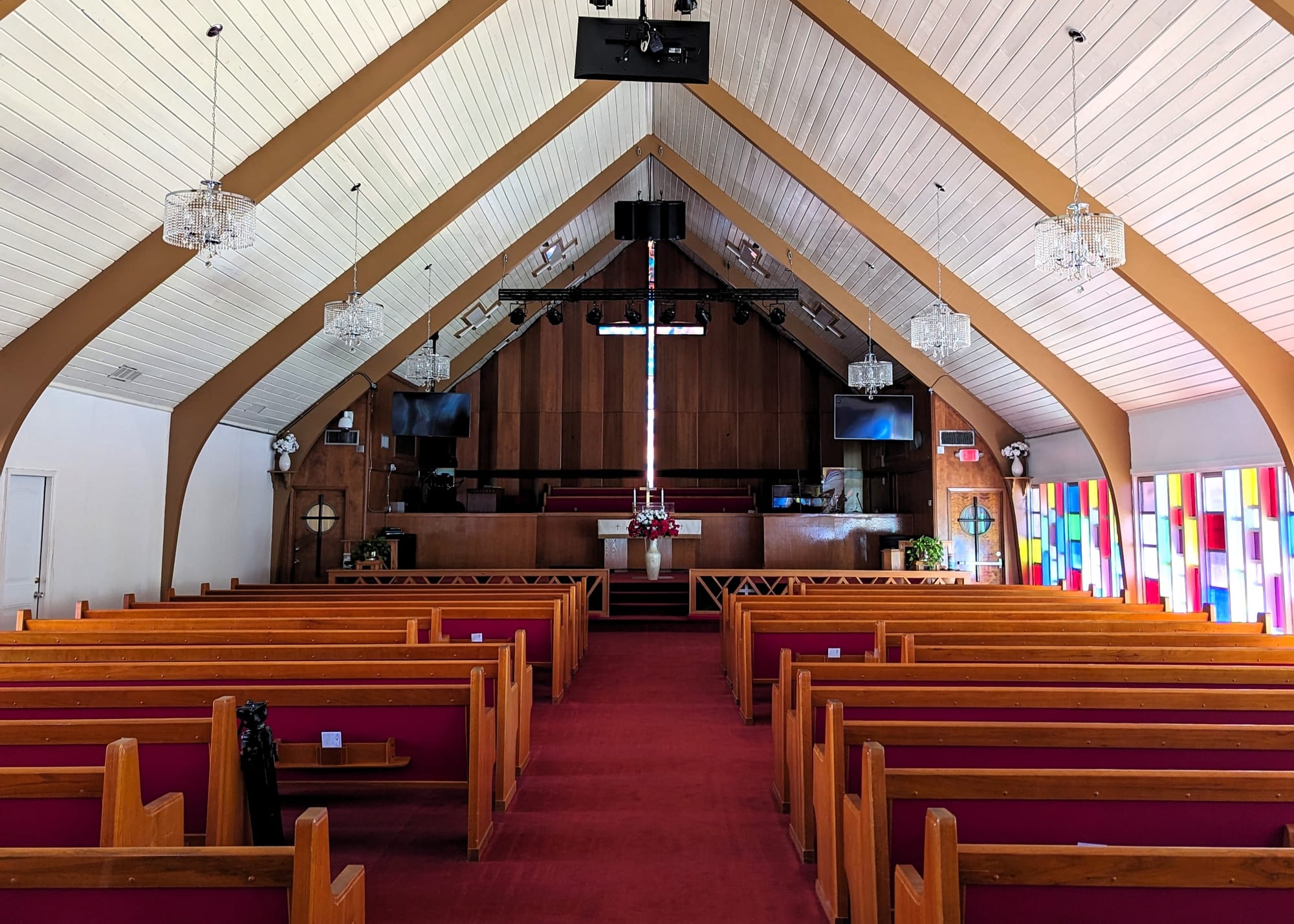
In 2021, with the help of Preservation Houston and former University of Houston student Walker Shores, Boynton Chapel became a Protected Landmark of the city of Houston. In 2023, it was designated as a Registered Texas Historic Landmark.
On Sunday, May 18, church leadership and the Harris County Historical Commission unveiled its Recorded Texas Historic Landmark Marker, permanently marking its significance to the state.
That opens it up for funds to preserve the building. In 2022, the church received a $180,000 matching grant from the National Fund for Sacred Spaces to replace the air conditioning system. In February, they received an unspecified amount of money from the African American Cultural Heritage Action Fund to restore the church’s windows and masonry.
The historic designation, particularly of a Black church in the Third Ward, was particularly significant in Houston, which is well-known for destroying its historic buildings.
But the building has stood, in part, as a testament to Chase’s work.
—
Thirty years before he would move to Houston, Chase was thinking about concrete.
Chase was born on Jan. 23, 1925, to John S. Chase, Sr. and Alice Viola Hall Chase in Annapolis, Maryland. The first structure he built was his grandmother Laura Hall’s concrete tombstone. He was in middle school.
“I was looking at the lasting qualities of the material and decided to use concrete,” he told Larry Crowe for the HistoryMakers Archive, a repository for oral histories with prominent Black Americans in 2004. Concrete would later dominate his work.
He wouldn’t learn the word “architect” until his junior year at Wiley H. Bates High School when James Marchand, who taught building trades, asked him about his goals.
“When he got to me, I said, ‘Mr. Marchand, I don't know what you call them but I want to be the person who is over all the construction, who determines what it looks like, the colors that are in it, how the rooms and spaces go,” he told Crowe.
“My boy, you wanna be an architect,” Marchand replied.
He enrolled at the Hampton Institute (now University) in Hampton, Virginia, a historically Black college where he earned an undergraduate degree in architectural engineering in 1948. (His studies were put on hold for two years when he was drafted by the Army during World War II.)
When offered placements, the first place he scratched off was Texas. He instead chose Philadelphia. But after a year, he didn’t think he could make his mark as a solo practitioner. (Example: The city’s first Black architect, Julian Francis Abele, graduated from the University of Pennsylvania in 1902, fifty years before Chase.)
“I always wanted to go into business for myself as an architect. I just didn't see Philly as the city that offered that kind of opportunity,” he said. He asked Hampton’s placement office if they had another place in the Deep South, “where they would want stuff they don’t have.”
When he moved to Austin in 1949, he worked at the Lott Lumber Company, the largest Black-owned lumber company in the state, while teaching at the Crescent Institute, a trade school for Black veterans. He learned to build houses, the company’s specialty. Then he realized something.
“I found out that, goodness, I don't know as much [about architecture] as I thought I knew. So, I said maybe I ought to go on and do some graduate work.”
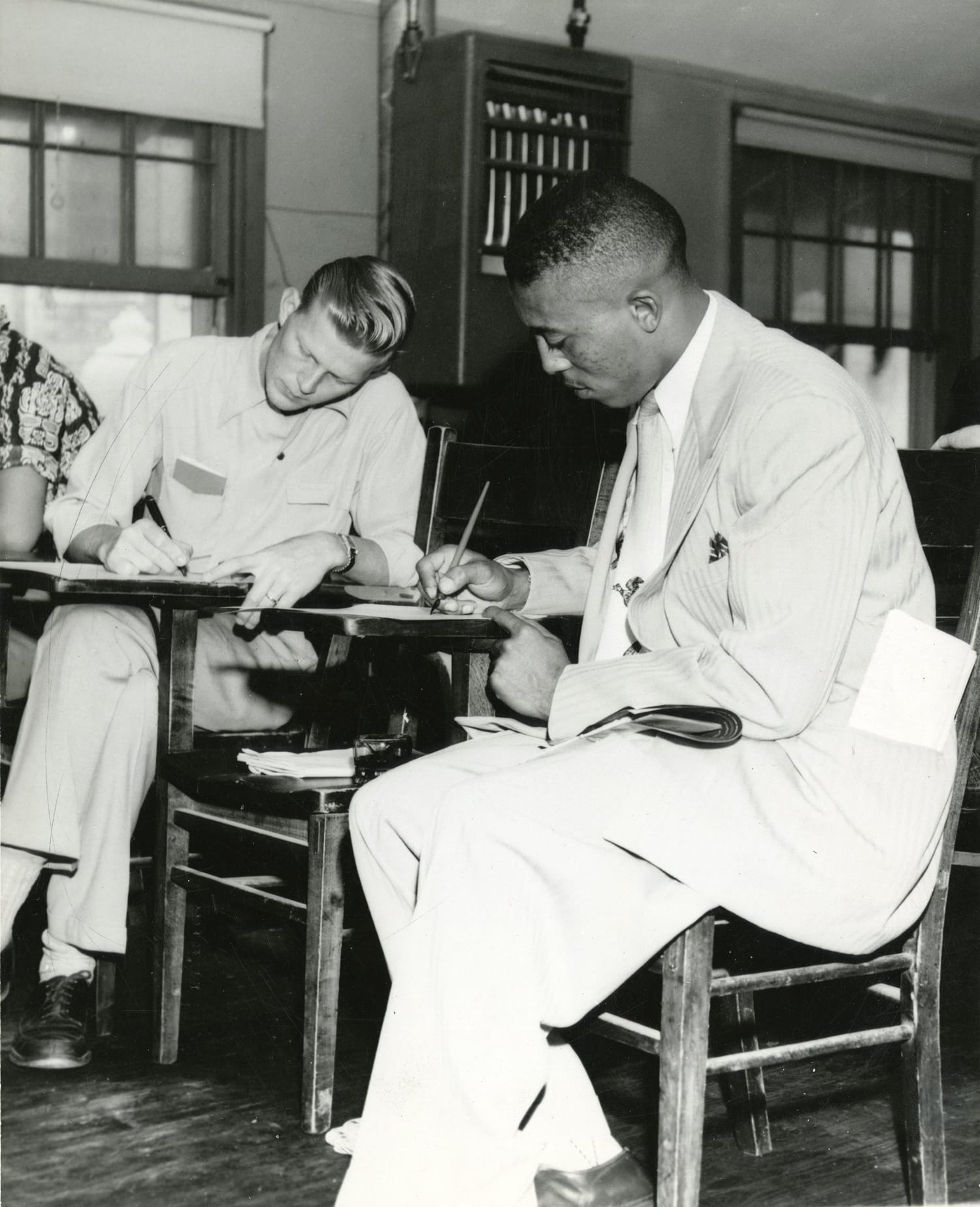
He applied to University of Texas, where the white dean Hugh McMath welcomed him but told him to wait. The Supreme Court’s decision in the Sweatt v. Painter case was pending. When the court ruled in favor of Heman Sweatt, who sued the University of Texas School of Law in 1946 for denying him admission to the law school based on his race, both were admitted, and Chase started that fall. The first day as a graduate, he was escorted by federal marshals.
“Let me tell you, you could pick the friends out right away, you could pick the foes out. Nobody had to tell you,” Chase recalled to Crowe.
He graduated in 1952, becoming the first Black graduate from the university’s School of Architecture. But he faced a barrier: he wasn’t licensed.
Even before graduating, he contributed to small projects in Austin, like the Crescent Institute, a vocational school for Black people where he also taught and the De Luxe Hotel, both in historically Black East Austin. But experience was not enough. He wanted to be a licensed architect, which required working for a firm before applying for licensure.
“He's doing all this work even before he's admitted to UT,” said Tara Dudley, an assistant professor of architecture at the University of Texas at Austin who is writing a biography on Chase. “He was really trying to find ways to ultimately pursue a career as a licensed professional architect at that time.”
Dudley also curated the recent exhibit in the architecture school’s Mebane Gallery, Celebrating 100 Years of John S. Chase, which closed in February. It coincided with the renaming of the university’s architecture and planning library in his name thanks to a $5 million gift from his son Tony and spouse, Dina Alsowayel, who previously donated $1 million to the school for a graduate fellowship, of which Dudley was a recipient and endowed professorship both bearing his name.
“Mr. Chase was very savvy about the way he approached his pursuit of an architectural career,” Dudley said, thinking about his career long before he enrolled at UT.
After graduating, he joined the architecture faculty of Texas Southern University, the historically Black university in Houston. For the next two years, he developed a portfolio by visiting churches with his wife, Drucie, and later sons, John and Anthony. And, improbably, selling congregants on modern architecture. “I think it's a matter of getting away from the ordinary and trying to hit a spark somewhere people would like and enjoy.” he said.
To Dudley, Chase wanted to make modernism accessible, and meet his clients where they were — and church was a major part of Houstonians’ lives.
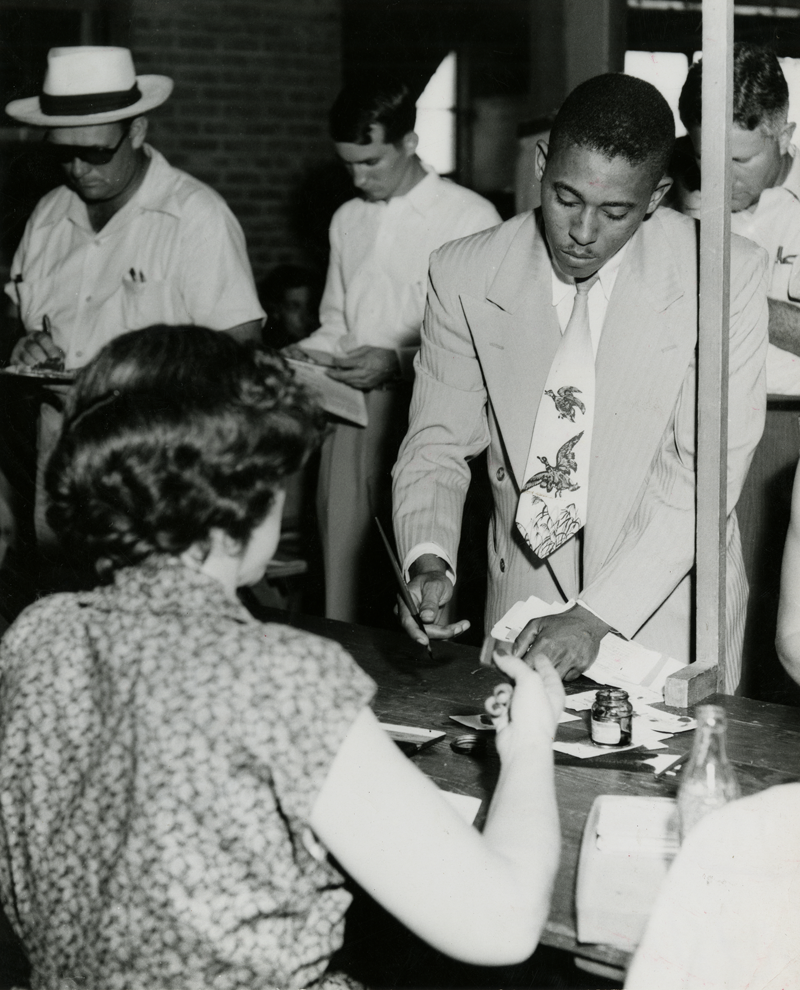
During those two years, between working at TSU, raising a family and hawking himself every weekend, he eventually developed a portfolio worthy, he thought, of petitioning before Texas Board of Architectural Examiners. The portfolio of early churches, medical offices and houses would serve in absence of the required work hours at a firm.
The board agreed. In 1954, after passing the required exams, he became the state’s first Black licensed architect.
Chase died in 2012 at the age of 87. By then, he was a well-known public figure. He was the first Black person admitted to the Texas Society of Architects, and a founding member of the National Organization of Minority Architects. He was the first Black man to serve on the United States Commission on Fine Arts after President Jimmy Carter appointed him in 1980. He was also the first Black president of the Texas Exes, the UT alumni association.
In an era of mass lick-and-stick subdivisions and shopping centers, non-native plants and little connection to the community, owners of Chase’s properties appreciate his distinct style, according to Dudley.
“Whether it's a residence, commercial or an institutional building in a suburban or an urban environment, Chase was really good at manipulating various elements where you can think about the landscape and the sighting,” she said.
During his lifetime, Chase built the Colored Teachers State Association of Texas headquarters (now the John S. and Drucie R. Chase Building owned by UT) and a number of contributions to TSU, like the acclaimed Martin Luther King, Jr. Humanities Center and Thurgood Marshall School of Law. He even got a commission to build the United States Embassy in Tunis, Tunisia, a $50 million project that ultimately was shelved.
But even the smallest of additions or parking garages utilized his preferred forms and materials like UT's San Antonio Garage.
“There is a reverence by the people who, once they realize Chase was the architect, appreciate the history and the significance,” Dudley said.
Just like the 1958 Boynton Chapel Methodist Church, where Davis, the pastor, is among the Chase devotees.
“If you see our building, it is just very phenomenal,” Rev. Linda Davis said. “It is such a beautiful edifice.”