Years Before the Stonewall Riots, Dallas’ Queer Community Had Its Own Movement

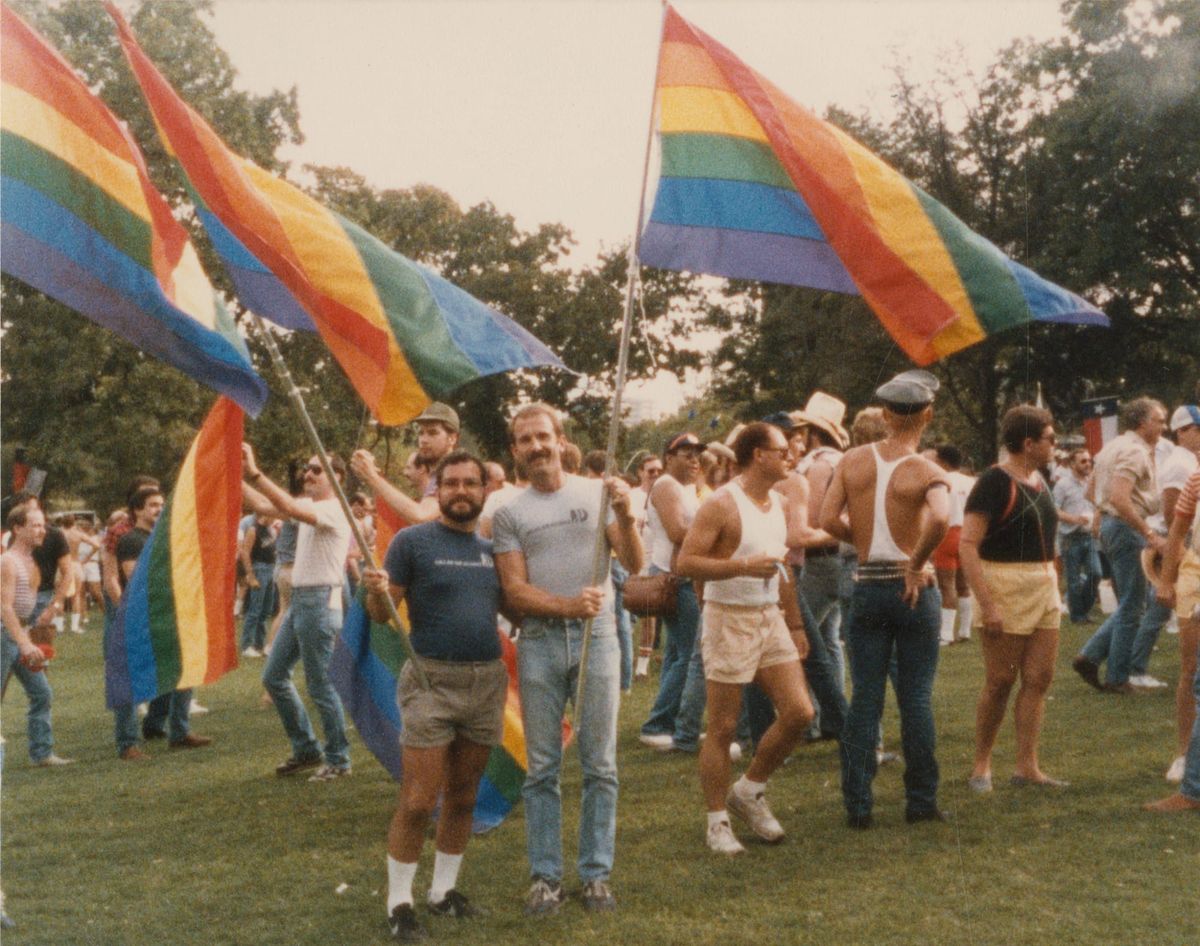
In 1988, the city of Dallas filled in a hole. City council spent half a million dollars to fix a dangerous gap left on a vacant lot by a construction company. Seemingly good news, right?
Well, to local LGBTQ+ activists, it was a sign of how little local politicians cared about them.
At the time, the AIDS pandemic was tearing through the local gay population. AIDS had killed more than 600 people in the city by the end of 1987, yet the city budget only allocated about $50,000 to fight the disease and support its victims.
That’s where GUTS, the Gay Urban Truth Squad, stepped in. They transformed that same vacant lot into a mock graveyard for the fallen and held a rally demanding that the city pay attention.
“The potter’s field demonstration applied significant pressure to the Dallas City Council,” historian M. Rhys Dotson wrote in his new book, “The Dallas Way,” which will be published on June 2 by New York University Press. “By the fall of 1988, city council members Lori Palmer and Craig Holcomb fought to significantly increase funding to the tune of $552,000 the following year.”
According to “The Dallas Way,” GUTS cofounder Bill Hunt was “frustrated by the lack of progress as ‘good little civic citizens,’ which led the group to “embrace civil disobedience” inspired by ACT-UP, the grassroots political activists group founded in March 1987 in New York City. Up until that point, many of the most active and successful activists in Dallas embraced what today might be called “respectability politics” in order to survive in one of the country’s most conservative cities.
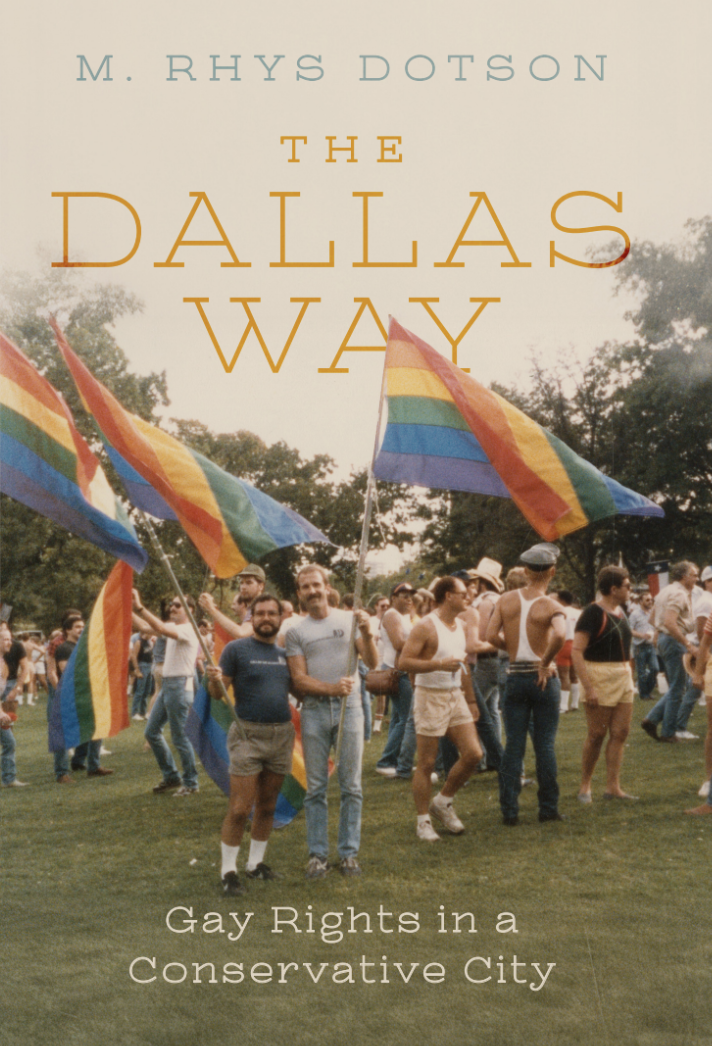
The titular “Dallas Way” is a term dating back to the 19th Century, when local bankers worked closely but quietly behind the scenes through networking and social engineering to achieve their aims. Dotson’s book explains how, in a similar fashion, the earliest groups of queer activists wrote polite letters to their enemies, carefully dressed in suits and ties when they met with politicians, and worked closely with churches to protect themselves from police raids.
“It's a different lived experience in Dallas, and because there's a different cultural experience in Dallas, I think that that also provides us with a different way of getting things done,” Dotson told The Barbed Wire. Speaking for those early activists, he said, “We're not radical people out here trying to upturn the entire system. We're just wanting to be treated as fair and equal citizens.”
Dotson studies the history of civil rights movements at the University of Texas at Tyler. In a phone interview, he said he was born in a rural town east of Dallas, which led to a lifelong fascination with the history of the area. One day, he was browsing the Portal to Texas History — an incredibly comprehensive online archive of historical documents created by the University of North Texas — and was shocked to discover a photo of a 1979 billboard in Dallas advertising a national gay and lesbian march on Washington that took place in October of that year. As outlined in Dotson’s book, this was one of the first campaigns of its kind to ever openly feature LGBTQ+ people on billboards.
“That kind of just led me down a rabbit hole to discover that there was an active gay community in Dallas before the ‘79 march that actually extended before the Stonewall riots or the Stonewall rebellion in 1969,” said Dotson, which is how American historians and global LGBTQ+ scholars mark the beginning of the queer civil rights movement in the United States.
“The Dallas Way” begins with the Circle of Friends, one of the earliest “homophile” groups to form in Texas, founded three years before Stonewall by Phil Johnson, a Dallas native who was searching for the same kind of gay camaraderie he’d discovered in the military during his service in World War II. Although he wanted to build gay community, he knew he wouldn’t find the kind he was seeking in the city’s gay bars. But not only was Johnson uncomfortable in the bar scene, he also knew LGBTQ+ people were unsafe there too, as bars were frequently raided by the police. In order to protect members' privacy and anonymity from police snooping, Johnson partnered with Doug McLean, a local Methodist minister, to create his circle.
“I think that that also speaks to the conservativism, and for lack of a better word, maybe the religiosity of the area, that police officers could not conceive that they would go in and raid a church, that was just a step too far for them in that era,” Dotson told me.
The lengths that these early Dallas activists had to go to protect themselves from police harassment and the very real possibility of life-ruining legal consequences is remarkable.
At an early public pride event in the city, the Dallas Gay Political Caucus, which later became the Dallas Gay Alliance, held a June 1976 rally to honor Stonewall at Exall Park. Not only was it opposite a popular gay bar, but just as importantly, the park was lacking in public restrooms, where activists feared the “Dallas Vice Squad might lure, trap, and apprehend unsuspecting young men.”
“The Dallas Way” not only paints a fascinating and engaging portrait of an understudied period in Texas history, it also highlights the vital importance of media that centers LGBTQ+ reporters and queer and trans voices.
With The Dallas Morning News opinion page often arguing in favor of the sodomy laws, which made queer life illegal, it fell on newsletters and independent publications by the queer community to document their lives and highlight their struggles. (Though most have disappeared, the Dallas Voice continues to publish online and in print.)
“I think that's a really great way for us as historians to get an almost both sides perspective,” Dotson said of the vital role LGBTQ+ reporting plays for historians like him.
“It really helps us build a richer narrative,” said Dotson. “If we did not have those publications … then we would not have the ability to tell the story and the agency of the gay community.”