5 Ways Texas Politicians Have Made It Harder for College Students to Vote

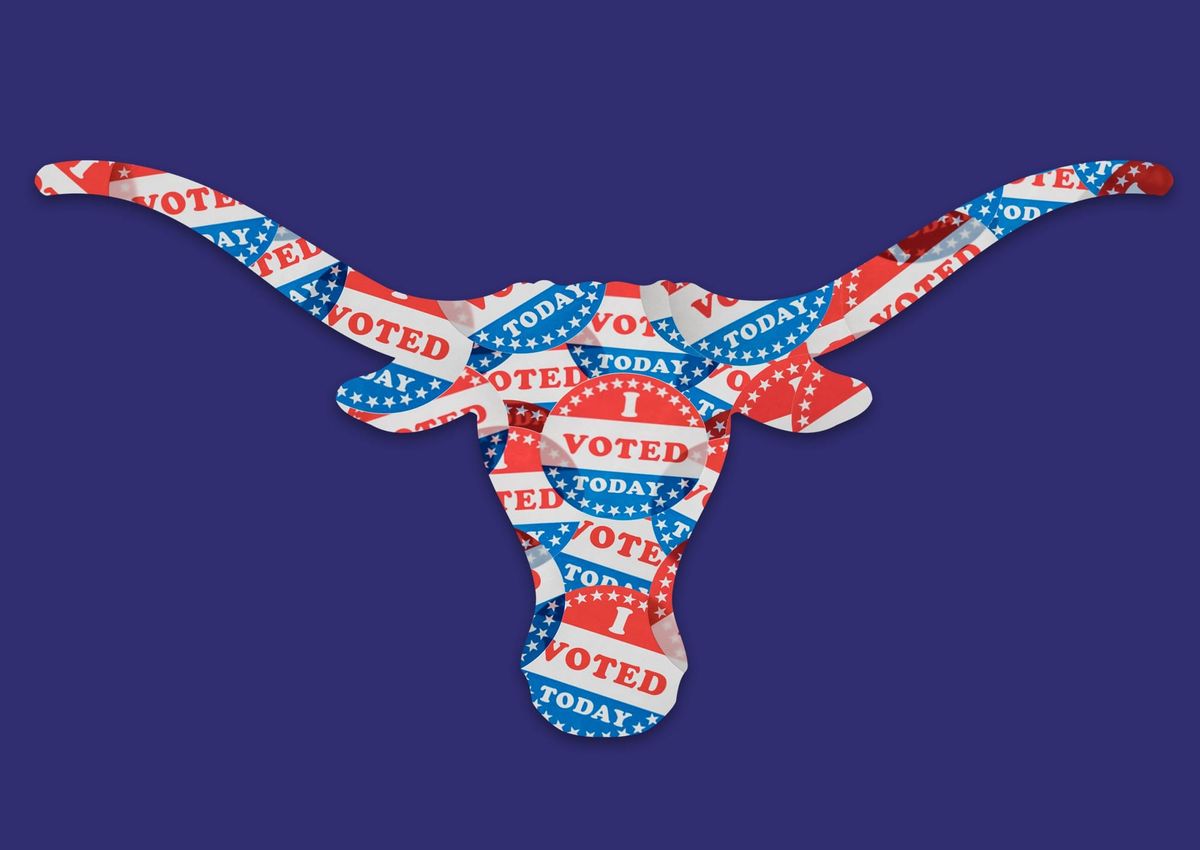
It’s no secret that certain Texas politicians are on a mission to make voting as hard as possible.
Gov. Greg Abbott was out in front of the pack back in 2013. Hours after the Supreme Court’s decision in Shelby County v. Holder gutted parts of the Civil Rights Act, Texas’s then-attorney general was ready to reinstate a restrictive voter ID law that had been blocked by the feds.
Without preclearance — the section of the Civil Rights Act that required states with a history of racial discrimination to preclear voting law changes — Texas has been on a roll of, well, limiting voter rolls.
In 2021, Texas lawmakers redrew the state’s congressional and legislative maps, drawing claims from civil rights groups that politicos had purposely and unfairly increased the reach of white voter’s voices while diluting votes from people of color (who, by the way, have been responsible for most population growth in the state). Legal challenges are ongoing.
A highly controversial law, Senate Bill 1, went into effect later that same year. The legislation banned drive-through voting, made it harder to vote by mail, limited early voting hours, and complicated the process of removing disruptive poll watchers. Stephanie Gómez, political director of Move Texas, says it’s “still kicking as law in Texas.”
“Legislation doesn't have to say, ‘We don't want young people to vote’, but what (lawmakers) can do is create policy that makes it much more difficult” for those votes to actually occur, Gómez says.
Now, Texas is considered one of the top five hardest states to cast a ballot in. And current state attorney general Ken Paxton is leading raids on the homes of prominent Latino leaders (including an 87-year-old grandmother) under what his office has called “undercover operations” for an “election integrity investigation” and what civil rights groups say amounts to voter suppression. Paxton has plenty of targets — he’s also suing Bexar County after commissioners voted to hire an outside company to help them register voters ahead of the November election.
There are several communities that are vulnerable to these kinds of suppression efforts — and college campuses are full of them.
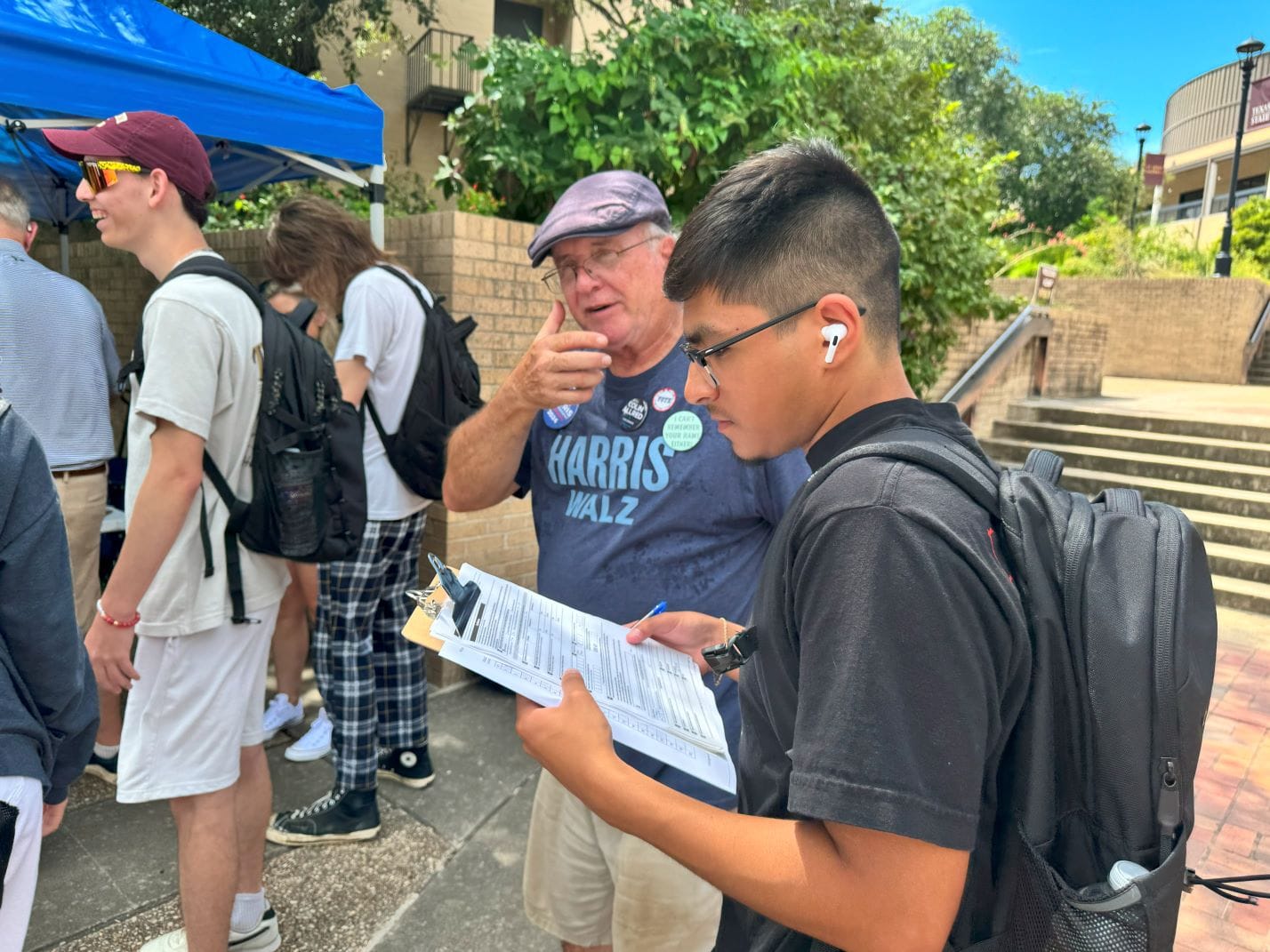
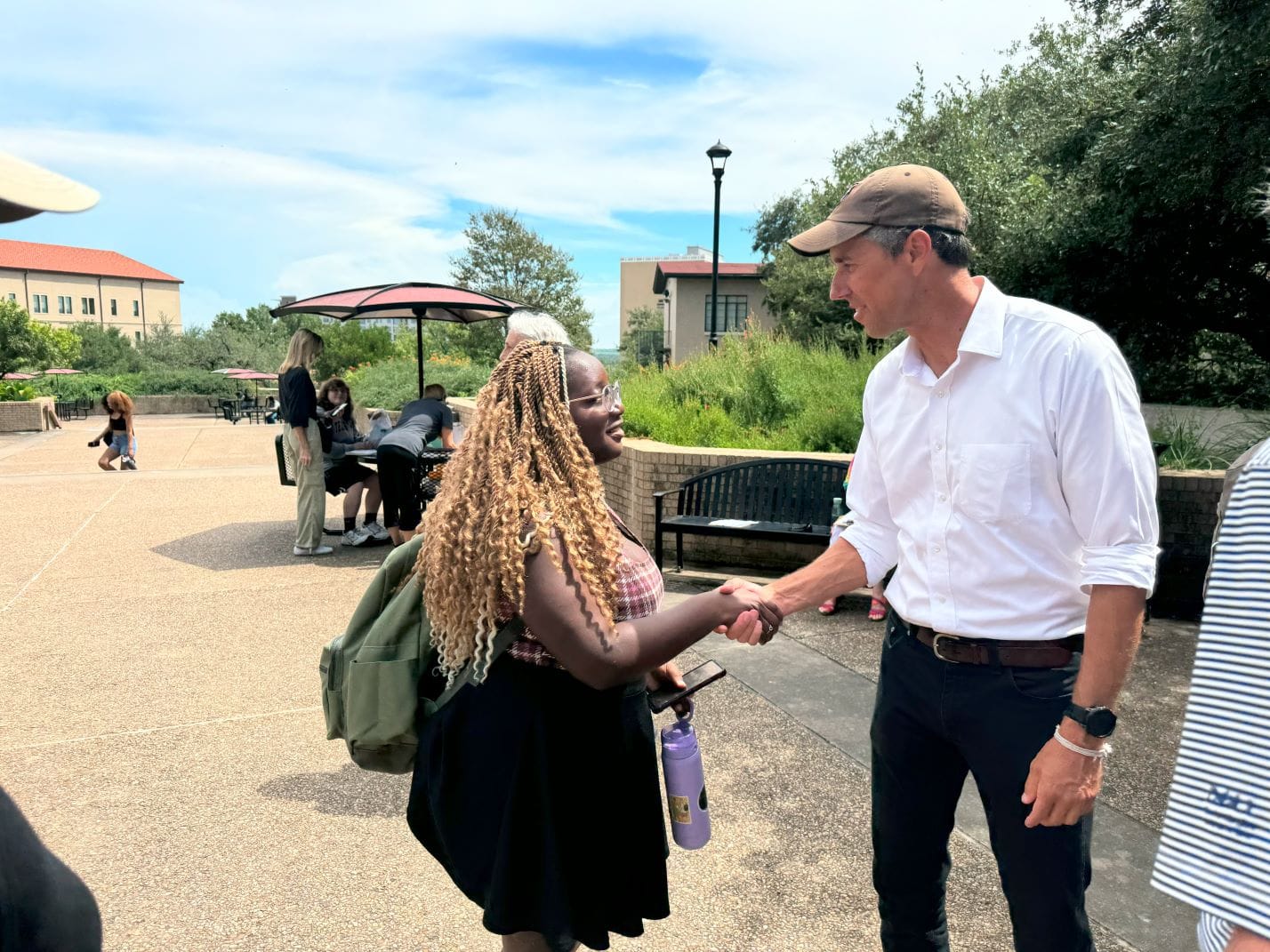
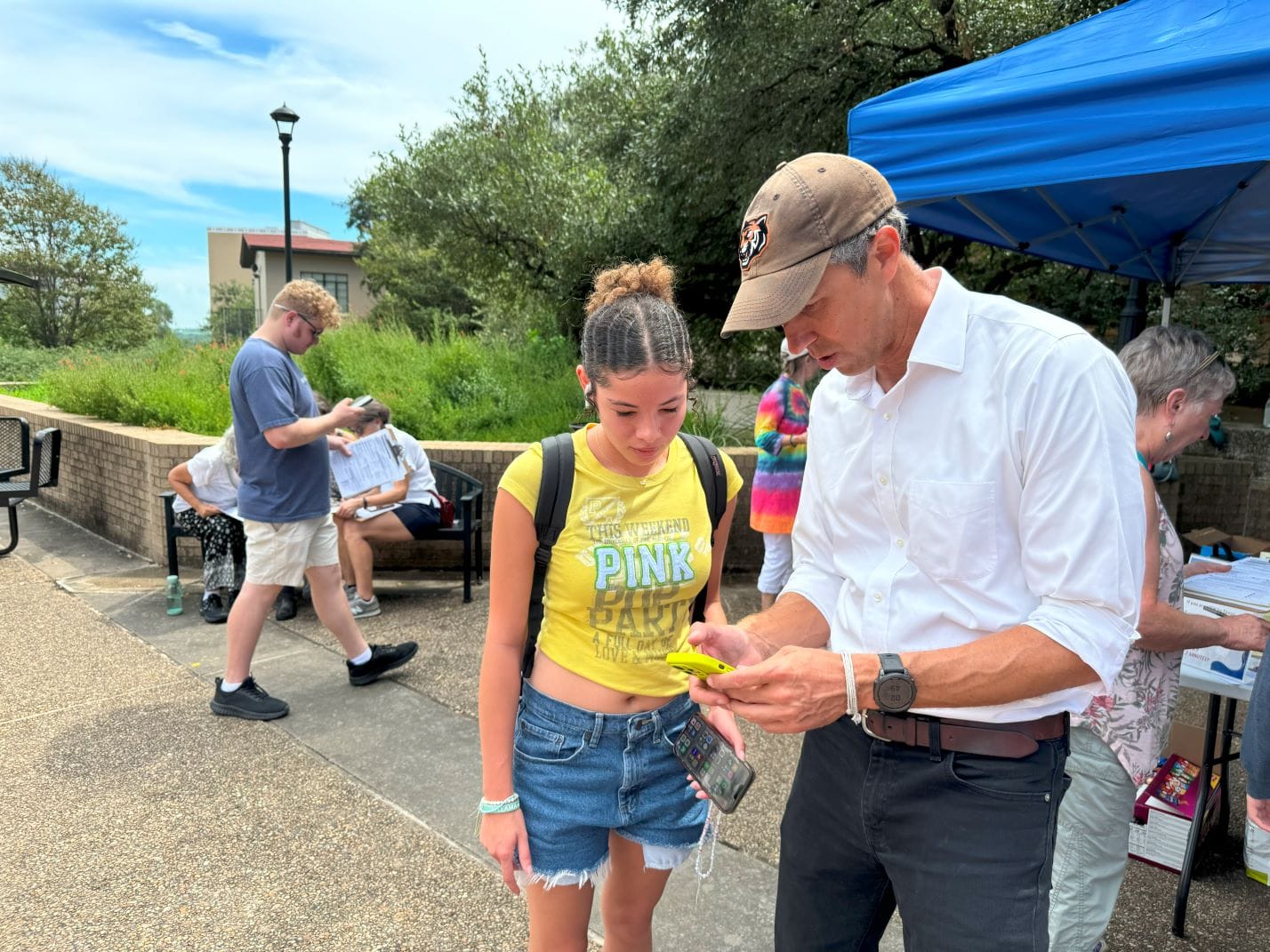
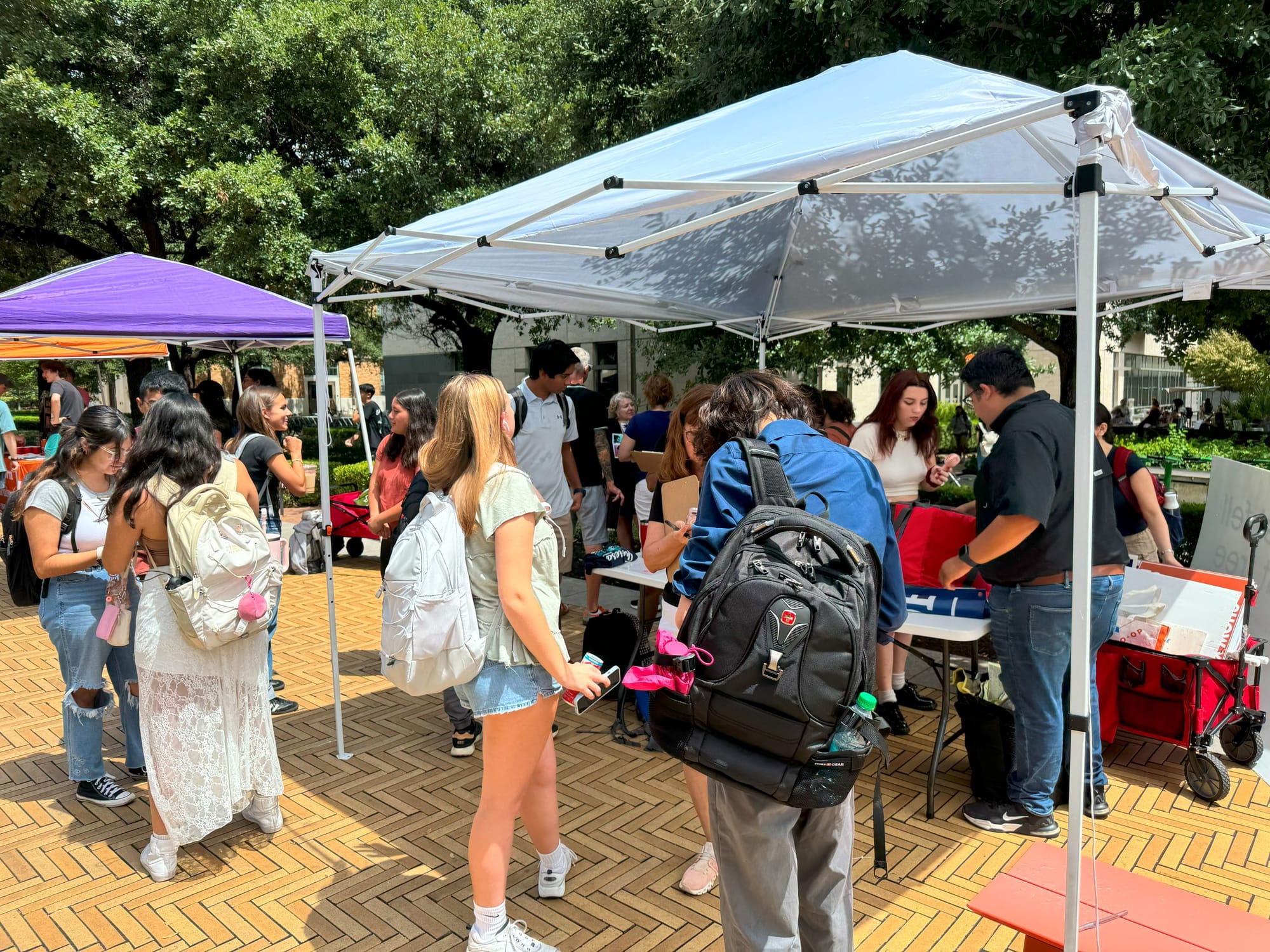
“It is way too hard for students to vote,” said Beto O’Rourke, the former U.S. representative and founder of Powered by People, which mobilizes progressive voters. During a phone interview with The Barbed Wire, O’Rourke said: "It is many, many more times harder for a student, and that is why you find us on these college campuses, not only registering people, getting in touch with them, and we tell them, ‘Look, we're going to be your voting sherpa.’”
It’s complicated to register to vote, and you can’t do it online.
Texas is one of only a few states that doesn’t offer online voter registration, which could simplify the process for many first-time and young voters.
Moving away to attend college can also make registration confusing. First-time voters must return a registration form to the election office for the county where they live. For example, if you’re from Dallas and move to Austin for college but want to register to vote in Dallas, you must find a volunteer deputy registrar from the county you want to register to vote in, or send a hard copy by mail.
“I think these young Texans effectively get written off or taken for granted,” O’Rourke told The Barbed Wire. He was driving to Texas Southern University in Houston to register young people to vote on a Central Texas tour that covered the University of Texas, Texas State University in San Marcos, and the University of Texas at San Antonio. In fact, O’Rourke spent most of his summer driving across Texas, visiting college campuses with the mission of getting young students registered to vote.
!function(){"use strict";window.addEventListener("message",(function(a){if(void 0!==a.data["datawrapper-height"]){var e=document.querySelectorAll("iframe");for(var t in a.data["datawrapper-height"])for(var r=0;r<e.length;r++)if(e[r].contentWindow===a.source){var i=a.data["datawrapper-height"][t]+"px";e[r].style.height=i}}}))}();
Logistical challenges are common on voting day.
Thanks to laws like SB1, conveniences like drive-through voting are now illegal. Curbside voting is still available to people with disabilities. However, early voting hours have been limited, so polling locations can no longer open before 6 a.m., (9 a.m. on Sundays) and they must close by 10 p.m. Students are also banned from using their student ID to vote, even if it's issued by a state school. (But you can use your handgun license.)
Polling locations change all the time.
Since the Shelby vs. Holder decision, Texas no longer has to seek pre-approval from federal officials — who had previously monitored the state to prevent discrimination against communities of color — before switching things up on constituents. Without that oversight, more than 700 polling locations have closed in Texas since 2013 — more than any other state .
On many college campuses, voting sites have also changed locations from years past (like at the University of Texas at Austin). They may have election day voting but not early voting (like at Baylor University and St. Edwards University), or vice versa — offer early voting but not election day voting. Or their voting site may change on election day from the site that had early voting to a whole new site (like at Texas Tech University). In 2020, people voting at Texas Southern University, a historically Black college, were left to wait in line for seven hours after polling locations closed. According to the Texas Tribune, the last votes at Texas Southern came well past 1 a.m.
“Those are all things that make it harder for a young person to vote, especially for a first-time voter,” Gómez told The Barbed Wire. “They get (to the voting location) and they realize that that polling location that they've been hearing about for two weeks that was open during the early vote period is not open on election day and then it's like a scramble to get that person to cast that ballot.”
There’s a ton of mis- and disinformation.
Organizations like Move Texas say they often hear of college students who don’t understand the process of voting and often think they can do things online. This college-aged group, Gen Z, are considered digital natives, meaning the internet has always been a part of their lives (anyone who is 18 this year and is eligible to vote was born in 2006). But that hasn’t helped in a state with notoriously poor civic education.
“It's just a general lack of understanding, awareness of what's going on, and, a lot of times, if we're just kind of sitting at the surface of all of this, it's really confusing,” said Sherri Scott, a Hays County Volunteer Deputy Registrar.
Scott is also a volunteer with O’Rourke’s organization. She said when her son went to college, he didn’t understand voting or how to register so she does what she can to help others like him. “(Texans) don't have the best educational programs for civics; it's something we need to improve so that everybody understands,” she told The Barbed Wire. “Most people don't start voting until they're in their 30s. We can't do that anymore. We don't have time.”
Increased polarization and partisanship isn’t helping.
When did voting become so polarized? It’s unclear, but maybe around the same time Texas’ leaders began ramping up efforts to incite fear and confusion around voting integrity. Anthony Gutierrez, the executive director of Common Cause Texas, says his organization has heard from a lot of educators who are fearful of political threats. (Common Cause is a nonprofit organization whose mission, according to its website, is “defending the right to vote, limiting big money’s influence on our elections, holding public officials accountable,and more.”)
“You see local election administrators facing hostility and that sometimes extends to the workers at the actual poll sites as well,” Gutierrez told The Barbed Wire. “A lot of campuses, both higher education and elementary schools and high schools, are more leaning towards the attitude of, ‘Do I really want to invite that onto my campus and have all this sort of potential for hostility and incidents to break out?’ I mean, it's really a sad state of affairs, that voting, the thing that most characterizes us as a democracy, has become something that some schools feel like they need to just avoid (to prevent) having incidents on their campus.”
Recently, the University of North Texas banned all voter registration organizations from classrooms, which professors told the student-run North Texas Daily has never happened before.
“The university is committed to following legal guidelines, which prohibit the use of state resources and programs for political purposes,” Director of UNT Media Relations Devynn Case said in an email to the Daily.
That’s left nonprofit organizations like Move Texas confused because, by law, they must be a non-partisan organization. Even still, Move Texas says their work won’t stop. And they aren’t alone.
Powered by People has a similar mission. Once they help students register, those students are given the option to join a text list, which notifies them of crucial dates — like when early voting starts, where their nearest voting site is, and when election day happens.
“Nothing makes me happier than seeing this long line of students who all want to make sure that they have a voice and a vote in this next election,” O’Rourke told The Barbed Wire during a voter registration event at Texas State.
He was joined by that exact thing — a long line of students.Karen Padron, a sophomore at Texas State who’s excited to vote in her first presidential election, said: “I feel like I have a voice. I feel like I have an opportunity to be somebody. I feel like I'm important.”
According to data from Alliance for Youth Action, youth voter turnout — ages 18-29 — has increased from 28% in 2016 to 41% in 2020. Has an increase in polarization woken up some students to the importance of voting? That’s the case for another student The Barbed Wire spoke with during O’Rourke’s Texas State voter registration.
“Our rights are basically kind of up for grabs. They should not be cherry-picked and able to be taken away like that,” said Avery Ann Guggenheim, president of College Democrats at Texas State. “It's very important for me to stand up for my communities, like the LGBTQ community, the Arab community, (and) women in general. We've lost so many of our rights, and I fucking hate it. I don't want to have to foresee my children having to live through that, too.”
“So it’s my job to fix it. Well, again.”