Texas’ Grid Operator Promises State Can Handle Winter Cold. No Really This Time.

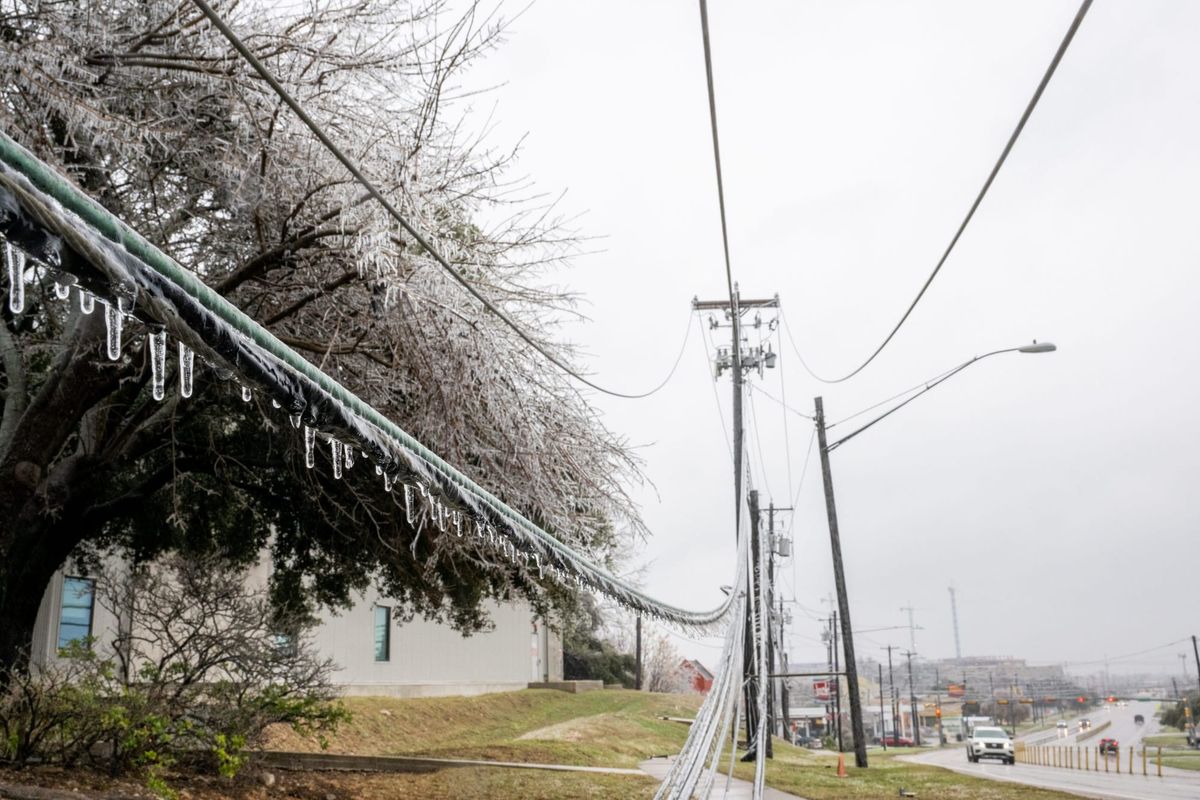
Texas’ grid operator swears — for realsies — that they’re ready for the winter.
“We are constantly preparing for all types of weather in Texas and the best way to manage the grid reliably with each season,” an Electric Reliability Council of Texas (ERCOT) representative told the Midland Reporter-Telegram. “We are ready, whether we see a mild or extreme winter, to keep the lights on for Texans.”
The representative highlighted that, as of October, ERCOT had completed 2,892 inspections of generation and transmission facilities.
Meanwhile, the Railroad Commission of Texas has been assigned the responsibility of inspecting production facilities. A spokesperson for the commission told the Reporter-Telegram that the agency is actively preparing for extreme weather conditions this winter.
“Starting in early December, inspectors spread across the state to ensure natural gas facilities on the state’s electricity supply chain map are weatherized and in compliance with the RRC’s weatherization rules,” the spokesperson said.
These assurances come despite ERCOT recently warning of a “greater-than-average” potential for extreme cold this winter.
During an ERCOT board meeting earlier this month, the agency’s chief meteorologist, Chris Coleman, highlighted the growing frequency of cold extremes, emphasizing that patterns this year mirror those of 2021, when a winter storm unofficially named Uri devastated the state, claimed nearly 250 lives, and left millions without power.
“The more I look at this winter, the more cold potential I see,” Coleman told Reuters. “We’re in a pattern that supports something like a Uri this winter.”
Ice storms, cold snaps, hail, and winter storms are all expected to cause over $754 million in annual losses across Texas annually, The Dallas Morning News reported. As for Austin, which was hard-hit by Uri, FEMA's National Risk Index indicates that Travis County faces a “relatively high” risk of winter weather-related losses.
Over the past eight Texas winters, five have been marked by severe cold spells, which stands in sharp contrast to just three such events in the previous 25 years. Scientists link this rise in extreme weather to the effects of climate change.
Despite this, ERCOT officials keep telling us the grid is reliable enough to handle it. More than 10,000 megawatts of new power generation — including solar, wind, natural gas, and electricity storage — have been added since November.