Texas’ Most Notorious Killer, John Wesley Hardin, Is Buried in El Paso

Ask Patricia Kiddney her take on Bob Dylan’s 1967 album, “John Wesley Harding,” and the president of El Paso’s Concordia Heritage Association will say she instead prefers the Man in Black’s ode to the infamous outlaw.
“The lyrics that I like the best are the ones Johnny Cash does about how Hardin ‘wouldn’t run,’” she said. “When I am doing my Hardin programs, I start off setting it up and (tell) everybody to listen very quietly. ‘This is going to set up the man that you’re going to learn about.’”
Hardin (Dylan misspelled the name on the album) was buried in El Paso’s Concordia Cemetery in 1895 shortly after being shot in the back of the head at El Paso’s Acme Saloon by John Selman, a deputy constable and an outlaw himself, according to various accounts.
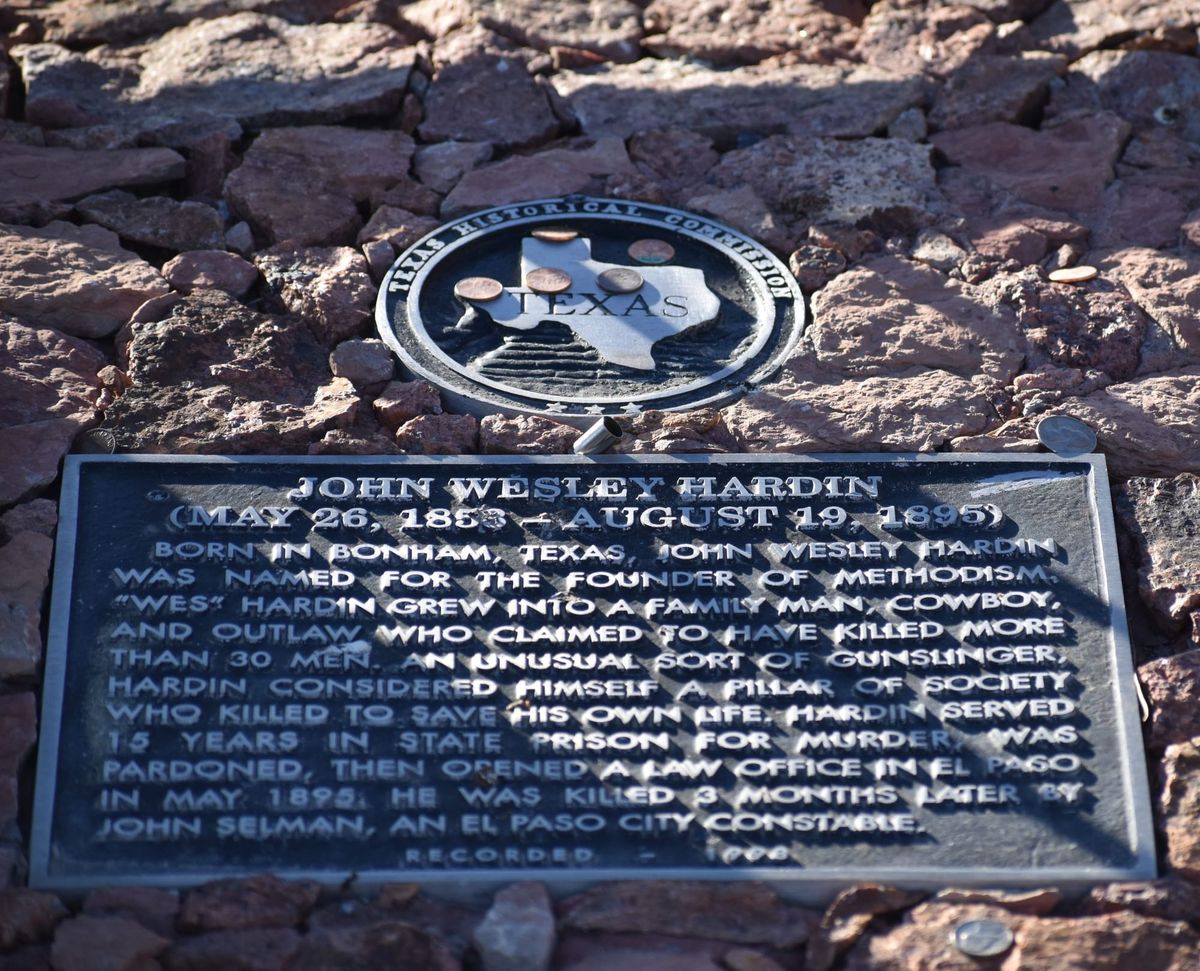
Hardin’s grave is encased in an enclosure of stone and wrought iron to protect it from the bleary-eyed history buffs and vandals who for years left bullet casings, shattered whiskey bottles, or shot glasses atop Hardin’s grave. The first Texas historical marker at the site was also stripped of most of its lettering, Kiddney said, and had to be replaced.
“Those are expensive,” she said.
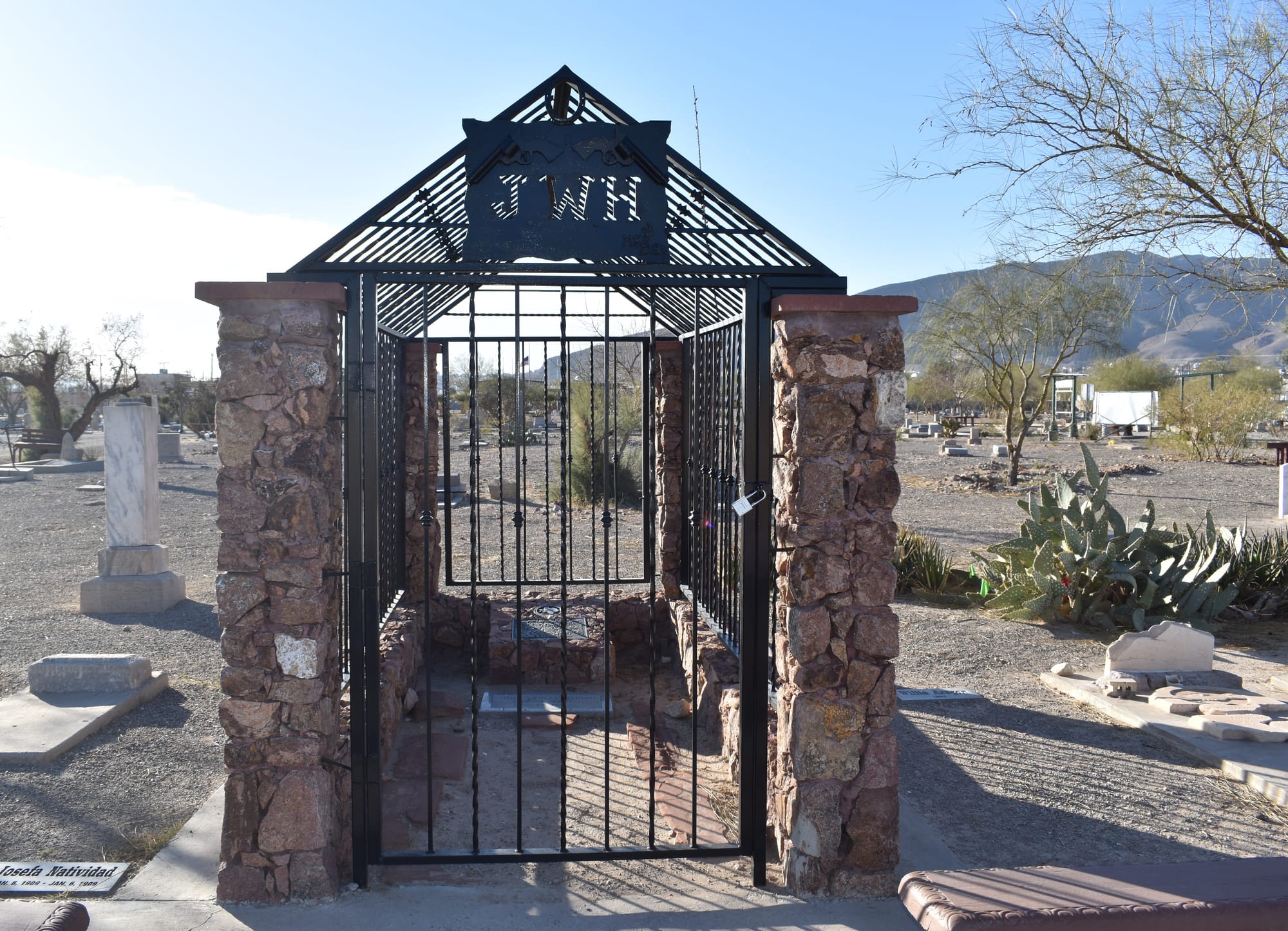
The cemetery could serve as a backdrop in any modern Western: The 52-acre spread is loosely segregated by faith — and even ethnicity. Some areas are overgrown with crabgrass and weeds, and several of its 60,000 graves hold the remains of unknown bodies that date back to before the reconstruction era. It’s nestled in Central El Paso in a neighborhood that’s a microcosm of the southwest border: a blue-collar barrio just a few miles north of Mexico. A major U.S. Army base — Fort Bliss, Texas — sits nearby to the north. And the badlands of the dusty New Mexico desert are about a dozen miles west.
Hardin’s legacy is likewise storied — and complicated. He’s been depicted as one of the most notorious outlaws of yesteryear with his kill count ranging from “at least 21” to more than 40. A native of Bonham, Texas, Hardin spent several years evading law enforcement in Kansas, Florida, and Alabama.
Hardin’s final resting place has also been caught in a crossfire. In 1995, Hardin’s family tried to “steal his grave,” Kiddney said. While the accusation invokes images of pre-dawn thievery, the dispute between Hardin’s ancestors and the cemetery was hashed out in court. (A case summary of the dispute actually quotes one of the most iconic lyrics written about Western gunslingers: “Out in the West Texas town of El Paso,” taken from Marty Robbins’ classic El Paso.)
The family’s efforts were eventually shot down.
“In the early morning hours of Sunday, August 27, 1995 … various individuals later named as defendants below, traveled to El Paso for the purpose of disinterring the remains of John Wesley Hardin. Upon arrival at Concordia Cemetery, they were served with a handwritten ‘court order’ prohibiting them from removing the body of Hardin. The descendants ceased their activities and returned home,” the case summary reads.
Hero or villain?
In his autobiography, he boasts he didn’t shoot those who “didn’t need killing,” a claim historian Kristina Downs, the executive director of the Texas Folklore Society, said is dubious.
“The romanticized version is very different from reality,” she said. “He doesn’t sound like a nice guy.”
One of Hardin’s most famous exploits was killing a man who was snoring too loudly, which disturbed the outlaw’s peaceful slumber.
A lot of what is written about Hardin, Downs added, comes from his own autobiography, which was written with a certain élan capable of embellishment and skirting the truth.
But she acknowledged the nostalgia tied to famous outlaws, especially from Texas.
“If you talk to a lot of families that have deep roots in Texas, a lot of them have these kinds of stories,” she said. “And (the outlaws) were usually in trouble unjustly.”
But Kiddney eschews any thought of Hardin being an indiscriminate killer. He was a product of the post-Civil War era where southerners were mistreated and did what they needed to survive.
“He (was) rehabilitated. Prison did what it was supposed to do for him,” she said. “And he didn’t shoot anybody after he got out of prison. And honestly, he didn’t kill anybody that ‘didn’t need killing.’”