After 15 Years and a Criminal Charge, Erykah Badu’s ‘Window Seat’ Is Still Texas’ Best Music Video

Texas hasn’t gotten its due as a major piece in the complex puzzle of American art. We’re here to rectify that. Every three weeks, H. Drew Blackburn will conduct a thoroughly scientific analysis of the 254 integral (one for every county) books, movies, tv shows, albums, podcasts, songs, and magazine articles — you name it — that best exemplify the Texas spirit. These texts, products of immense talent, dig into the marrow of our being. When it’s all said and done and we’ve built The Texas Voyager collection, we’ll (figuratively) head to the Johnson Space Center in Houston and shoot it beyond the atmosphere, into the cosmos. A wise person once posed the question: “What if the aliens are hot?” Hold onto that hope — this is our chance to impress ‘em.
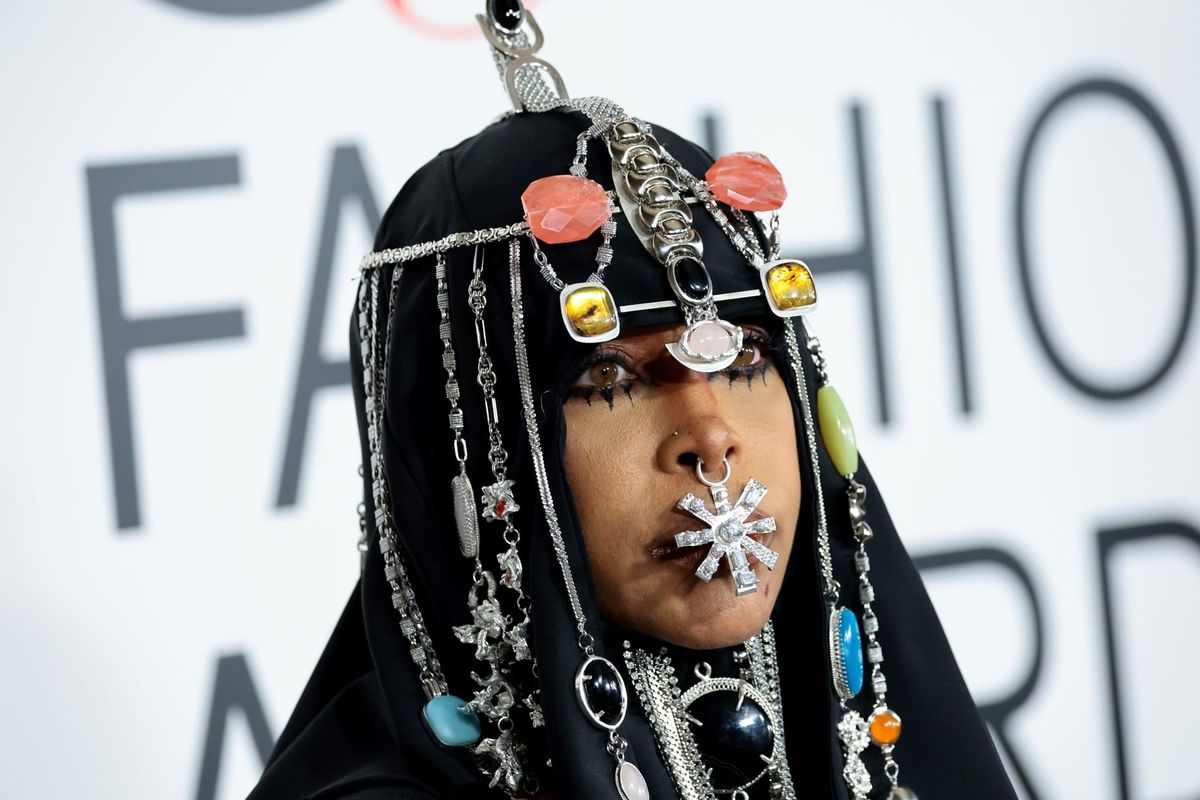
Erykah Badu carries herself like a presence felt beyond doors — a myth and a legend. In the ‘90s, she helped invent an entire genre of music, earning her title of the Queen of Neo-Soul. She’s a country-fried Afrofuturist, a doula who has helped deliver more than 50 children, and a fashion icon. Badu was the recipient of the CFDA’s 2024 Fashion Icon award and recently turned heads at Billboard’s Women in Music event wearing a campy body suit that’s an ode to full-figured women.
It’s a bit ironic that Badu’s most iconic moment of all, we see her with no make-up, wearing an unassuming peacoat and sweats, to wearing nothing at all, lying on the pavement with the word “groupthink” leaking out of her skull.
In 2010, Badu released “Window Seat,” the lead single for her fifth studio album, “New Amerykah Part Two (Return of the Ankh)” — her most recent full-length release (though there are plans for a long-anticipated follow-up soon). Fifteen years later, the song and its unforgettable video still resonate as a masterclass in artistic rebellion. “Window Seat” and the controversy surrounding it are seared in our memories, which it’s why it’s the first music video we’re adding to the Texas Voyager collection.
When it came time to shoot the visuals for the song, the label, Universal Motown, wanted something typical — to hire a marquee music video director and spend a bunch of money on the production, which Badu would eventually have to pay back, plus interest. “That’s how the labels work. They’re banks,” Paul Levatino, the former general manager at Badu World, a company that handles the artist’s day-to-day operations (essentially Badu’s right hand), and assistant director for the “Window Seat” music video, told The Barbed Wire.
The label’s original idea to get Badu on an airplane looking out of the window was a bit boring. “Just very on the nose kind of shit and that's not who Erykah is,” Levatino said.
Badu began researching videos, seeking out artists like Radiohead and Bjork for inspiration, and stumbled upon “Lessons Learned” by Matt and Kim, which sees the electronic duo stripping off their clothes in Times Square until they’re naked. Badu reached out to the musicians to get the OK to lift their premise for a Dallas-based rendition.
Badu enlisted Coodie & Chike, who’d directed “Jeen-Yuhs: A Kanye Trilogy.” During a brainstorming session on where to shoot, Dealey Plaza, the site of John F. Kennedy’s assassination, came up. At first, the team thought the location might be too sacred and Badu bristled at this idea, a sign of good instincts.
You would think that the place where a sitting president of the United States got shot in the head would be some sort of hallowed ground, but it’s not. Every day, tourists visit the grassy knoll and the literal “X” that marks the spot on Elm Street. There have been warring factions trying to make a buck off the tragedy. At one point, a city bus tour with Dallas’ slogan, “Big things happen here,” ambled about town with JFK’s face plastered on its side, a silver handle protruding out of his forehead. Dallas may have at one point had shame associated with the macabre incident, but now, there’s an odd sense of pride, which is much deserved of a send-up.
The idea for Badu to shed her clothing until fully nude while walking through Dealey Plaza and staging a metaphorical assassination in broad daylight was a lot more provocative than anything the label had envisioned.
That’s exactly why it worked. And why it sparked controversy.
On the day of the shoot, Badu and company arrived at Dealey Plaza with no permit and shot the video in one take, guerrilla style. “I was prepared to get arrested, honestly,” Levatino said. “(Badu) didn't feel like it was going to hurt anybody. And for me, I guess I would be willing to do that for somebody if I truly believe in their art, so I was willing to take that risk. I had done that many times on the road with her, where we had done stuff that was scary or whatever, but I did it because I truly believed in her art and her message, and I wanted her to be able to get it out there.”
There was no noise or outrage in the immediate aftermath of filming; that came when “Window Seat” was released online. Badu was cited for disorderly conduct, given six months probation and a $500 fine (much less than a permit would have been, by the way). Of course, Badu being naked in public was always going to stir outrage — but the art was meant to provoke thought, and it did.
“Window Seat” is the most significant music video any Texan has ever made because it’s a
bold expression of artistic freedom and an indictment of how people are punished for individuality. Nudity in public is indecent, but with the absence of any sexual energy or activity, I’m struggling to find a compelling reason why. To boot, some people’s naked bodies, namely Black women’s, are inherently seen as more sexual and titillating because of the prevalence of misogynoir. Now, this music video is weird because Erykah Badu is certainly a weird person, but it’s undoubtedly high-performance art.
“She’s not afraid to say (or do) some pretty over-the-top things to get people thinking,” Levatino said.
And that’s precisely why she’s an icon. A real rebel, with a cause.