Don’t Forget That Juneteenth Is Black Texas History

I can still remember Sister Loria McQueen, a tall tawny-complexioned woman who I thought was the embodiment of elegance as a child. She wore eggshell blue tailored suits and elaborate hats on Sundays in our apostolic church in my hometown of Sherman.
At some point in the 1980s, when I was around 8 or 9 years old, she began gathering the children in our all-Black neighborhood for after-school activities at the community center. The classes she taught served as a quasi-finishing school, covering everything from Black history to decorum and etiquette.
That summer, I sat looking out the window daydreaming, only partially listening to Sister McQueen when suddenly something caught my hungry ears. I sat up in my chair a little straighter. My mind began savoring a word I had heard before but never truly understood. Sister McQueen laid the foundation for a commemoration day I would go on to study as a scholar — Juneteenth.
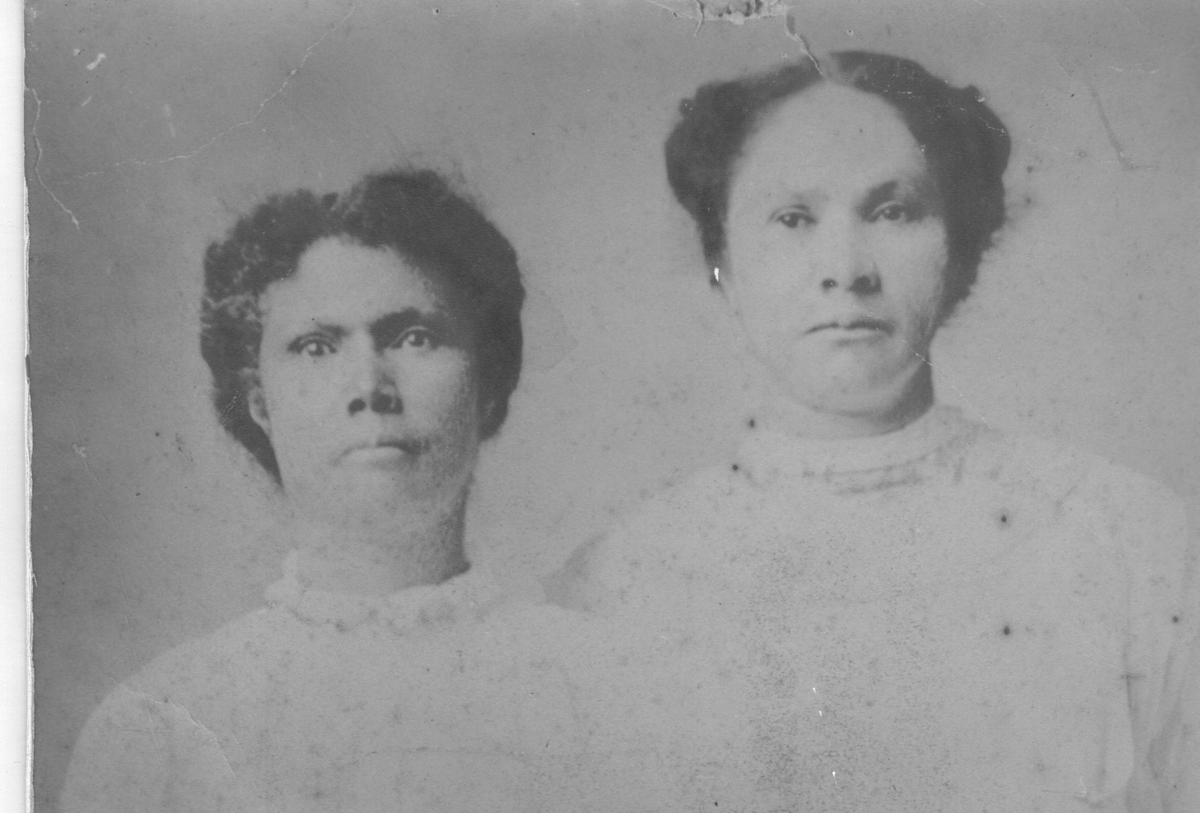
Sister McQueen described the holiday loosely as Emancipation Day for Black people from Texas. For me, a multigenerational Texan, her lesson also embedded in me a deeper appreciation for my maternal ancestors (the Mitchells, Loveladys, Hicks and Wilsons) who despite hardships, persevered and chose to embody hope and raise their families in a state that often did not love them.
Each summer that passed layered new memories onto the June day: pageants, barbecues at East Street Park, crowded car rides to Lake Texoma where we’d unfold plastic gingham tablecloths anchored with spicy hot links, barbecued ribs, fried chicken, catfish, and my grandmother’s teacakes. Those were the Juneteenth food staples I grew up with while classics like The Gap Band or Zapp and Roger, an old-school funk band, blared from my next door neighbors’ cars. And although back then I loathed memorizing speeches about freedom to recite to crowds gathered for the same purpose, today I crave the intimacy our holiday once held. It was our “thing” that made us unique from other states.
The Origins of Juneteenth
While Galveston is the city that typically receives the honor of being Juneteenth’s “home,” several other cities in the eastern part of Texas also received visits from the soldiers in the weeks both before and after the 19th of June. The Union men carried with them copies of the iconic General Order No. 3, sometimes referred to as “Juneteenth Order.”
But perhaps the most cunning part of the often referenced document is the subtle yet deliberate language that Major Frederick W. Emery added to the military order. Emery was not just a military officer, but a white abolitionist. His progressive beliefs appeared in his most heroic phrasing that is often misattributed to Granger: “absolute equality of personal rights and rights of property between former masters and slaves.” (This wording was not found in the original draft that Granger had written, nor was it in the Emancipation Proclamation or 13th Amendment.)
That order left an indelible mark on Galveston, and after enforcing the news in various parts of the port city, the brave soldiers continued inland to announce to other Black Texans that freedom was here. Juneteenth was birthed in the communities that the soldiers visited, like Brenham, Liberty, Marshall, Houston, and of course Galveston.
Understanding Juneteenth Traditions
Juneteenth rituals passed from generation to generation have never been about symbolic colors or foods. They are about shared memories. They are how we practice our freedom.
In early festivities, Black Texans who had to previously adhere to strict slave codes symbolically “tossed their rags into the river” and put on clothes that had previously belonged to their former enslavers. The grandeur soon became embedded in the fabric of this celebratory day: from the story of Sallie Tate, who used her first wages earned to purchase a few yards of high quality fine cotton fabric that she carefully crafted into a beautifully simple white dress, to the stunning gowns that adorn the pageant queens competing in traditional Miss Juneteenth pageants. Fashion would become center stage in the pomp and circumstances that would come to be expected of all things Juneteenth related.
My fond memories of a Texas Juneteenth began to shift in the 1990s. Bamboo earrings, hip hop music, and leather medallions shaped like Mother Africa became emblematic of a growing cultural connection many African Americans felt to the continent. The seeds of that pride had been planted earlier — no doubt by Marcus Garvey himself. The Jamaican born Black activist visited Dallas on Juneteenth 1922 to deliver his “Back to Africa” speech. Decades later, the Pan-African flag he first promoted — with its vivid red, green, and black — was embraced again by many and often woven into Juneteenth celebrations. But it wasn’t the only flag that flew. Red, white, and blue American flags also remained a constant mainstay in our communities, signaling a complicated but undeniable tether to the country that had once enslaved us.
Ironically, the Juneteenth flag that would later emerge — designed by Ben Haith, a grassroots activist from New England — came about just as Pan-Africanism was reemerging and gaining national momentum. It was within this 1990s culture, pregnant with Black pride, that reinterpretations of Juneteenth’s food traditions began to take shape, particularly among celebrants who lacked ancestral or regional ties to Texas. It wasn’t uncommon to celebrate with foods that were regional.
One of the most romanticized myths about red foods and drinks (such as barbecue, red velvet cake, watermelon) began to appear in print during this time. A newspaper in Spokane, Washington, one of the earliest but certainly not the only examples, lacked a clear cultural blueprint to the Lone Star State by ancestry, and so these newly acquainted celebrants struggled to define what Juneteenth truly meant to them. As momentum grew around Kwanzaa, some began to draw parallels between the two, theorizing that the symbolic red colors representative of “the blood shed by our enslaved ancestors” for their December holiday were equally fitting for Juneteenth. The two holidays are distinctly different, in my opinion, each worthy of celebration in their own rite but deserving of their separate traditions.
Keeping Texas at the Center of Juneteenth
For my family and thousands of other Black Texans, these surface-level customs were not just traditions. The older generations never told us what Juneteenth meant because they inculcated it in us through motion, repetition, and presence. We preserved Juneteenth in church halls, or near creek beds in quiet resistance in years that it was forbidden.
We preserved Juneteenth in backyards with family, or sitting on hot bleachers with the thick stench of horses and our thunderous applause cheering at local rodeos. And we preserved Juneteenth at city parks where we hosted free public gatherings long before it became a federal holiday or a trending hashtag.
This holiday was open to all, no admission fee required, because the tickets had been purchased in 1865.
It’s jarring to see social media culture ridicule our state (politics, culture, food, etc), while simultaneously adopting our beloved traditions without acknowledgement. My childhood experience is Juneteenth, I am Juneteenth because I am a descendant of brave Black Texans who toiled until freedom came and then. The celebration has always been about legacy. Juneteenth was less about structured teachings and more about familial traditions.
As Juneteenth spread beyond Texas in the '90s, Sister McQueen began organizing pageants in my hometown of Sherman. Too awkward and painfully shy to compete, I continued the oratory tradition expected of me. I felt then what I still feel now — pride, knowing that simply standing on that stage, reciting words that my elders felt, was its own form of prayer.
I still remember one of my speeches that I nervously recited in front of a sea of faces in the college auditorium Sister McQueen would rent annually for our Juneteenth programs. It was the first time I encountered Langston Hughes:
“O, let America be America again— The land that never has been yet— And yet must be—the land where every man is free. The land that's mine—the poor man's, Indian's, Negro's, ME— Who made America, Whose sweat and blood, whose faith and pain, Whose hand at the foundry, whose plow in the rain, Must bring back our mighty dream again.”
It was a reminder then — and now — that Juneteenth is not just a commemoration of what was, but a continued charge toward what must be. For those of us whose families built this stolen land with calloused hands, this celebration is a homecoming filled with traditions.
But as this holiday spreads far beyond Texas soil, I welcome those who celebrate to do so with respect, but also reflection. Let your own ancestral stories guide how you mark this day. As for my family, we will be commemorating just as my ancestors did — long before it was recognized as a holiday, and without waiting for permission. In Texas, Juneteenth was never a trend. It was and will continue to be about memory, rituals and reclamation. I’m hopeful that as Juneteenth evolves, it will continue to leave space for Black Texans to steward and preserve what we began.