‘Very Real Barriers.’ Trans Voters in Texas Are Worried About Casting Their Ballots.

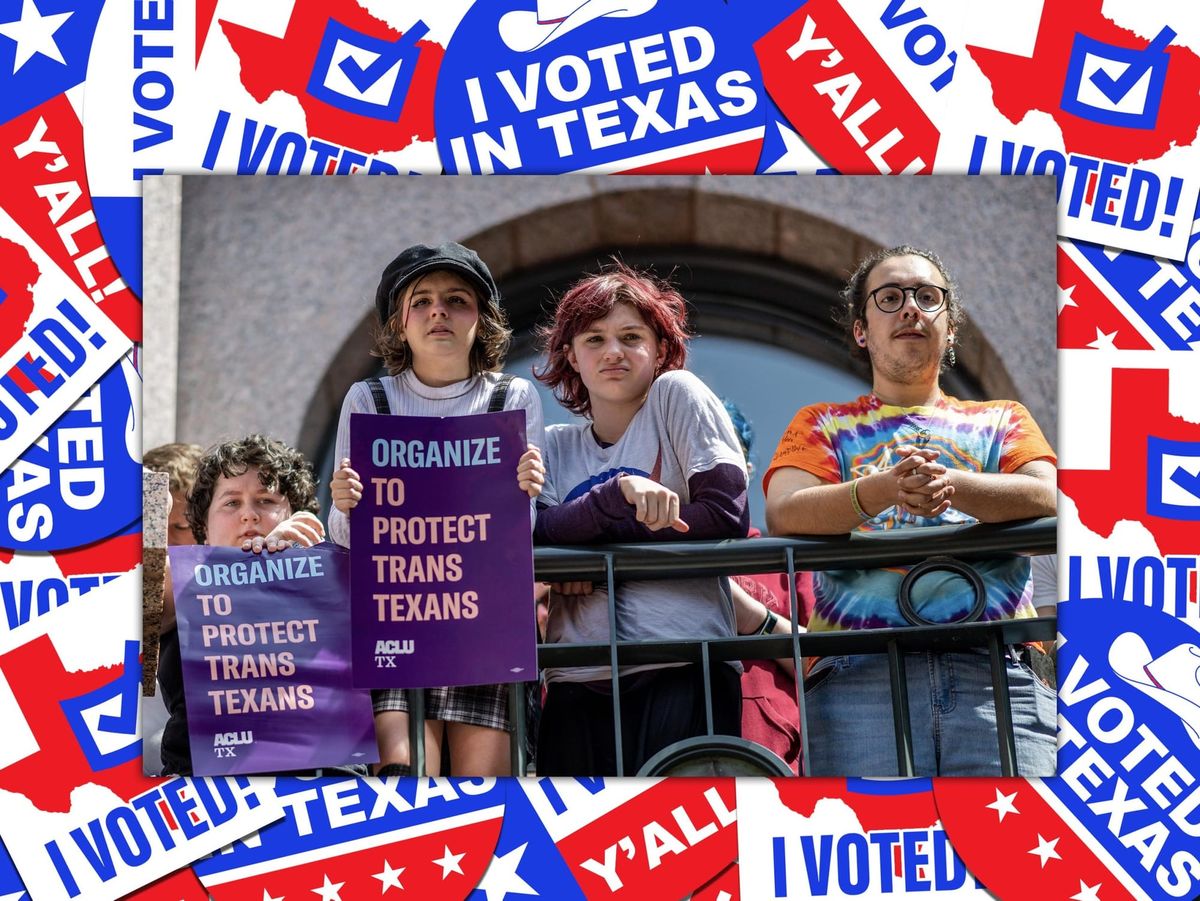
In theory, being transgender shouldn’t matter when it comes to voting. But when it comes to transgender rights in Texas, things often don’t go the way they should.
“The way that it's supposed to work is that no one is supposed to be denied the opportunity to vote based on their appearance,” Ash Hall told The Barbed Wire by phone.
As a policy and advocacy strategist on LGBTQ+ rights at the ACLU of Texas, it’s Hall’s job to track and oppose attacks on the rights of queer and trans folks in our state, and they’re closely watching the primaries and upcoming midterms for any signs of trouble.
Primary Election Day is Tuesday. And nonprofits that protect LGBTQ+ rights in our state are monitoring what’s playing out at polling locations. The ACLU of Texas is part of a coalition of hundreds of organizations that operate the national election protection hotline, 866-OUR-VOTE. One major area of concern for Hall is what could happen when a person’s gender presentation clearly doesn’t match the gender marker on their identification.
“Since Texas has made it impossible to change the gender marker on a lot of the ID options that people use to vote, there's a chance that people are going to face questions from election officials or, in worst case scenarios, harassment and pushback on whether or not they should be allowed to vote,” Hall said.
Starting in the summer of 2024, Texas began blocking the ability of trans Texans to update the gender marker on their driver’s licenses or state IDs. In March 2025, Attorney General Ken Paxton ordered state agencies to begin reversing previously issued identification with updated gender markers. Changes in federal policy under President Donald Trump have also prevented trans people from updating the gender on their passports, and blocked nonbinary people from obtaining passports with an “X” gender marker, rather than an M or F.
Texas law requires voters to present a form of photo identification, if possible, at the polls, although a person can fill out a form and present an alternative form of ID if that is impossible. As a result, trans and nonbinary people’s gender presentation may not match the gender markers on the documents they present to poll workers.
Even though it’s legal to vote in these circumstances, Caleb Armstrong, a transmasculine Texan, worries. Armstrong is the cofounder of the Local Queer Foundation, which, in addition to hosting social events for Austin’s queer and trans residents, previously offered clinics to help trans people update their IDs.
“Trans voters are left vulnerable to being outed, questioned, or turned away, which creates very real barriers to casting a ballot,” Armstrong wrote in an email. “It is difficult to find accurate information about voting as a trans person, and for many, the fear of navigating the process is enough to keep folks from voting at all. This fear and confusion has a purpose in trying to silence our voices and keep trans people from participating fully in our democracy.”
Texas’ voter ID laws have been widely criticized for making it harder for marginalized groups to access the polls, particularly poor and nonwhite communities who may face additional barriers to accessing identification. Intersex voters could also be affected by recent legal changes that make it harder to access identification that matches their gender identity, according to a report in the Texas Tribune.
“I literally fall into a third gender, according to this law, a third gender that is not defined. So does that mean I legally don’t exist?” Juliette Thurber, an intersex and transgender San Antonio resident told the Tribune.
Voting rights advocates warn that the proposed Safeguard American Voter Eligibility Act, or SAVE Act, could also create additional barriers for voters across the country who have legally changed their names, a population that includes many trans people in addition to many married women. In January, the bill was reintroduced to the U.S. House of Representatives by Texas Republican Congressman Chip Roy. Similar legislation passed the House last July but died in the U.S. Senate. The new measure passed the House in February, but Republican leaders have warned they don’t have enough support to get it through the Senate. If it becomes law, the act would require additional documentation for anyone registering to vote whose legal name doesn’t match the name on their birth certificate.
Both the ACLU of Texas, and LGBTQ+ advocacy groups like Equality Texas, have made efforts to educate the public, and voting rights officials, about how these laws can affect trans Texans.
“The voter ID law affects all Texans in their ability to access their … vote, but for trans and non binary folks and queer people in general, it does add some additional barriers,” Brad Pritchett, CEO of Equality Texas, told The Barbed Wire. “So every election season, we're making sure folks kind of have an understanding of what applies in the Texas voter ID law and what doesn't.”
Pritchett said he’s less concerned for voters in major Texas cities with large LGBTQ+ populations, but it’s possible that inexperienced election workers could still make trans voters feel uncomfortable by asking unnecessary questions. “There's increased tension and stress that comes along with it, because you never know who you're going to be presenting your ID to.”
Pritchett said Equality Texas sets up booths at LGBTQ+ events where they check people’s voter registrations, and they’ve discovered numerous examples of queer and trans people with Hispanic surnames being purged from the voter rolls and forced to re-register. He is concerned voter purges could grow even more widespread, particularly as the Trump administration steps up its war on LGBTQ+ people.
In December, Lauren McGaughy of The Texas Newsroom reported that the state is creating lists of apparent transgender people for an unknown purpose, including more than 100 people who tried to change the gender marker on their ID after the ban went into place. Also in December, Texas Secretary of State Jane Nelson turned the name, address, and social security numbers of almost every Texan registered to vote over to the Trump administration. The administration said it needed the data "to test, analyze, and assess states' (voter rolls) for proper list maintenance and compliance with federal law," and sent similar requests to other states, the Houston Chronicle reported.
“We have no idea what they're going to do with that information or why they need that information, but the odds are it's not going to be something that is designed to increase our access to the ballot,” Pritchett said. “It's probably something more nefarious than that.”
Pritchett said that any LGBTQ+ Texans with concerns about their ability to vote can contact the Equality Texas helpdesk, which will help them find the resources they need to solve their problem. In addition to re-registering, he also recommended that anyone who has been purged from the voter rolls should get in contact with their county clerk’s office to see if the issue can be solved. They can also cast a provisional ballot on election day, Pritchett said.
In addition to issues around voter ID laws, Hall said the ACLU of Texas is also concerned about the potential for extremists harassing voters outside of polling locations. White supremacist groups in the U.S. frequently simultaneously target both LGBTQ+ and people they perceive to be from immigrant backgrounds.
“Any instance of that happening, as long as people call the election protection help line, 866-OUR-VOTE, we'll be able to take action,” Hall said. “My hope is that everybody is able to access their legal right to vote safely and without intimidation.”
Hall noted they’re hopeful that members of both parties can assemble peacefully at their polling places during the Texas primaries. “The really bad behavior that we've seen people commit around polling places, it tends to be in general elections, and so I am very hopeful that this primary election will be very uneventful, not dramatic, and a safe way for people to again come together and make their voices heard at the ballot box and let this state and this nation know who they'd like to see representing them.”