Austin’s Plotting a Comedy Rebellion. Welcome to The Anti-Kill Tony Show.

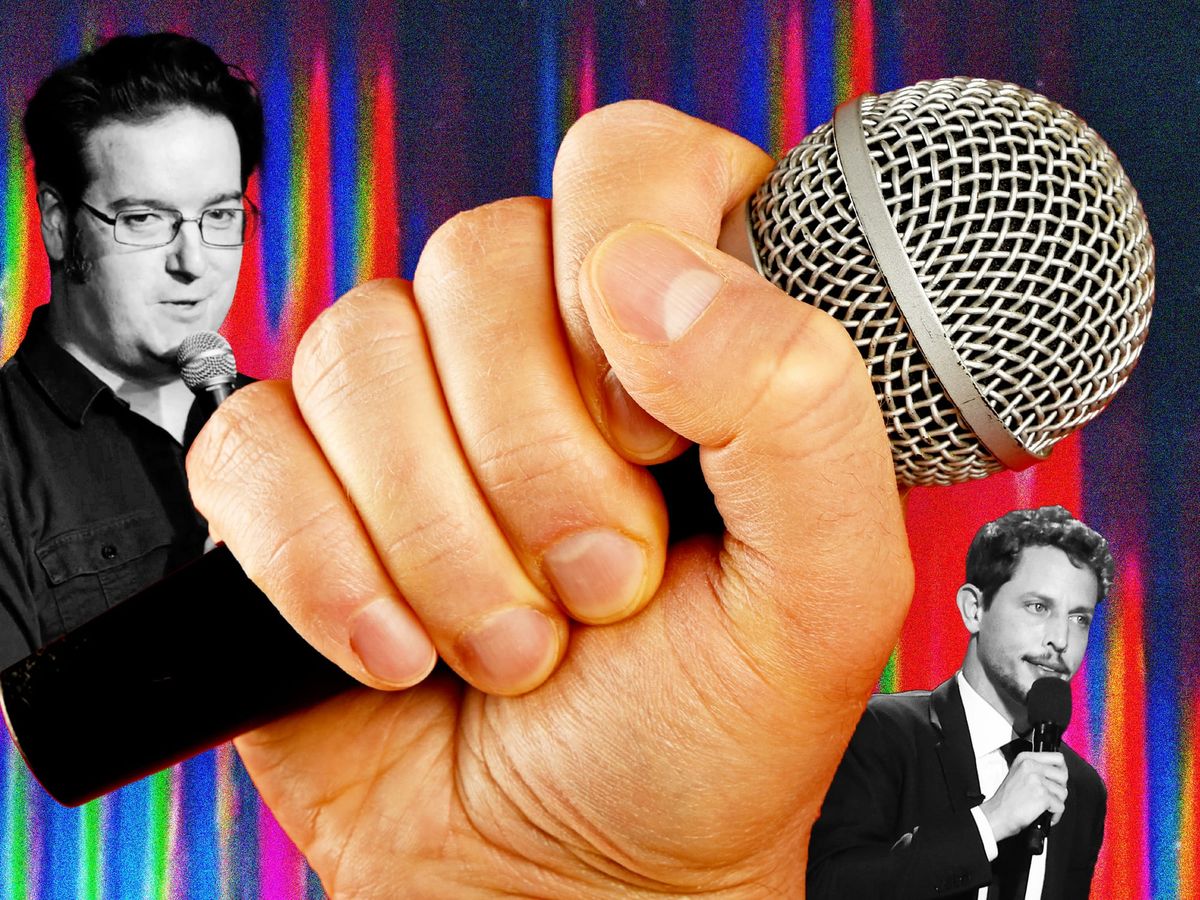
For a few years now, the Austin comedy scene has been dominated by a new ecosystem led by Joe Rogan and Tony Hinchcliffe.
The city is now nationally known as a haven for their style of “say whatever shitty thing you want, it doesn’t even need a punchline” comedy. For these guys (and their disciples who moved here during the pandemic), the slur IS the funny part.
But that doesn’t mean that the old guard — the people who were doing standup before 2020 — has gone away. And veteran Austin comic Duncan Carson wants to strike back, with a new comedy show that’s committed to punching up, not just saying crappy things for laughs.
“They just think, anybody that laughs is an inherent good,” he told The Barbed Wire. “And I’m like, not if it’s a fucking Klan rally.”
In a defense of Austin's comedy heritage, Carson is launching a new late-night show that aims to showcase the city's old-school comedy scene, which produced such luminaries as current “Saturday Night Live” cast members Andrew Dismukes and Devon Walker.
The variety show is called “Signing Off: A Comedy Show for the End of the World” and it’ll run Fridays at 10 p.m. starting April 4 at the Fallout Theater in Austin.
Carson is uniquely qualified to run it, having hosted weekly shows in Austin since 2012, including the popular “Sure Thing” showcase with Brendan K. O’Grady.
“I think if you counted, I've hosted the most comedy shows in the history of this city,” Carson said. “And maybe that means I never got famous, but it also means I never sold my soul.”
Carson, who moved to Austin in 2011 from Milwaukee, reminisces about a time when the local comedy community was a golden era of smart standup. He likened it to an "eternal summer camp," a tight-knit group of performers who maintained (reasonably) high artistic standards. Venues like Cap City and The Velveeta Room played crucial roles in developing local talent, creating an environment where smart comedy thrived.
And while the scene wasn’t perfect by any means, its informal gatekeepers — club bookers, experienced comics, and discerning audiences — would usually marginalize comedians who relied on cheap, dumb jokes.
Tell a bunch of racist jokes? Oops, looks like you’re last on the list. Again. Hacks eventually got the message.
“We all self-policed it to a degree,” Carson said.
(Although, as a longtime Austin comic myself, I’d add that there were still plenty of offensive jokes flying around back in the day. But they were generally told by someone with an IQ higher than room temperature water.)
Sadly, the pandemic and the arrival of Rogan (and his resulting constellation of clubs and shows) greatly changed this landscape. Carson argues that the new wave of comics has created an ecosystem that rewards offensive material, giving previously unsustainable comedic approaches a platform and financial incentive.
"It's like Fox News set up camp down the street," Carson said. Where comics once had to be clever and thoughtful to succeed, now shock value and controversy can be monetized.
And he’s right. What’s more, while the Rogansphere is popular, they’re not actually very good at being funny. Rogan’s last special on Netflix tanked, with one critic calling it a “tired and unfunny tirade.”
Tony Hinchcliffe bombed with racist jokes at the Republican convention, which should be easier than spotting a lifted truck at a Buc-ee’s. Hinchcliffe’s first Netflix special was so bad that he removed it from the internet, but that didn’t stop the streaming service from getting in bed with him again.
So what are you left with? A bunch of middle aged dudes spouting worn-out cliches at an audience who drove in from the suburbs to lap it up. That’s what Austin comedy is known for these days.
Carson wants to remind audiences that comedy can be more — and it can be funny.
“I don't want comedy that's like, preachy or always has to support social progress or something,” he said. “Just don't be a monster, like it's so obvious.”
"It’s very easy to be funny without being mean," Carson said. “Comedy is inherently political and I’m tired of us acting like it’s not.”
By integrating music, a podcast recording, as well as standup, Carson hopes to remind audiences of Austin's comedic roots (which stretch back decades, not just a few years).
The show’s head writer Jon Mendoza told The Barbed Wire he doesn’t think the staff is “sitting there trying to figure out how to be the antithesis of (the new arrivals).”
“We’re just trying to do what makes us laugh most of the time,” he said. “I think all of us that work on the show have always tried to punch up rather than down. There’s tons of bad news out there all the time, and we try to make something that lets people forget about it for a little while, rather than remind them of it. “
As for any lessons they may have taken from “Kill Tony,” Mendoza had one.
“(Hinchcliffe) is right that it only takes a minute to decide you’re not a fan of somebody,” he said.
Like it or not, though, Rogan and his minions are popular — and aren’t going anywhere. At the same time, a lot of the old Austin comedy guard has faded away.
Not Carson. Barring a call from “The Daily Show,” he jokes, he’s staying put.
“This is my city,” he said. “And I will run a weekly show as long as a venue will have me.”