‘We Are Everywhere’: Kind Clinic is Leading an LGBTQIA+ Healthcare Revolution in Texas

Paid content. Kind Clinic and Texas Health Action paid for this article and reviewed it before publication. Eric Webb is an independent freelance writer.
No one does a waiting room like Kind Clinic. Disco balls, pride flags and sculptures shaped like butts line the shelves. On one sign, Madonna reassures patients about wait times. If you’ve still got jitters, just hum along to “The Rhythm of the Night,” which might be playing from the speakers.
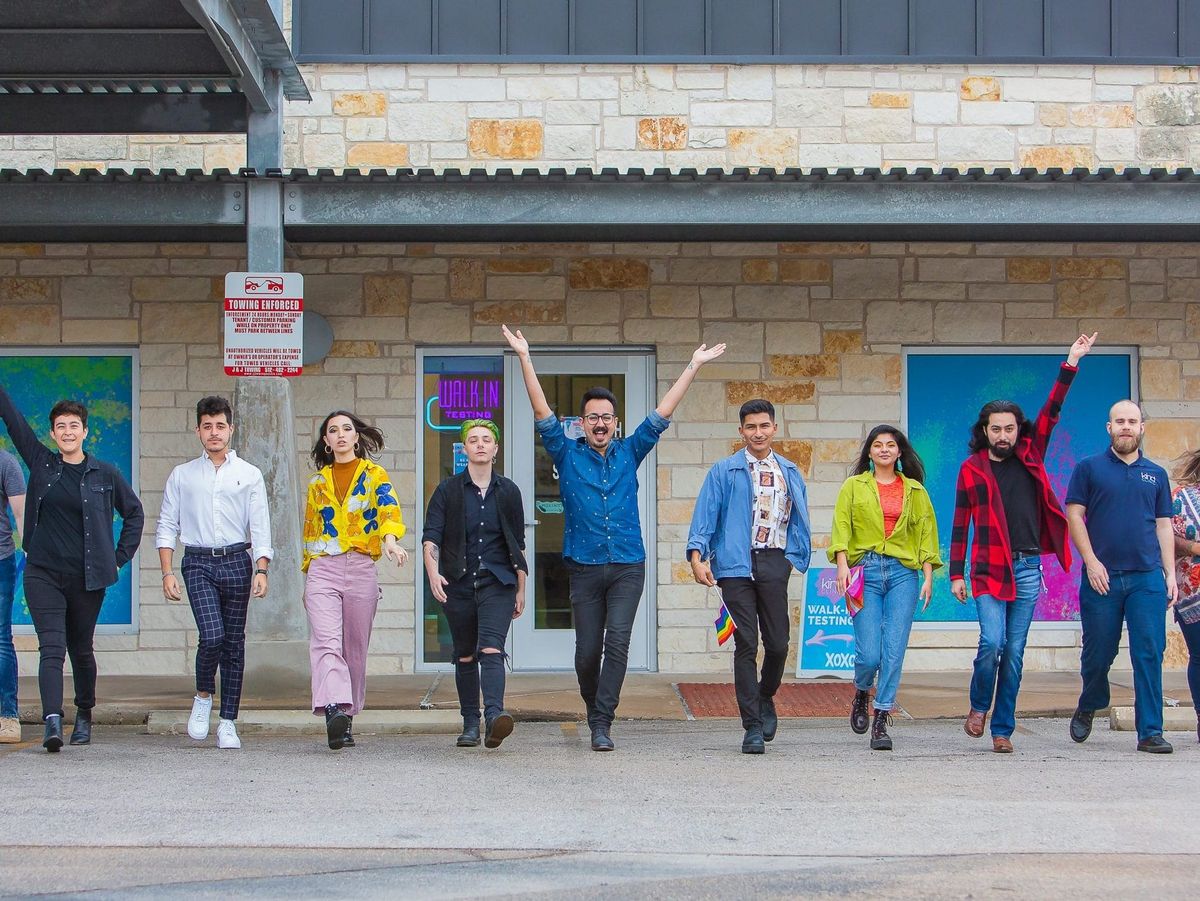
Behind all the proudly displayed colors—and the 1990s dance hits—Kind Clinic is leading a Texas healthcare revolution. The clinic operated by Texas Health Action provides vital access to the HIV prevention medications known as PrEP (pre-exposure prophylaxis) and PEP (post-exposure prophylaxis), as well as gender-affirming and intersex care, and testing and treatment for HIV and other STIs. Their doors are open to clients of every identity and financial status, with a focus on the LGBTQIA+ community.

The most revolutionary part? Services are offered with or without health insurance, and medications are provided at little-to-no cost.
As Kind Clinic celebrates 10 years, The Barbed Wire went on an exclusive tour inside its Central Austin location, an inviting space on Koenig Lane where providers and patient advocates are creating a sex-positive, judgement-free sanctuary, despite the odds.
Kind Clinic’s roots go back to the 2015 launch of Austin PrEP Access Project, a grassroots HIV prevention initiative. In 2017, that program grew into the first Kind Clinic. Texas Health Action now operates four clinics across Austin, Dallas and San Antonio. They serve almost 30,000 patients annually, including many who might not otherwise have access to affirming care through virtual services
Kind streamlines each step of care into a one-stop shop. It starts at an on-site testing facility where clients who test positive for an STI can receive same-day treatment, and those who are newly diagnosed with HIV can see a provider next door. A few steps away, patients pick up their medication from Avita Pharmacy, Kind’s partner at most locations.
Juan Benitez, chief advancement officer of Texas Health Action, sees Kind Clinic’s mission woven into a 40-year legacy of community care going back to the AIDS epidemic. “We take care of us,” he said.
Forty percent of Kind’s client base is uninsured. That’s double the percentage of Texans without insurance coverage, a statistic making it the most uninsured state in the country. The Kind Patient Assistance Program, or KPAP, provides $1.6 million in financial assistance to clients annually for medication, co-pays, lab costs—you name it. That’s sustained by a mix of private philanthropy, individual giving, corporate sponsorship, and grants.
When nurse practitioner Cynthia Stewart first arrived at Kind five years ago, the no-cost treatment model blew her away. Throughout her career, she’s seen the deadly consequences of barriers to treatment. Kind’s approach allows patients to surmount those barriers, she said. Providers like Stewart are able to educate more clients about safe sex practices while validating their lived experiences.
“We have a one-on-one conversation, like I'm talking to my sister or my brother or my friend, and in a nonjudgmental way,” Stewart said.
In many clinical settings, a patient might go in for an STI visit only to be grilled about their number of sexual partners. That approach is counterproductive, Stewart said. Instead of searching for a number, she’ll ask if they’ve had any new partners in the preceding month and make sure they’re sticking to their PrEP regimen. When patients feel comfortable, they will often go into more detail about their lives without being asked.
“We get all of the tea about everything that’s happening,” Stewart said. “We are better able to serve our patients due to that transparency.”
All clients are paired with a patient advocate, too. They help navigate financial assistance; arrange transportation to appointments; liaise with insurance companies; and identify resources outside the clinic, from mental health care to housing assistance.
Patient advocate Michelle Cornejo has been with Kind Clinic for about two years. Fluent in both English and Spanish, she believes that breaking down language barriers is a calling. The work of patient advocates deepens Kind Clinic’s community-centered approach, she said.
“We are patients ourselves, and we are aware of what we need. Whenever you're getting care here at Kind, it's knowledgeable care. It's culturally sound care,” Cornejo said.
Kind Clinic’s work is all the more remarkable because it’s happening in Texas, where lawmakers consistently target the rights of transgender citizens and stymie access to affordable health care. This Pride Month, Kind Clinic is sending a message: “We are everywhere.” It applies to the clinic’s reach—clients receive care in half of all Texas counties, thanks to virtual care—as well as visibility for the LGBTQIA+ community.
“You cannot deny that queer people exist,” Benitez said. “Our healthcare needs are just as valid as anyone else's.”
Still, Stewart knows that medical visits can be intimidating for queer people, and for many people living with HIV, figuring out how to get medication can take a backseat to basic necessities. She wants Texans to know that at Kind Clinic, they’ll be safe—no matter who they are, what they look like, or how much money they have.
“The doors are always open,” Stewart said. “All of our patients understand that this is not just a place of care for them. This is home for them.”