Everybody Say ‘Thank You, Khalid!’ for Reviving the Male Pop Star

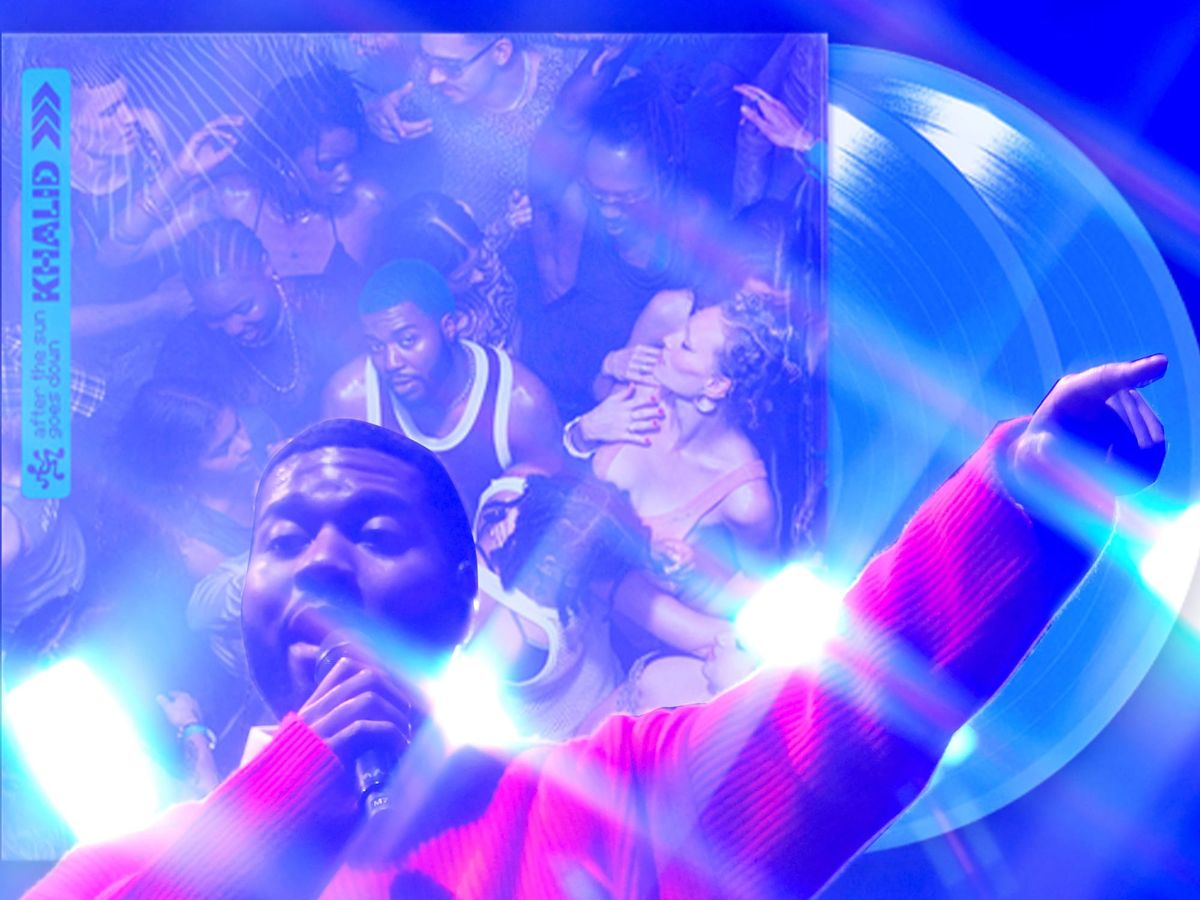
Today is a good day to say, “thank you, Khalid!” for saving male pop music.
His latest album, “after the sun goes down,” which dropped at midnight on Friday, Oct. 10, has earned him the crown of least problematic favorite in a genre populated with headline-grabbing “this is going to ruin the tour” DUIs, monkeys getting confiscated at the airport, and other unsavory scandals.
The impetus for the project came only three months after the release of his last album — “Sincere,” which dropped in August 2024 — when he was outed as gay online. “I think what’s so nasty about it all is that my own story got stripped away from me,” the 27-year-old told PEOPLE.
Still, Khalid let what he called a “blessing in disguise” fuel his music, both to regain control of his story and to publicly step into who he’s always been — and who he’s always wanted to be. The resulting album is “a huge ode to just the beautiful icons that come before me,” he went on to say. “I’ve always dreamt of being this pop star. I really tapped into that little boy and gave him his shine that he always wanted.”
It’s resonating with fans because of the project’s full embrace of pure pop à la the 2000s and 2010s. Texans quickly claimed Khalid as one of our own after learning he lived in El Paso as a teenager.
“Undoubtedly, this is a new era for Khalid,” wrote Neil Griffiths in Rolling Stone.
It’s “breezy, fun and danceable,” one fan said on Reddit.
As another user declared, “This has main pop boy written all over it, I fear.”
In other words, there’s been a drought in the male pop star market, and with “after the sun goes down,” Khalid lays out ample evidence to support the case that he’s the full package with all the right visual and aural references in tow.
A part of tapping into his pop stardom is owning his queerness directly and proudly, (“You're my type, fly, dark, and handsome,” he sings in the 13th track, “momentary lovers”) but it’s also about allowing himself to creatively revel in a fantasy that gendered and racialized expectations so often preclude.
What these expectations have produced is an oversaturation of male performers rewarded even when their act feels underwhelming or contrived. One flip off a piano in a sparkly unitard and Benson Boone’s Grammy-nominated. When he covered Adele’s “When We Were Young” months later, people were genuinely shocked and delighted to discover he had actual vocal chops. One commenter, who got more than 23,300 likes in agreement, wrote: “He’s wasting his voice on goonbeam ice cream songs.” Perhaps the most succinct visual representation of this phenomenon was when Beyoncé performed alongside Ed Sheeran at the Global Citizen Festival in 2018. We’ve all seen the pictures. She stuns in a hot pink sculptural couture dress and he’s…there in a black T-Shirt and jeans — the event started an entire online debate about gender standards in performances. We’d be remiss not to talk about Harry Styles’ Whole Thing (congrats on that marathon, by the way!), but his last album was released in May 2022. And it’s hard to find an example of a male pop musician in this world who isn’t exhausted after coming up through millennial capital b Boy Bands. As Dazed wrote in May: “Where are all the Gen Z pop boys?”
With his fourth album, Khalid’s given us our answer. And in his fantasy, the bar for male pop stars is higher. Khalid already had seven Grammy Award nominations ahead of this week’s release, including Best New Artist in 2018 when he was just 19 years old.
Throughout “after the sun goes down,” he’s liberated from expectations, reintroducing himself as a reminder that he’s evolved since his shy “American Teen” days in 2017. He’s grown and, as seen in the music video for the second single, “out of body,” he’s sweaty and sexual, dancing to a Darkchild-produced track that samples Britney Spears’ “Outrageous” in both melody and energy.
For fans, this seems to be a welcome departure from Khalid’s previous projects, of which some have said came across too homogeneous. “This is a surprisingly good album and definitely Khalid's best,” one fan wrote on Reddit. “I think Khalid's biggest problem was that all of his songs sounded the same.” That’s no longer the case.
Especially not for “after the sun goes down,” which effortlessly blends pop with tastes of R&B and dance. “Given the pivot in sound and direction, it’s fair to say Khalid has tapped into something new and exciting,” Griffiths wrote for Rolling Stone.
As much as the album meditates on Khalid’s real life love, lust, relationships, and desire, it’s also itself a love letter, written and addressed to pop music, to those who shaped it throughout the 2000s and 2010s, and to those who continue to remind us of what it could and should be today. Chief among those who shaped pop music as we know it is Darkchild, who’s produced everything from Brandy and Monica’s “The Boy Is Mine” to Beyoncé’s “Déjà Vu,” making it all the more clear how the fifth track “out of body” was able to nail the early aughts pop sound so well.
Other collaborators include co-writers Tove Lo, Julia Michaels, and Ryan Tedder, all of whom are responsible for some of the biggest pop songs of the last decade. Producer ILYA, best known for his myriad of hits with Ariana Grande, contributes to most of the album, while Oscar Görres — who worked on Troye Sivan’s introspective “Something To Give Each Other,” a dance-heavy, synth-pop album — jumped in on a few records.
“out of body” is certainly a standout on the album, particularly because of its direct reference to Spears. Songs like “tank top” and “instant” offer feel-good pop moments similar in vibe to Tate McRae’s “Sports car” or Zara Larsson’s “Midnight Sun,” while Khalid’s smooth vocals flow with ease on tracks like “nah,” “rendezvous,” and “angel boy.”
In “whenever you’re gone,” I can’t help but hear whispers of both Jay Sean’s 2009 hit “Down” and Taio Cruz’s electro-pop sensibilities (if you get it, you get it?). Based on the catchy percussive instrumentals riding through “impulsive” and “yes no maybe,” I wouldn’t be surprised if you told me Timbaland produced the tracks. An obligatory reference to cell phones seems to be true to trend for an album infused with recession pop influences, evidenced by the likes of “Telephone” by Lady Gaga, Soulja Boy’s “Kiss Me Thru the Phone,” and “Hotline Bling” by Drake, and Khalid’s latest entry is no different with the earworm, “please don’t call (333).”
Recession pop has been back for a while now — thanks to new entries from established artists like Kesha, Lady Gaga, and Charli XCX. But while the sound running through “after the sun goes down” isn’t new as a phenomenon, it is new for the public to hear from Khalid. That’s not to say it’s new for Khalid as a listener, who has made clear that female pop stars have long served as a guiding inspiration for him, looking up to icons like Britney Spears and Rihanna since he was a kid. Some of us have long been waiting for someone to take that camp and express it in a new way. Not only is Khalid tapping into those sonic qualities, but he’s interpolating them with the joys, nuances, and complexities of life as an openly gay Black man who is also a part of Gen Z.
While Khalid is filling a noticeable void in the industry, he’s also setting an example for other male artists to meet a higher caliber of performance — performance that is well-researched and intentional, that is original but also rich in reference, and that, importantly, cites its sources. In doing so, might Khalid encourage more male acts to be less afraid of embodying the pop star persona in its totality? I’m sure the pop queens who’ve been holding down the fort would welcome the company up there on the stage.
“after the sun goes down” doesn’t just answer the question of where all male pop stars have gone, it also provides a road map for where they should go next.
Maybe Khalid can send them his location.