What Can I Teach? Will Martin Luther King’s Work Be Censored Next?

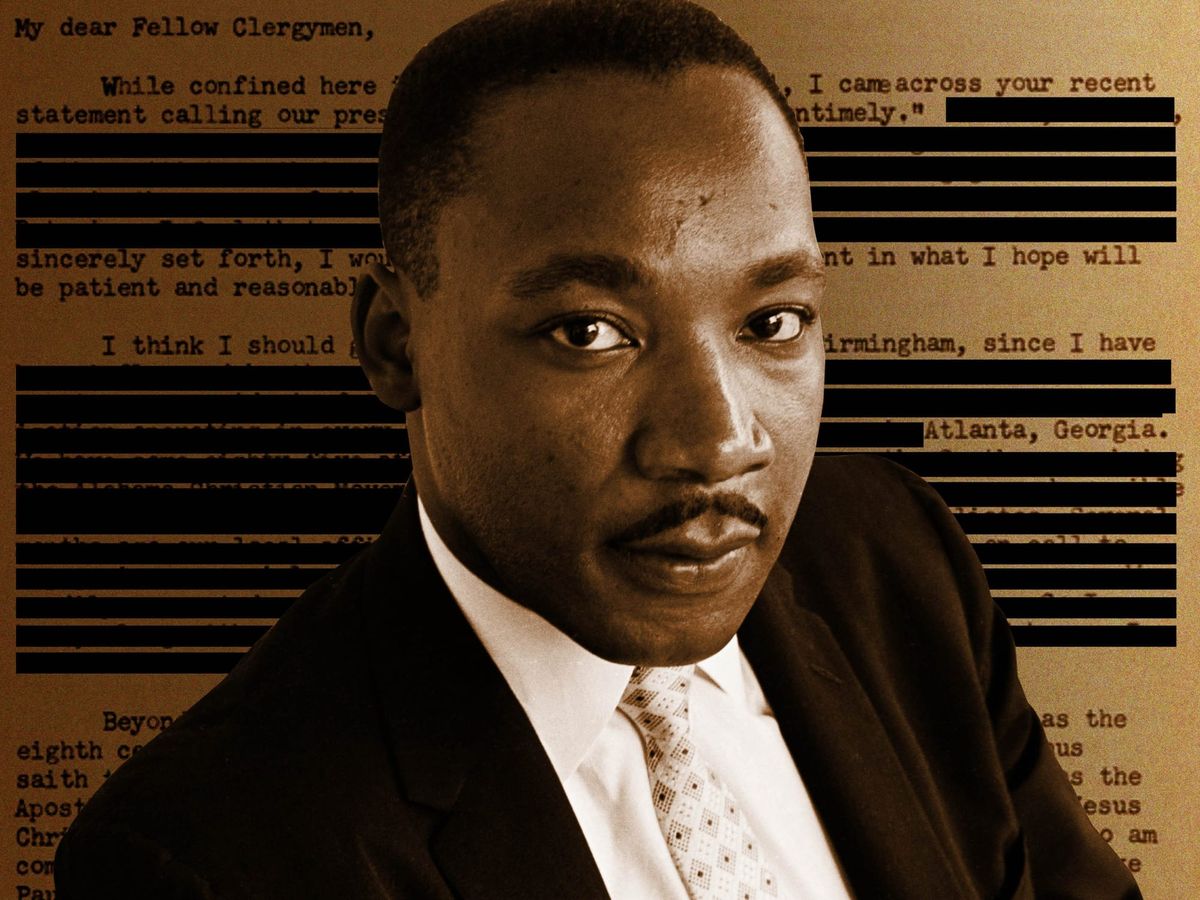
This week starts a new semester at Texas A&M San Antonio. While preparing for it to begin, I have been asking myself questions that I have never asked in my 17 years as a college professor. Questions like, can I still teach Martin Luther King Jr.’s “Letter From Birmingham Jail”?
As we celebrate the national day of service in King’s honor, I have a hard time believing many professors have asked themselves that question since President Ronald Reagan established the federal holiday in 1983. But then again, up until last week, no philosophy professor I know of had ever been prohibited from teaching Plato, either.
I am a political science professor. I have taught at five different universities in three states, including Texas. One of the many classes that I teach is on federal government. It is a core course, meaning it is part of the required classes students must take to graduate, regardless of their major. I have taught this class close to 100 times and never, and I mean never, have I questioned whether I would be violating university policies if I assigned my students to read “Letter From Birmingham Jail.” But now I am.
In November 2025, the Board of Regents at Texas A&M passed a policy stating that “no system academic course will advocate race or gender ideology, or topics related to sexual orientation or gender identity.” The exceptions are if the course is approved by the system university president. In an attempt to clarify the policy, but which just made things worse, the A&M Board of Regents again amended their amendment in December to say those exemptions would only be for graduate courses and non-core classes.
The fallout is beginning at the flagship campus in College Station where, at the moment, 200 plus courses have been removed from the core curriculum or are having their content censored to fit with the new directives.
This is where the absurdity of a philosophy professor needing to drop readings from Plato as they discuss sexual identity comes from. My campus, Texas A&M San Antonio, is currently undergoing this course censorship process, but our administration has told us we won’t know whether our courses comply with the new policies for another month or so (classes begin on Tuesday). In the meantime we wait to see if we will suffer the same fate as our colleagues in College Station.
This brings me back to “Letter From Birmingham Jail.” Early in my career I used to lament having to teach a core course such as federal government. As a required core course, you get many students who are just there because they need the credit to graduate and not because they have an inherent interest in the subject. As I have gained more teaching experience, I have come to see this as less of a problem and more of a challenge. I want to help students care about political science, and one way to do that is to expose them to quality readings such as “Letter from Birmingham Jail.”
In his letter addressed to eight white clergymen, King lays out with characteristic moral clarity the necessity of non-violent, direct action (protests that avoid physical violence) to attack racist segregation policies in the South. One of the reasons I assign this work — alongside the fact that rhetorically it is full of fire and passion — is because it shows the strategic genius of King and the Civil Rights movement. Protests, sit-ins, boycotts, marches, and many other peaceful forms of contentious politics have a long and storied history in American politics, and teaching about them is an important part of any introductory federal government course. In his letter, King lays out why he and his movement have chosen these methods and what he hopes to accomplish with them.
King said that non-violent direct-action manifests “creative tension” in a community which can break through the complacency of those in the middle by forcing them to take a side and propel resolution. We can still see the use of non-violent resistance today as people march to oppose to ICE operations in their communities and use innovative strategies like blowing whistles to alert people when ICE invades their neighborhoods. Creative, and confrontational, non-violent direct action is a hallmark of the Civil Rights movement and still offers us lessons for understanding our politics today.
Under this description I assume the administrators at the Texas A&M system would approve of my teaching of “Letter From Birmingham Jail,” but does it really pass the test under A&M’s new censorship regime? As part of banning the “advocacy” of race and gender ideology in the classroom, the Board of Regents provided definitions for those concepts. Race ideology is defined as:
“a concept that attempts to shame a particular race or ethnicity, accuse them of being oppressors in a racial hierarchy or conspiracy, ascribe to them less value as contributors to society and public discourse because of their race or ethnicity, or assign them intrinsic guilt based on the actions of their presumed ancestors or relatives in other areas of the world. This also includes course content that promotes activism on issues related to race or ethnicity, rather than academic instruction.”
Towards the end of his letter, King expresses his disappointment with what he calls the “white moderate.” King writes:
“I have almost reached the regrettable conclusion that the Negro's great stumbling block in the stride toward freedom is not the White Citizens Councillor or the Ku Klux Klanner but the white moderate who is more devoted to order than to justice; who prefers a negative peace which is the absence of tension to a positive peace which is the presence of justice.”
Is this statement shaming white people and accusing them of being oppressors in a racial hierarchy? Well, yes, it is. And that is the point.
Teaching about Martin Luther King, Jr. and the Civil Rights movement without talking about white supremacy and racial oppression is impossible.
Teaching about Martin Luther King, Jr. and the Civil Rights movement without talking about white supremacy and racial oppression is impossible. It would be akin to discussing the Civil War without discussing slavery, or the American Revolution without addressing British imperial rule. This type of selective discussion is not just bad teaching but makes the topic nonsensical. Martin Luther King, Jr. was fighting against white supremacy and racial hierarchy and teaching about his strategic and moral leadership without discussing what he was opposed to would be outrageous. It would be as if the repression of the era was just something that happened and not something that was the result of policies and actions by individuals; and yes, they were mostly white individuals.
None of these teachings are to make any of my students of any race or background feel bad or inadequate. It’s to learn the reality of what has happened, and what continues to happen, and how political processes have been marshalled by groups and individuals to redress and change it. In other words, what is happening in my class is education. What worries me is that under A&M’s new censorship policies my classes will not be sites of education but places where certain topics are taboo — leaving students worse off because of it.
Education is too important to be left to the dictates of political appointees who lack relevant subject matter expertise. So as long as I can continue to teach “Letter from Birmingham Jail” I will. We will see what the new semester brings.