Distracted Driving Is a Major Killer in Texas. Meet the Teens Trying to Stop It.




This story was created as part of a news writing workshop by Youthcast Media Group®, which offers free and paid training in multimedia journalism to diverse high school students from under-resourced communities.
Teens are taking to the road every day in Texas as newly-minted drivers and passengers. And safety activists are trying new strategies to ensure they get home alive.
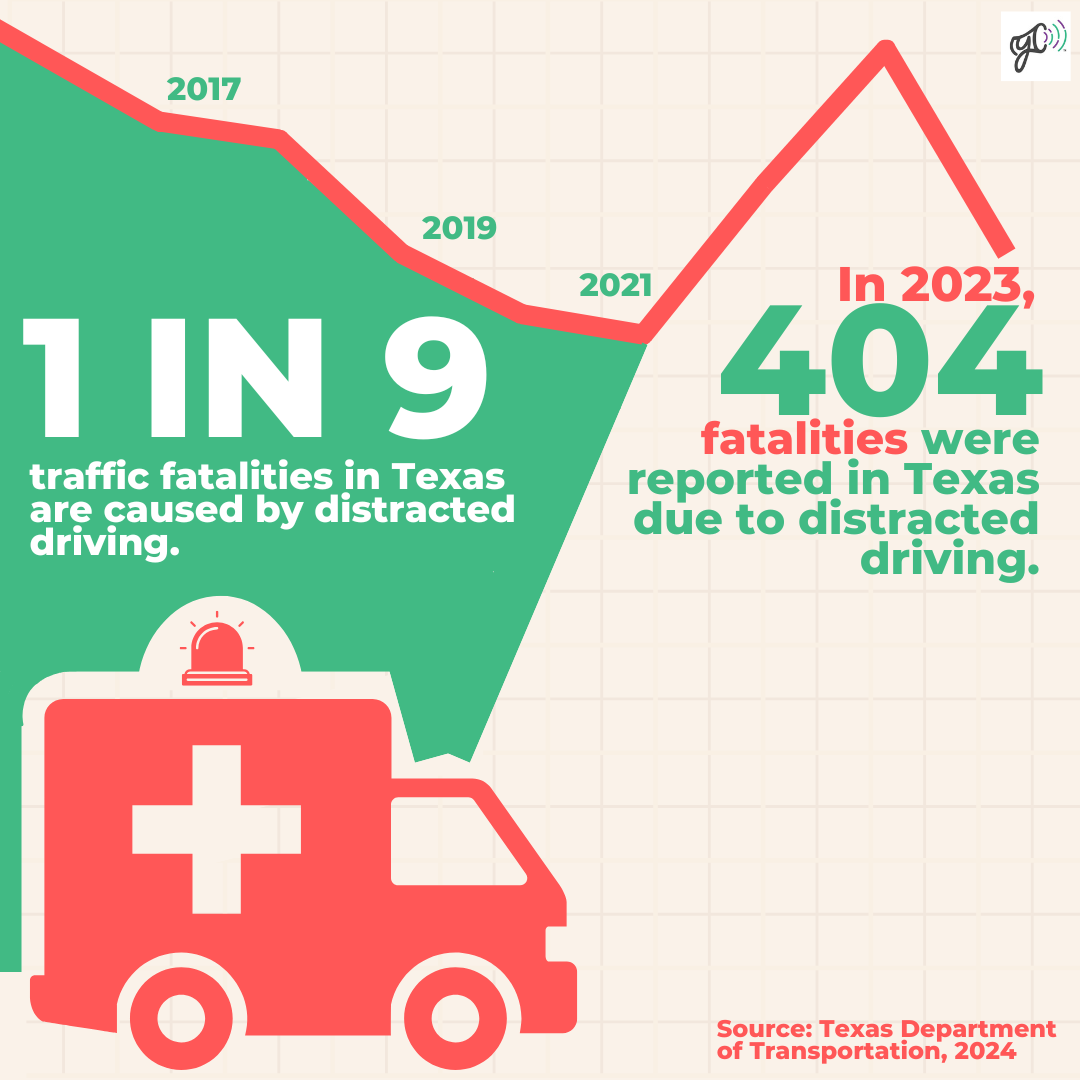
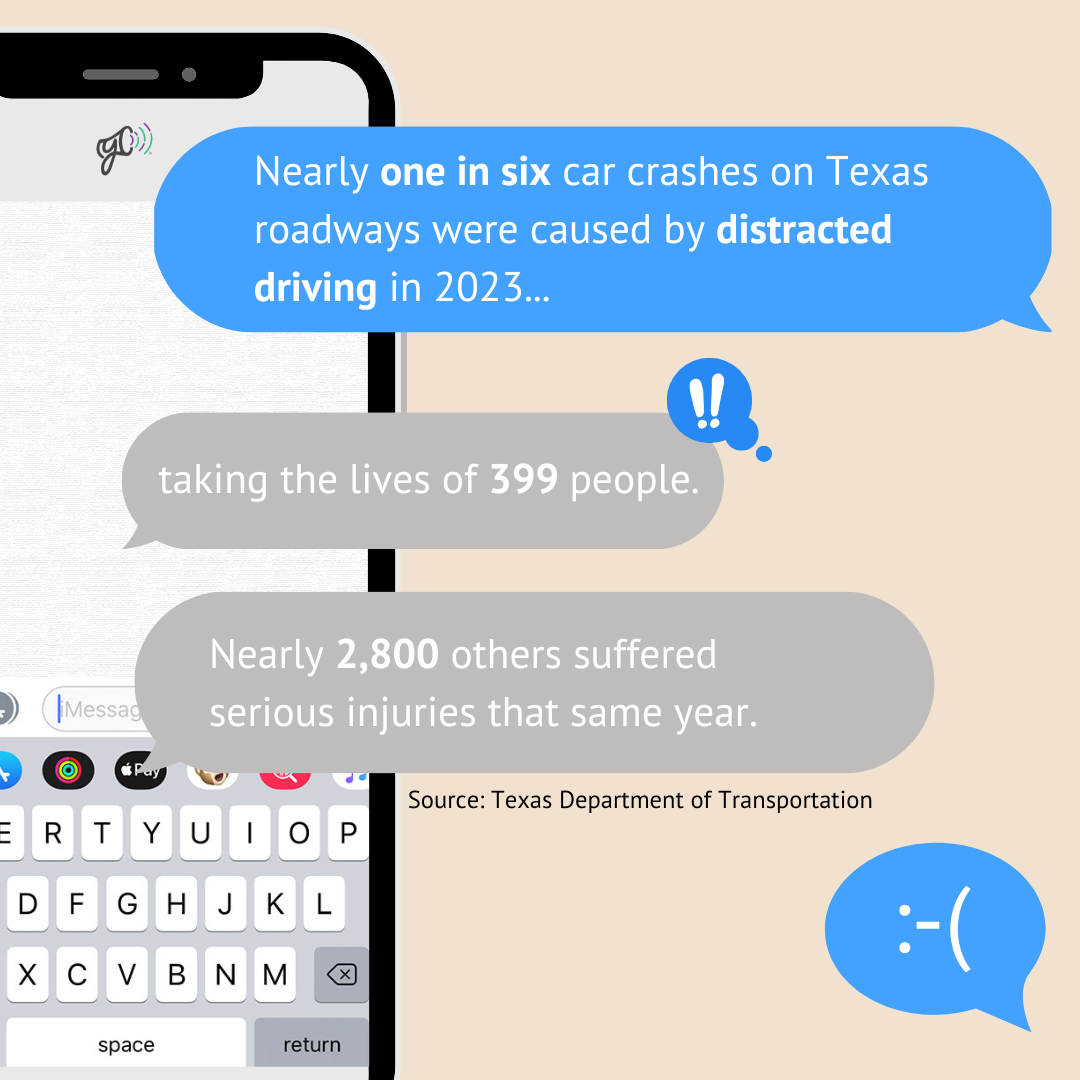
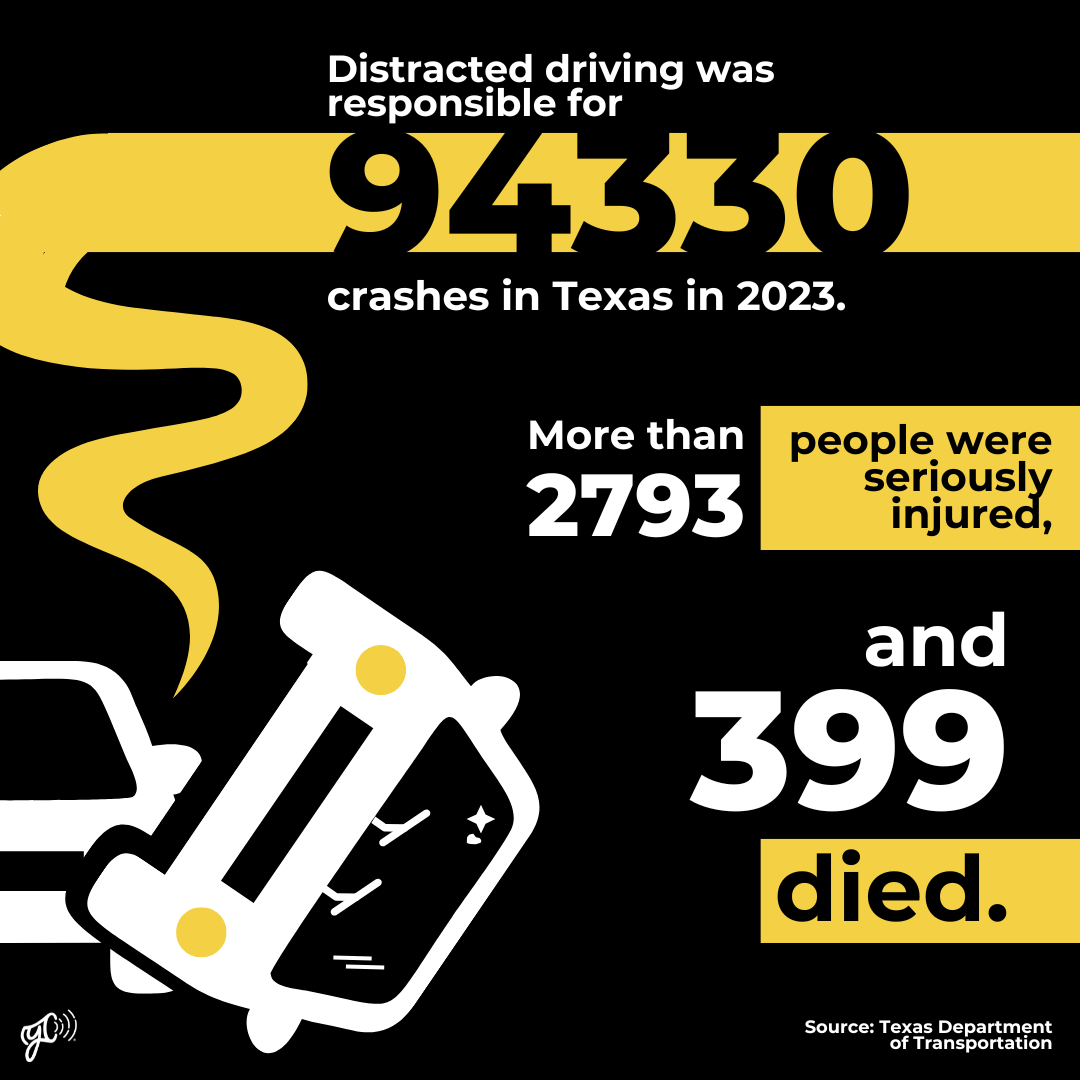
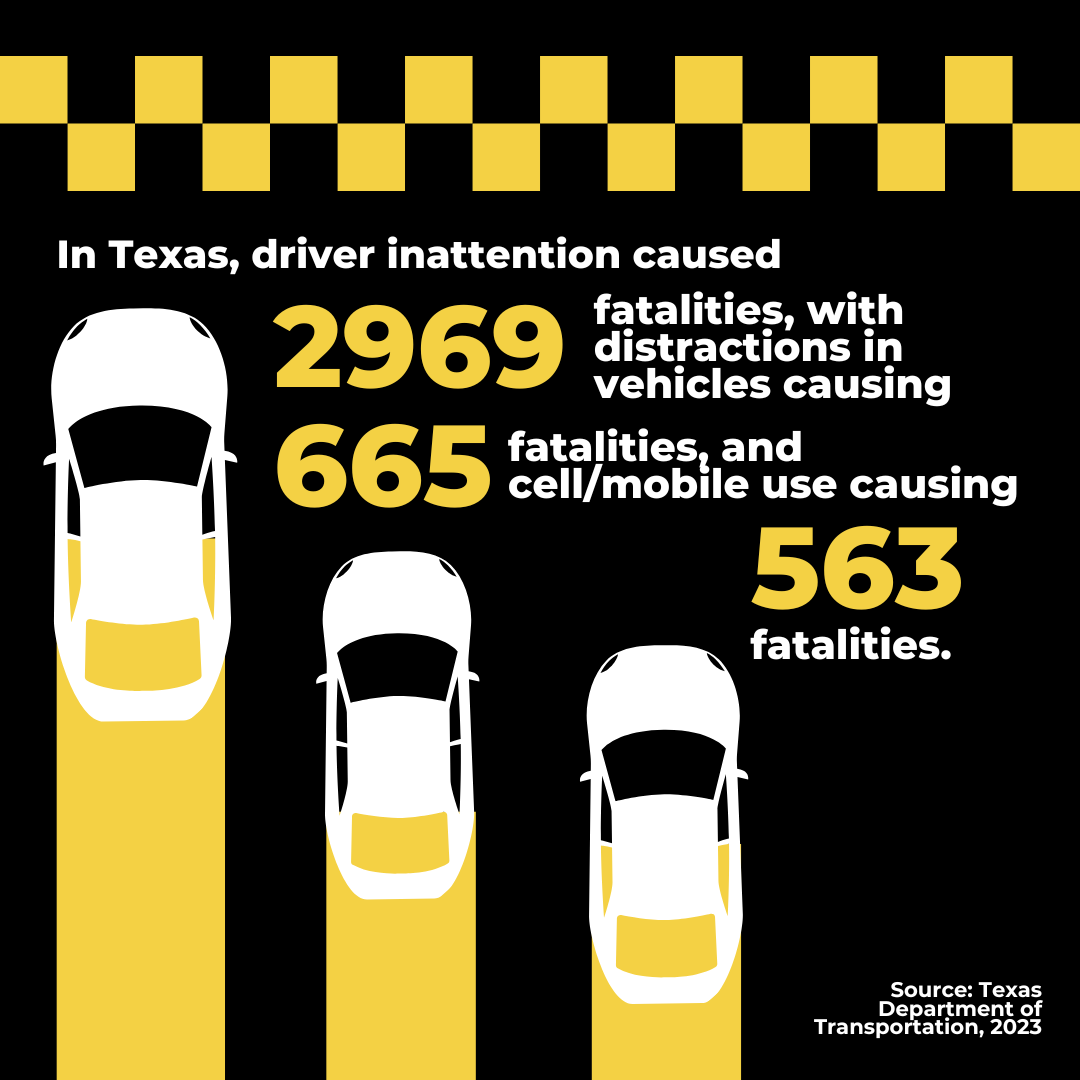
Car crashes remain a leading cause of death for teens, eclipsed only recently by gun violence. But the causes of fatal crashes — much like the new generation at risk of experiencing them — have changed. Cell phones, touch screens, talk-to-text, and other distractions have emerged as serious threats to safe driving. Nearly one in six car crashes on Texas roadways were caused by distracted driving in 2023, according to the Texas Department of Transportation, taking the lives of 399 people. Nearly 2,800 others suffered serious injuries. Across the country, distraction played a role in 8% of fatal crashes and 12% of crashes that caused injury in 2022, according to the National Highway Traffic Safety Administration.
Much like they did in the 1980s with campaigns against drunk driving, activists have taken note, and are calling on passengers to combat the issue.
“My friends don't drink and drive, and they don't take drugs and drive, so that wasn't an issue. But distracted driving was,” said Candace Lightner, who founded Mothers Against Drunk Driving and, more recently, We Save Lives, a nonprofit focused on the “three D's: drunk, drugged and distracted driving.”
A little more than four years ago Lightner gave up her car after a crash caused by a distracted driver. Being a frequent passenger was a revelation. “It really opened my eyes to a new way of existing in an automobile, and how drivers behaved, and what I could do about influencing their behavior, because what they do risks my life.”
It was at that time, while serving as a guest lecturer at Cornell University’s Personal Leadership Institute, Lightner started asking students in her classes how many rode in cars with drunk drivers. A few would raise their hands. Then a few more when she’d ask about drugs. When she’d ask about distracted drivers, however, nearly everyone’s hand would go up.
“I was just appalled,” she said. “I would look at them and say, ‘Why would you do something like this? Why would you risk your life to be with somebody who is driving dangerously?’”
Lightner partnered with the National Road Safety Foundation, to launch the National Passenger Safety Campaign. National Passenger Safety Week, now in its fourth year, will run from Jan. 20 - 27 and involves dozens of local, state and national groups including the Governors Highway Safety Association, and uses social media aimed at young people, including videos that model ways teens can speak up when they feel in danger in a car. It also includes a pledge not to ride with anyone who is drunk, on drugs or distracted called the Courage to Intervene.
The Texas Department of Transportation runs a similar campaign called Talk.Text.Crash. in April for Distracted Driving Awareness Month, part of #EndTheStreakTX, a broader safe driving effort aimed at ending the 24-year streak of daily deaths on Texas roadways (the last deathless day was Nov. 7, 2000.)
Increasingly, students are heeding the call.
Lakshitha Kamala Kannan, a senior at Spring High School outside of Houston, has studied health science as part of a pre-medical career and technical education pathway. Stories of car crashes, from a health perspective, led her to join Teens in the Driver Seat, a peer-to-peer program focused on traffic safety. Though led by teens, the program receives scientific guidance and project resources from Texas A&M’s Transportation Institute and is now available in 28 states.
“We organized lunch tables and we put up posters throughout the school,” Kannan said. “We have control over the senior parking lots, and we help them paint some parking lot [signs] that create awareness for teen drivers.”
Kannan is also studying for her driver’s license, which gave her another idea on how the state could better address teen driver safety.
“In the state of Texas, I feel like they could have a class. A whole teen driving class. You can join during school, and you could have that as your period and get a social or a science credit,” she said. “I feel like it's more important in Texas, especially in Houston, downtown, it's terrible driving the highways.”
Some teens say they are concerned with being onlookers to unsafe driving.
“I’ve noticed that sometimes while people are having a conversation or trying to multitask, like setting up their phone, they might get distracted,” said Shivali Sinha, a sophomore at Bellaire High School in Houston.
Sinha received her driver’s permit at the end of July. As a precaution, she said she reminds herself to focus completely on driving and not get distracted.
The increasing use of rideshare services like Uber and Lyft, especially among younger people, means that many youth are in cars with drivers they don’t know. Uber and Lyft drivers can also be distracted.
“Many of their drivers do drive distracted. They have to look at a map and they take phone calls,” said Lightner.
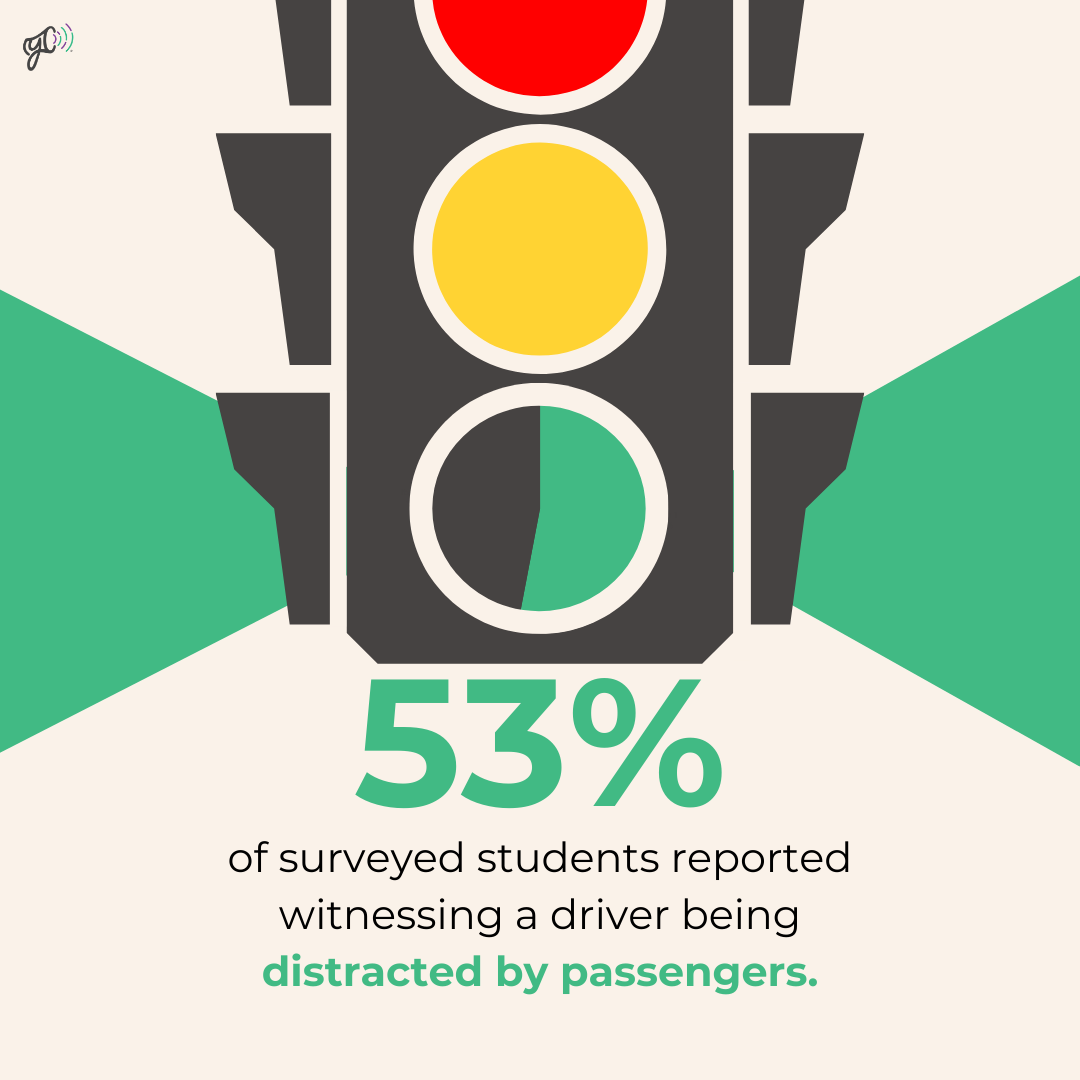
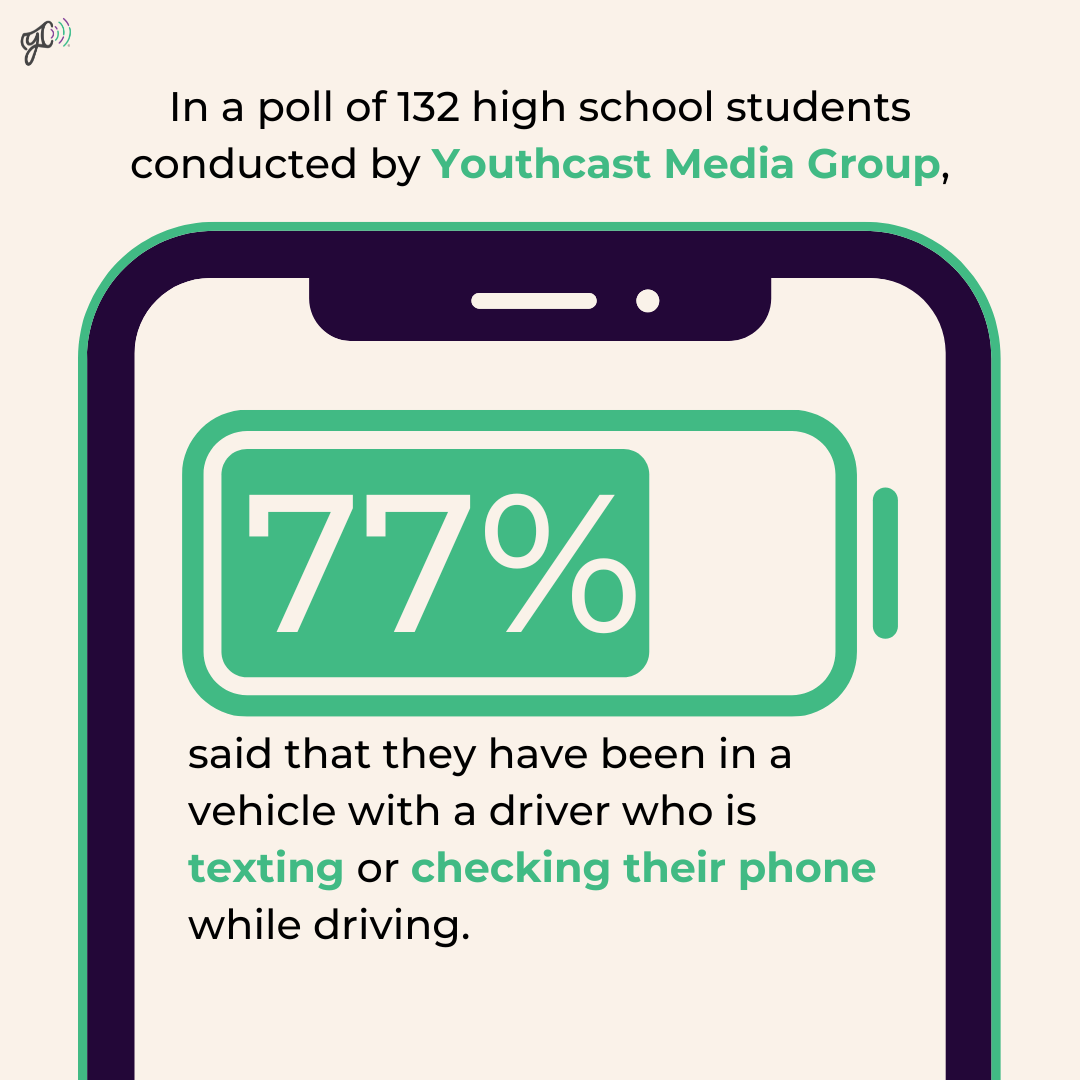
Other students around the country have also had similar experiences. In a poll of 134 high school students conducted by Youthcast Media Group, 76.5% said that they had been in a vehicle with a driver who is texting or checking their phone while driving. And 53% said they experienced a driver distracted by passengers.
Abigia Kebede, a sophomore at Alief Taylor High School, agreed that more class time should be dedicated to safe driving. Especially after learning how many people die each year.
“There should be a lot more awareness,” Kebede said.
As a passenger, Kebede feels empowered to speak out against unsafe driving and hopes others can do the same. She’s seen that it can work.
“The driver would be speeding, and it would just, like, throw me off,” she said. “But I would tell them to slow down, and they would. Because I have a voice that I can use.”
Bethel Kifle and Cindy Tint are 10th-grade students at Bellaire High School in Houston, Yaneli Victoriano is a junior at Palatine High School in Illinois, and Jose Negrete is a junior at Back of the Yards College Preparatory High School in Chicago. They worked with Youthcast Media Group journalist-mentor Cara Kelly to write this story during a news writing workshop. Student journalists Alani Schwertfeger, Shaunavahn Reid, and Fatumata Barrie contributed to this story.
Correction: This story previous referred to Lightner’s revelation as happening ten years ago. In fact, it was four years ago. The Barbed Wire regrets the error.