Are You There, Texas? It’s Me, Olivia.

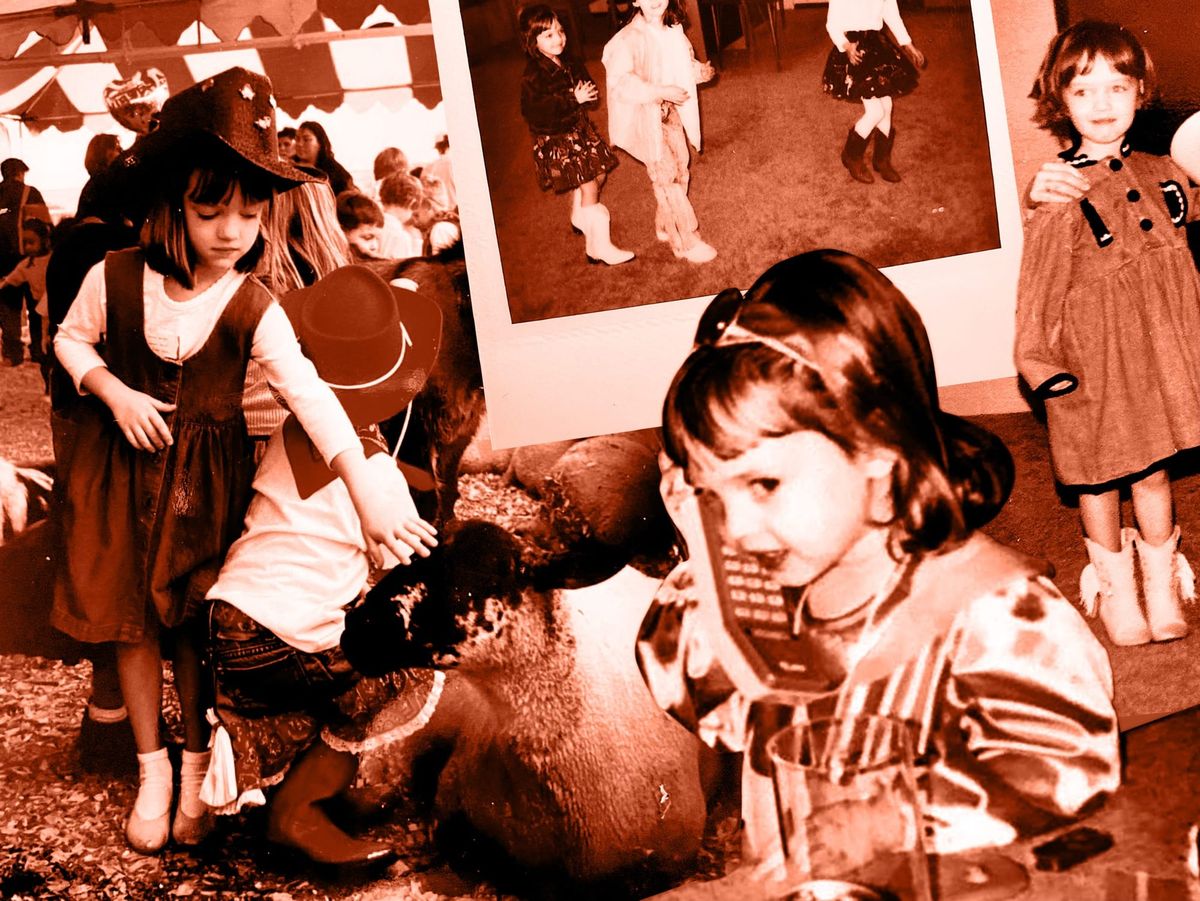
Welcome to The Barbed Wire.
If you’re reading this and live in Texas — or used to live in Texas or care about Texas — you’re in the right place.
Here’s what we’re offering: We would like to make you laugh and tell you hard stories. We want to inform, to engage, and to help you waste an hour. We’ve made a place that mirrors your Texas pride, showcases Texas art, and revels in Texas folklore. The Barbed Wire will have cultural coverage of Texas sports, food, pop culture, money, and power by some of your favorite Texas writers and comedians.
This is a site by Texans and for Texans — starting with me. I’m an eighth-generation Texan — or seventh, depending on whether you count my fifth great-grandfather, who settled here around 1845. Texas is where I cut my teeth on reporting. Maybe this is our first meeting. Or you may have read my investigations into sexual harassment at the state Capitol for Texas Monthly or the Texas Observer. You may have even followed my local crime reporting when I wrote for The Waco Tribune-Herald.
Like many Texans, I have spent much of my career outside the state, chiefly in New York City at The Daily Beast, where I worked on breaking and national news.
Like those newsrooms, The Barbed Wire will punch above its weight, but we are also something different: a site that combines the best of savvy, new-model online journalism with Texas’ deep — and very old — association with progressive ideas. Gummy vitamins and brain worms, in equal measure.
Here’s what that means: We plan to produce irreverent, quippy, quick-turn essays along with splashy exclusives, long-form investigations, and old-fashioned shoe-leather reporting. Texas is huge and, while we can’t be everywhere, we want to cover all of the state in all its boisterous glory.
When we say “sports,” we mean an essay about Houston Texans’ quarterback C.J. Stroud and a history of how Texas became ground zero for the fight over trans athletes. When we say “money,” we mean: Here’s a gaming project that received $700 million in funding but never launched. We’ll have essays about varmints, deep-dives into the history of Dr Pepper, interviews with drag queens, and features about the Texas-based ghost-writers of your favorite Texas rappers. We’ll have astrology, tips for living in the Texas heat, joke-filled merch, features on communities you haven’t yet met, and coverage of political leaders.
You’ll read all that and more in the coming weeks from our incredibly talented team, including senior editors Brian Gaar and Leslie Rangel, audience strategist Candace Henry, as well as columnists and contributors like Cat Cardenas, Steven Monacelli, H. Drew Blackburn, and more.
We’re politically aware, but The Barbed Wire isn’t a political site. We care about who has power and what they’re doing with it. We won’t hyperfocus on the state Capitol — but we know that building is where, every two years, some of the state’s most momentous decisions and biggest drama gets made. While The Barbed Wire’s outlook is ideologically progressive, our journalism is nonpartisan. We belong to a venerable state tradition, which teaches that all humans and all political parties are both corruptible and flawed — and we have assembled a crack team that will treat them that way.
Judy Blume once told an interviewer she felt that, like her character Margaret, she had “a very personal relationship with God that had little to do with organized religion.” Fair. I have a very personal relationship with Texas that has little to do with party politics.
When I ask, “Are You There Texas? It’s Me, Olivia,” I mean to ask if my cousins and my old friends from elementary school and their friends — Texans I know and love and remember sitting next to in class — can hear me.
Above all, in an era of runaway consolidation across media and the wider economy, The Barbed Wire offers a voice from somewhere — and we’ll actually tell you what that means. As journalists, we’ve historically expected readers to believe our research and analysis, but we haven’t given you much to go on. We don’t often explain who we are, why we know what we know, how anonymity works, what fact-checking entails, or why we use the language that we do. Why don’t we call them lies sometimes? How do we verify what we’ve found? What makes us choose one story over another?
With the power of the written word, journalism — and Texas journalism in particular — has accomplished great things. Texas journalism has overturned verdicts. It has provided spotlights where they were desperately needed and inspired award-winning films. But for all the good that we have done and can do, for all the public service journalism and groundbreaking investigations, we have also made a lot of mistakes. In Texas and in the country at large, we have participated in both-sidesism. We’ve been too cowardly to use plain words even when they’re the right ones. We have packed our ledes with blood. We have fear-mongered. We have parachuted into your towns, exploited your pain, locked it behind a paywall — and then blamed you for not giving us the money to keep doing it.
Many of us have even pretended not to have a viewpoint — a bizarre task that requires the person doing the writing and information-gathering to imagine they weren’t born in a body, didn’t live in a place, and never experienced hardship. In the name of objectivity, many legacy institutions have asked us to continue that charade, demanding that women who’ve survived sexual assault or harassment remove themselves from those coverage areas. Some have asked Black journalists not to publicly support movements advocating for inalienable rights, like breathing. Pretending you don’t have a uterus or a romantic partner or a skin color is an impossible task. Pretending you’re not a voter or a constituent is ridiculous.
Our areas of expertise — our life experiences — have been viewed as liabilities. Though it’s hard to imagine that a man who owns a home would be conflicted if he reported on home ownership, that same principle has applied to historically marginalized groups. That lack of a viewpoint isn’t just insincere — it’s dishonest. And it clearly doesn’t engender trust.
I’d like to do things differently here. As the 39th governor of Texas, John Connally, once wrote: “There’s no better place than Texas to start over.” To that end, I’d like to tell you about myself, because — cards on the table — my family is a microcosm of all that is best, worst, and most complicated about this state.
My ancestors were early Texas pioneers, Old West Texas Rangers, and early settlers of Milam and Bell counties. They were mayors, sheriffs, judges, stone masons, farmers, and teachers. My third great-granduncle, Neill Bryant Messer, rode to North Carolina on horseback in 1862 and returned with a saddle full of oats, which were — according to records in the Bell County Museum — the first-ever oats grown in that county. My great-granduncle Bolin, a Texas Ranger, was nicknamed “Bowie;” he was injured breaking up a knife fight in Robstown. Some were not so great. Some were public servants who donated land back to the state. My second great-grandfather, Silas Monroe Messer, learned to drill oil wells in the 1920s using the same methods farmers were using for water wells for livestock and crops. I recycle, sure, and I can’t imagine what kind of damage the at least four generations of Messers in the oil industry did to the environment.
I have no interest in pretending that isn’t part of my history — or part of my family today. My sweet and earnest 89-year-old grandpa spent his career in the oil industry, starting when he was 19. He has a gun collection and a cowboy-themed guest room. He watches Fox News, and an endearing channel that shows older folks learning how to polka, from his armchair in the Houston suburbs. There’s a tilt in my smile that looks just like his when he’s admiring the Texas star hanging over his front door; it’s been too long since I visited.
My dad paid for his architecture graduate degree at Texas A&M with a lucky oil investment. Then he met my mom, who was raised in Louisiana and Alabama before moving to Houston, where she spent 25 years as a corporate attorney specializing in energy, oil, and gas law. After having my brother and two ectopic pregnancies (a dangerous condition in which the fertilized egg can’t survive and for which the treatment was: abortion), my parents wanted another child but were at an impasse — so they tried in vitro fertilization, which is both a newly controversial political topic and the reason I am able to write this letter in the first place.
My family also has its feet in the new economy and culture of Texas. My older brother works at a tech startup in Austin. When we were kids, he first taught me about vegetarianism, then later Burning Man, and, as adults, how to build a neighborhood and community full of friends. He drives a Tesla (based, of course, in Texas), and he’s raising my nephew — my godson and the coolest person I know — to be bilingual in English and Spanish.
Forgive the deep dive into my family, but there’s a relationship between my parents’ fertility journey — and my grandpa’s career in oil and my brother’s interests — and my own beliefs, even if it’s not a simple one. These are the Texas characters in my life, and they inform how I — and The Barbed Wire — see this magnificent state: as home. Because even with all that is flawed about this absurd place, I love it so much that I still get emotional walking into the state Capitol. I’m pretty convinced some of the facts I learned in seventh grade Texas History class weren’t true — like the lore about the height at which the Texas flag can fly. All the same, I enjoyed pledging to the state flag every morning. I’ll always clap four times when I hear “the stars at night are big and bright,” and I’ve always thought that if I gave birth outside of Texas, I’d have to bring a box of Texas soil to the hospital.
All of that is to say: The Barbed Wire is a place for people who feel the same — about Texas, or about your own corner of the world, where the voices of the media increasingly come from seemingly no place at all.
Every day that I stepped into The Daily Beast’s office, I walked by this quote from Molly Ivins on the way to my desk: “Keep fighting for freedom and justice, beloveds, but don't forget to have fun doin’ it.” I plan to make sure we do that. Like Molly advised, we will also “be outrageous” and “rejoice in all the oddities that freedom can produce.” We will celebrate “the sheer joy of a good fight.”
And even if this is the last journalism project I ever make, I’ll have been honored by the opportunity to do it with these brave, talented, and thoughtful storytellers.
Enjoy the show.